Mayor Dave Fried recently sat down with Robbinsville Advance editor Bill Sanservino to talk about issues impacting the township’s past and future.
The first part of the Q&A resulting from that interview ran in the March issue of the Advance and addressed impacts of the COVID-19 pandemic on the township, police and public safety and the 2022 municipal budget.
In part two, Fried discussed the status of the Robbinsville Town Center development, the Foxmoor Shopping Center, and the state of commercial real estate and its impact on township revenues.
In the final part of the interview, which appears below, Fried addresses issues including the types of cannabis businesses that might be allowed in Robbinsville, development and relations with neighboring communities, and the potential for more residential housing to be built in town and the impact on the school district..
* * *
Robbinsville Advance: One of the big growth industries in New Jersey is recreational cannabis, now that it’s been legalized. Robbinsville has taken a wait-and-see approach as to whether it will allow any cannabis businesses in town.
We’re starting to see a number of towns allow cannabis businesses as the state is clarifying the rules and offering licenses. Do you think that eventually the town will move into some acceptance of the cannabis industry?
Dave Fried: I think, certainly grow and manufacturing facilities are some things that we’re taking seriously. We were cautious going in because we didn’t understand the rules, and frankly, I didn’t want to dive in to something where we were didn’t understand what the rules were going to be.
I’m less excited about the retail. Number one, because I know my residents, and while they voted for it overwhelmingly, no one’s going to want one near their home. Secondarily, I really belongs as a highway commercial business—similar to what Bordentown did with one of their retail locations. It was really very well and tastefully done. I don’t think there will be any shortage of retail, but I’m not sure that’s really something that we’ve got a good location for. Most of our retail spaces are near residential.
I do think we can be good location for manufacturing, possibly also the grow. There’s a considerable amount of tax revenue in those two items and very little in retail. Further, I really question how the state is going to regulate retail. They’ve got a number of operators right now. who are selling in Trenton without a license. If it’s been decriminalized, how will you stop the licensed retail as opposed to the unlicensed. If there are no criminal penalties, once you get into that business, how will you stop those that are regulated from those who are unregulated?
So the retail for me is really a challenge, and I think it would be a mistake for us to go into that business until we understand it a little bit better, and until the rules are understood a little bit better.
RA: Off the top of my head, I can’t see any great area for a cannabis shop in Robbinsville, except maybe somewhere out on Route 130. But like you said, it’s still pretty close to some housing.
DF: Almost every site on Route 130 has housing behind it, so you are going to have unhappy residents. I think there will be plenty of retail opportunities throughout the area within a few miles of Robbinsville. I don’t think there’s going to be a shortage of opportunities for our residents who are looking for it. I’m just not sure it’s for us.
Neighbor relations
RA: I know some residents in Allentown weren’t super happy about some of the uses and decisions that were made in the warehouse zone, which borders their town. What are your feelings on the situation there? I think the residents were filing a lawsuit against one of the developers. It’s always a difficult situation when you’re making a decision for your own town, but it impacts another community?
DF: The mayor in Allentown (Thomas Fritts, who is also the associate publisher of the Robbinsville Advance) and I actually worked on that together. I think the residents who filed the lawsuit were uninformed.
They claim the development is going to create traffic in Allentown, and the opposite is true. That developer is going to be building a traffic circle, which would stop all the trucks from going to Allentown. There would be no reason for any tractor trailer to want to go around that circle. It would really force people out to I-195.
I just think that there was this sort of anti-warehouse sentiment, and this little group got caught up in it. They started out with traffic (concerns), and then they switched to environmental ones. Then they realized that there were really no environmental concerns there, so now I believe the most recent is they switched to concerns that it may affect eagles.
It’s an ever-moving complaint of what it is that they’re unhappy about. But, the administration in Allentown and Robbinsville work together. Allentown has asked us to preserve the Wittenborn property on Robbinsville-Allentown Road, which would create a green belt around Allentown, which we’ve agreed to do. (The township is working to permanently preserve the 15-acre parcel as open space).
So we have been working very, very well with both Upper Freehold and Allentown to try and make sure that we’re not putting too much on their borders. We’re trying to be respectful of what they’re doing, but good planning goes along both sides.
While we’ve been very successful with Allentown, we’ve been equally unsuccessful with Upper Freehold, where they put a housing project on our border, and they didn’t line the housing project up with the traffic light that was over there.
Instead they put the driveway 50 feet from the traffic light, which to this day, still makes me scratch my head from a planning perspective. So it’s got to become a little bit more cohesive on both sides.
I feel that Allentown is one of the towns that we’ve had a really good relationship with.
RA: Speaking of good relationships with towns. Since Hamilton elected Jeff Martin as its mayor, the relationship between Hamilton and Robbinsville Township seems to have gotten a lot better (Robbinsville had a contentious relationship with previous Mayor Kelly Yaede). From your perspective, has that continued? Are you pleased with the how communication has gone between the two of you?
DF: It’s really nice to have a sane mayor next door.
All kidding aside. We actually have a very good relationship with Hamilton. We continue to do shared services with Hamilton. We’re just now finishing up our sewer study, which I think both sides agree was the right way to proceed.
We’ve actually been helping them with some shared services. For example, they’ve had some changes in their administration, and we’ve been able to help them with shared services in terms of construction. They’ve been going through some real growth. So it really has been a pleasure to work with Jeff. I consider him my friend and colleague, and I think he’s genuinely trying to do some positive things in Hamilton. It’s been really has been a very good working relationship.
I also have a very good working relationship with East Windsor. We’ve been doing a lot of things together. During the pandemic the towns sort of formed small little working groups, and my working group was the mayor of Hamilton and the mayor of East Windsor (Janice Mironov). The two of them proved to be incredibly useful. We got a lot done and I looked forward to our weekly meetings, because both of them are really smart, and I learned a lot.
RA: Janice has been mayor there forever. As far as I can remember, and I’ve around for a long time.
DF: She’s smart. She’s tough. She’s an advocate for her town. When I first became mayor, I was pulling her budgets (to study), and she thought it was because we were in different parties, and that I was doing it for political reasons.
I hadn’t met her when I was doing that, so when I actually met her, her first question was, “Why do you keep pulling my budgets?” She thought perhaps I was thinking about doing something. And I said, “Because you’re one of the best budgeters I’ve ever seen, and I want to see what you’re doing and compare it to my budget.” And she was like, “Oh.”
So she is actually one of the people we modeled our budgets after. She’s incredibly smart.
BAPS temple violations
RA: What can you tell me about the ongoing investigation with into illegal labor practices at the BAPS Temple? (In May 2021, the FBI raided the Bochasanwasi Akshar Purushottam Swaminarayan Sanstha Hindu temple in Robbinsville following a lawsuit that claims 200 Indian nationals were trafficked to the United States under false pretenses and forced to live and work on temple grounds for $1.20 an hour.)
DF: I do believe it is still under investigation but we have not really been updated. We really weren’t included. It’s a U.S. Department of Labor, Immigration and FBI investigation.
They’re continuing to build there. They have, done everything that we’ve ever asked them to do. Their inspections have all been up-to-date. The inspections of housing they have on the property are up-to-date. It never had any challenges. The state has also overseen the housing there and they’ve never had any challenges.
Residential housing
RA: Robbinsville has been very proactive in preserving open space–not only for the sake of preserving open space, but also to help cut down on the number of residences that are that are constructed. As you have said, more housing equals more school kids. What about the residential housing situation in the township? How built out is the town?
DF: We are very close to full build out. There are very few properties actually for sale in the entire town, so there’s clearly a demand. The good news is—talking about schools–there was a massive increase in students and then it sort of leveled off. Now we are starting to see a bit of a decrease.
There may come a time where we do need some more residential in town. When that time comes, we’ve got a couple of properties where we can do some development. As of right now, we’re going to be very cautious, and continue to be aggressive on the open space side. We have two properties—Wittenborn being our number one.
We’ve now Identified a second property that I think would also be a good fit for open space. So it’s a balancing act. We will put some residential in town center, but we do work with the school to make sure that we’re not going to create a burden there. And we really try and balance it out.
The good news is that our patience has also spawned massive demand. We’ve got every developer in the world who would like to do something with us, because Robbinsville is so desirable. So when we do make a move, we have a lot of options. We’ve got a lot of people who want to work with us, but we will continue to be cautious and slow, and we’ll fill things out as we need to.
Probably the most likely scenario is finishing Town Center, and then we may look at down the highway (Route 130) and finishing off the property over by Meadowbrook Road/Gordon Road, that development. Sharbell owns a large portion of property there that I think eventually, they might like to move from commercial to residential, and that may make some sense.
The Senior Center
RA: Is there anything I haven’t touched on that you would like residents to know about?
DF: We’re starting to ramp up our senior activities again. Beth Rinyu, our new Senior Center manager has some great ideas, and I’m really, really, pleased with her leadership (For more on Rinyu, see the article published in the September issue of the Advance or posted online at communitynews.org.)
Over the senior center, we’re going to start trying to do some more events over there. We’re looking at the possibility of bringing in outdoor pickleball over by the police station near the basketball courts.
We’ve expanded those basketball/volleyball courts over at the police station and we would probably add pickleball there as well. It’s becoming more and more popular and the senior population in town is looking for us to be able to add that to our list of activities.
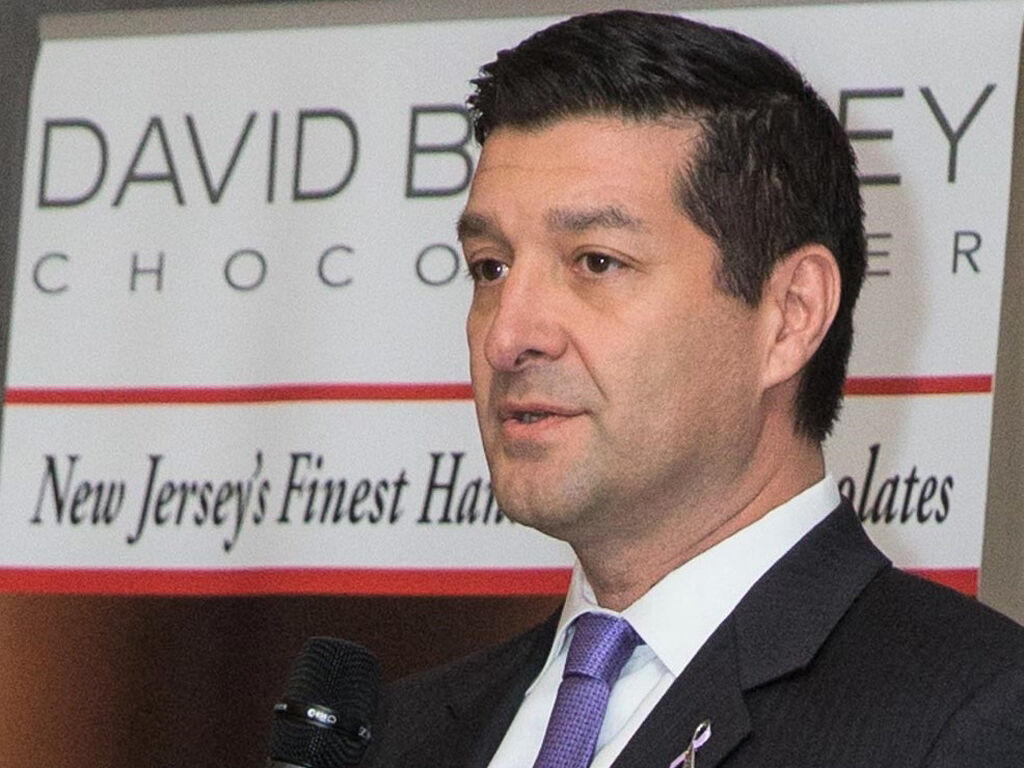
Robbinsville Mayor Dave Fried,

