A proud NASA stunned stargazers the world over on July 12, when it shared some of the first, best images to be taken by the powerful new James Webb Space Telescope.
The images are said to offer astronomers and astrophysicists the best look yet at our universe and everything in it.
Among the crowd at the Goddard Space Flight Center in Greenbelt, Maryland were many NASA scientists, engineers, technicians and project managers, as well as their counterparts from the European Space Agency, the Canadian Space Agency and representatives from Northrop Grumman, the primary contractor responsible for construction of the telescope.
Also on hand was Hopewell’s Jim Webb — son of James E. Webb, after whom the telescope is named. James Webb was the administrator of NASA from 1961 through 1968, the period during which the space agency embarked on many of the most ambitious programs in its history, including the Gemini and Apollo space programs.
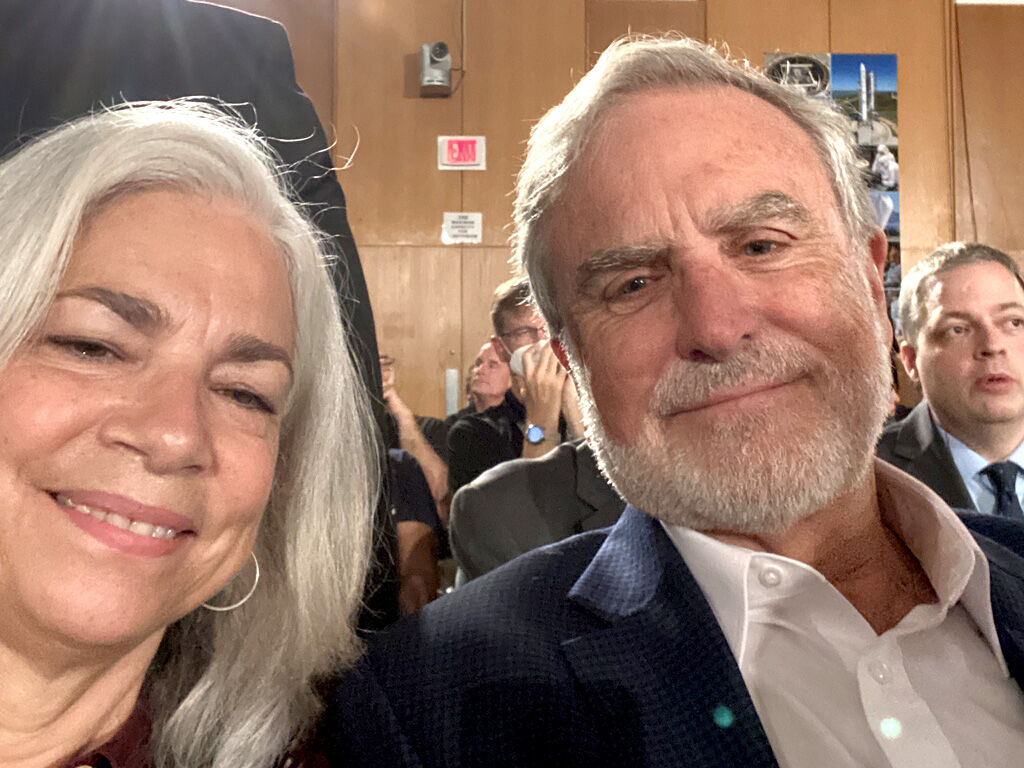
Webb, an artist and lampmaker, attended the event with his wife, Barbara. He says it was an honor to be there when the first images were shown to the world.
“I’m not sure I’d ever been in a room so full of ecstatically happy and proud people,” he told the Express via email.
The telescope, seen as a successor of sorts to the Hubble Space Telescope, has been in development for decades. Initial planning began in the 1980’s, with a budget of $1 billion and a development timeline of 10 years.
Instead it took more than 30 years, and approximately $10 billion, before the satellite was launched into space in December. Unlike Hubble, which is in low earth orbit, the JWST orbits the sun, one million miles from home.
According to NASA, the JWST will observe parts of space and time never seen before — allowing scientists to see 13.5 billion years into the past. Its primary mirror, more than 21 feet in diameter, along with instruments that detect infrared and ultraviolet light and a sunshield the size of a tennis court, will enable it to capture images with much more detail than Hubble ever could.
Originally known as the Next Generation Space Telescope, it was renamed in honor of James Webb back in 2002.
Webb (1906-1992), a native of North Carolina, spent many years working in Washington, including in the State Department and the Bureau of the Budget. President John F. Kennedy appointed him to succeed Hugh Dryden as the second head of NASA in February 1961.
That May, Kennedy gave his speech declaring that the United States would land a manned spacecraft on the moon and return it safely to the earth. From that point, it became Webb’s job to fulfill that promise.
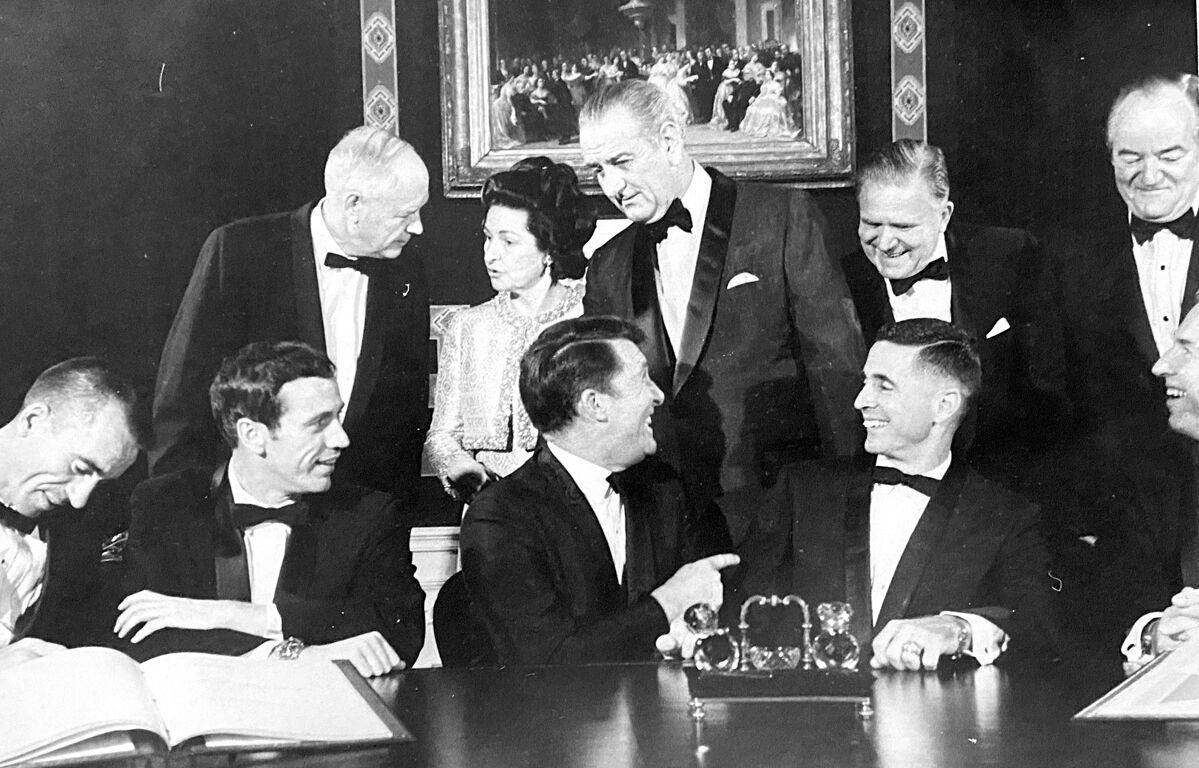
When Republican Richard Nixon won the presidential election in 1968, Webb, a Democrat, stepped down. Before leaving office in 1969, President Lyndon B. Johnson honored Webb with the Presidential Medal of Freedom, considered one of the highest civilian honors that can be given in the United States.
Jim Webb admits that growing up, he was not overawed by his father’s prominent role in U.S. government and in NASA.
“Honestly, because he was my dad and this was his job, I didn’t really give it a lot of thought at the time. I suppose I was like most typical teenagers,” he said. “I went with him to Cape Kennedy for the launch of at least one of the Apollo missions. That was pretty cool.”
He remembers NASA administrator Sean O’Keefe reaching out to his then 91-year-old mother, Patsy, in 2002 and asking for her permission to name the telescope in honor of his father. “She gave her blessing. However, she was also keenly aware that these projects do oftentimes go sideways, which this one did for a time. She was rightfully concerned about his name associated with a disaster,” Webb says.
Expensive scientific projects often find themselves easy targets when NASA or Congress is looking to make budget cuts, and the JWST was no different.
“It was a long and very difficult road, as no engineering project this sophisticated and complicated had ever been attempted. There were lots of setbacks, not the least of which was Congress threatening to pull the plug on funding many times as the price tag went up and the timeline stretched out,” he said.
The Webbs watched on TV on Christmas morning as the JWST launched from French Guiana. They had been invited to watch from Goddard, but because of the winter Covid surge, the event was later canceled.
“It was very moving,” Webb said. “To see the pitch-perfect launch provided by the European Space Agency’s Arian 5 rocket, then to have it go on to perfectly deploy while avoiding more than 300 points of possible failure, was truly impressive and a great relief.”
Jim Webb, 75, grew up in Washington and Oklahoma City, Oklahoma. He settled in Hopewell in 1996.
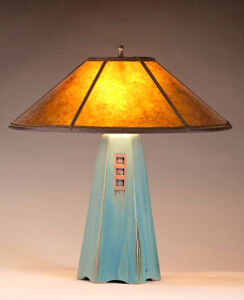
As an artist, he is known for his custom lamp designs. He says word of mouth among collectors generates the majority of interest in his work. He only makes a few lamps a month, with each lamp taking three to four months to complete.
He also does some abstract sculpture when time allows.
“When there is a break in lamp requests, I have the time to experiment with more abstract sculptural work, but honestly, of late, there hasn’t been a lot of time for that,” he said.
He works out of his private studio at his home in Hopewell, where prospective customers can see examples of his work. His lamps are also on display in a number of galleries around the U.S.
More information is available on his website.
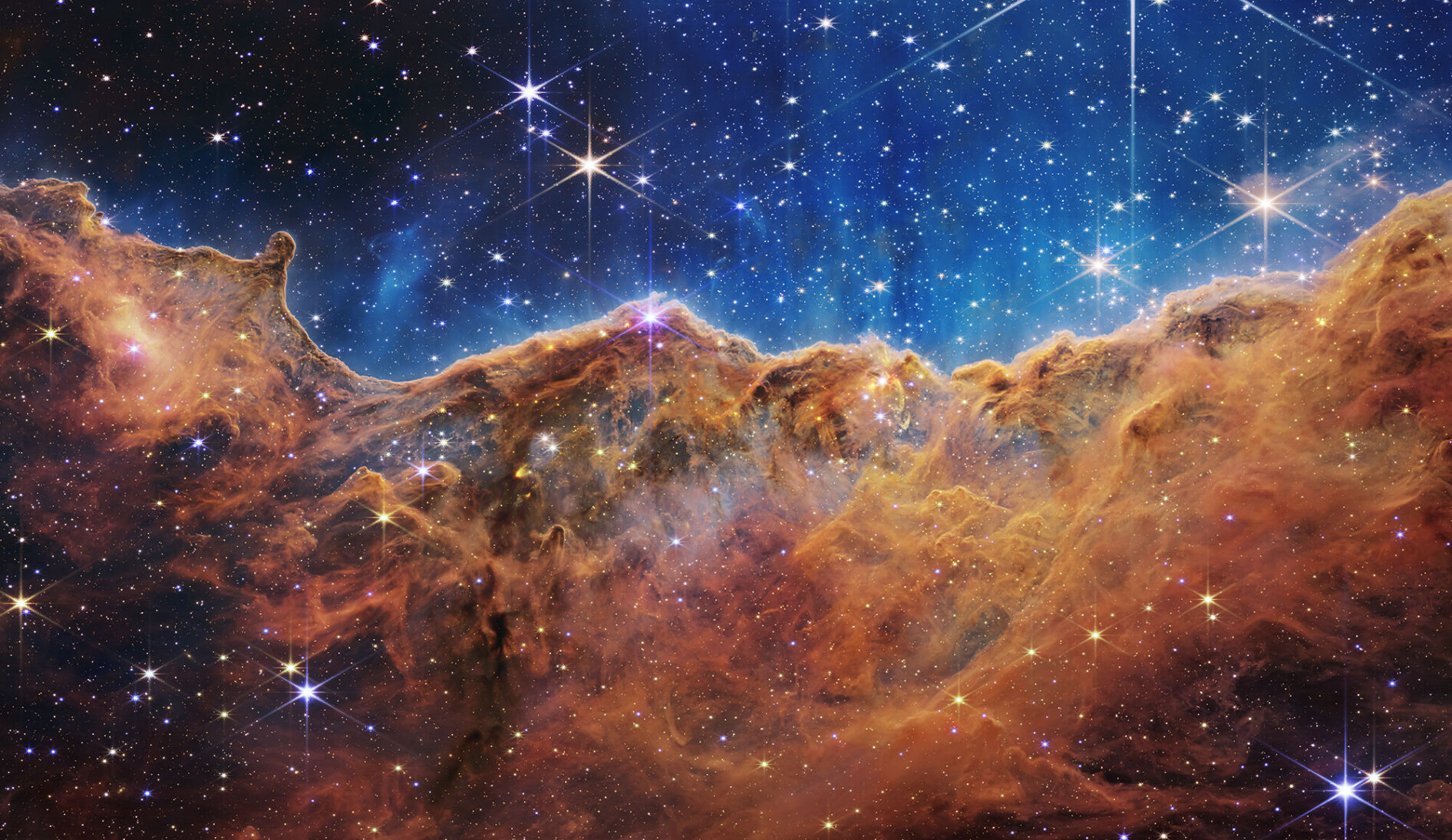
An image of the Carina Nebula taken by the James Webb Space Telescope. (Image courtesy of NASA.),
One of artist Jim Webb's custom lamp designs.,