It was while teaching a writing class for college students who were almost the same age as she was that the 21-year-old Deborah Preston discovered not just her calling, but also plenty of use for her theater degree.
Although she had changed her career path from acting to academia, the valuable stage skills she learned helped to shape her perspective in numerous leadership positions. Throughout more than 30 years of experience and service, Preston has studied the psychology of others’ motivations and frustrations as if preparing for a character.
As she steps into a starring role as Mercer County Community College’s seventh president, she says she wants to figure out productive solutions for both the audience and the people behind the curtain.
MCCC, which has campuses in West Windsor and Trenton, announced in April that Preston would be succeeding the nearly seven-year term of previous president, Dr. Jianping Wang. After starting on July 1, Preston sat down with U.S. 1 to talk about her background and goals.
Prior to accepting the MCCC position, Preston was the provost and vice president of academic affairs at Raritan Valley Community College in Branchburg. She also acted as the chief academic officer throughout the COVID-19 pandemic.
According to MCCC, Preston was instrumental in the Access2Success project at RVCC, which “addressed the equity gap for students of color, first-generation students and low-income students” as part of her commitment to the principles of diversity, equity and inclusion.
She says she hopes to expand those same practices at MCCC, bringing to the position what she has learned from developing, managing and overseeing a range of initiatives in community colleges.
Preston grew up in Georgia, spending most of her life in the south until she attended college and worked in other states. After being employed for 11 years at Montgomery College in Rockville, Maryland, she came to New Jersey for RVCC.
“It’s really an interesting migration for me,” Preston says. “I love it here. It’s been a much easier transition than I ever thought it would be.”
Preston started out with aspirations of becoming an actress and earned a bachelor’s degree in theater from Florida State University. Although she “accidentally” finished in only three years, Preston no longer felt content painting sets or doing vocal exercises in the highly competitive atmosphere. She wanted to try another field, one that was steadier and more reliable.
As a 21-year-old college graduate, Preston returned to FSU for a postgraduate degree as a way of “buying myself some time to figure out what I wanted to be when I grew up,” she says.
Preston chose to pursue a master’s degree in English, and the program required an assistantship in teaching English composition. That was where she fell in love with teaching in front of a room of students who should have been, age-wise, her peers. Preston then moved on to receive a doctoral degree — also in English, specifically dramatic literature — from Tulane University in New Orleans.
Once finishing the “rapid succession” from her college career to professor, Preston returned to Georgia, figuring that it might be worthwhile to apply for a job at the local community college, she says. Preston had no intention of staying in that space, especially because of common misconceptions and grad school pressures, but she started as an adjunct.
Her first challenge was a Saturday morning English 101 class, where, based on her previous experiences with student participation, she feared the worst.
But as Preston led the diagnostic writing assignment, informing everyone that they needed to take out writing materials, what unfolded was the opposite of her expectations.
There was no “moaning, groaning, digging through the backpacks, and the borrowing of the pens,” she says. Rather than letting the odd day and time of the class affect their enthusiasm, the students picked up their pens to work — because they genuinely had a desire to learn how to write, Preston says.
Even though Saturday courses tend to attract adults or non-traditional students, she continues, the readiness was appreciated, and she was “hooked” on community colleges since.
“On a day-to-day basis, you have a chance to make a difference in students’ lives,” Preston says, citing a desire to impact them and grow their potential. It was never her objective, but she has thus spent all of her higher education career in community colleges.
So it was only natural that Preston ended up wearing many hats in her 14 years at Georgia Perimeter College — now known as Perimeter College at Georgia State University — in Atlanta. She went from adjunct to tenured professor, then department chair and campus provost.
Preston says that she learned something important in every one of the different positions she has held as she moved up.
“It gives you a broader perspective of what’s going on across campus, so that when a division is struggling with something, you can relate to it in some way,” she says. “I think there’s a lot to be said for really understanding how a college works from top to bottom. If you’re going to be the leader, I think it makes you a more compassionate and innovative leader in a lot of ways.”
She was also selected to be an American Council on Education Fellow in 2004, where as “one of only two community-college administrators in her class,” she had an “eye-opening” experience. The program empowers participants to consider future leadership roles like college president, another title that Preston had not initially envisioned for herself.
As president, she realized she could combine her love of both teaching and connecting with students, so Preston took on more responsibilities. Following her work in Georgia, Preston served as the dean for visual arts, performing, and media arts at Maryland’s Montgomery College, then came to RVCC.
“Honestly, I think one of the reasons I started thinking about a presidency was that during the pandemic, as the chief academic officer [for RVCC], I had a huge role in pandemic management figuring out how we were going to deliver instruction, try to keep people safe, communicate what we were doing, and train the faculty,” she says. “It’s interesting because everything everybody knew was sort of out the window. We were just sort of making it all up fresh. I realized that if I could do that, I could be a president.”
Then, she began the search for job openings, “applying selectively” to remain local.
“I knew people who’d been at Mercer and had a real affection and a lot of good things to say about the college community and the faculty,” she says, sensing that the institution cared.
When she was selected, Preston says that she felt like she was “learning a new college, learning a new county, but not learning a new state.” That comfort gave her the confidence to see what she could accomplish, as well as the ability to establish a new home in Mercer County.
At Montgomery College, Preston met her husband, Dr. Ben Nicholson, the former math professor and department chair of mathematics, statistics, and data science for 21 years. When she started at RVCC, Nicholson stayed behind to continue teaching in Maryland.
Now, after years of living in different states, Preston and her husband are getting settled together in Lawrence Township, with Nicholson currently looking for new job opportunities.
Preston says that she tried to find a property halfway between the James Kerney Campus in Trenton and the campus West Windsor, but ended up closer to Trenton, which matches her interest in that campus.
“I’m incredibly excited about the JKC campus at Trenton,” she says. “I think that is just a diamond in the rough. I’m really looking forward to seeing what we can do to build up that campus” with structural, aesthetic and programming improvements.
Ahead of her first day, Preston says that she had conversations with many people who were entirely unaware of the Trenton campus’ existence, then assuming that it must have been a recent addition to MCCC.
But the original school began on Trenton’s North Broad Street, later merging and acquiring its current name, as well as opening the West Windsor location, around the 1960s to ’70s. Upon learning the history herself, Preston says she feels more empowered than ever to help give JKC “a clear purpose.”
“I truly believe that the JKC campus can and should be a really important part of the revitalization of that whole area of Trenton,” she says. “I’ve seen it happen with other types of businesses. I don’t see why it can’t happen with a college. In fact, I think we’re probably uniquely positioned to really bring about positive change working with other constituents in that community.”
To continue this, Preston says she wishes to get acquainted with the diversity, equity and inclusion plans on campus, noting there is “awareness around what we can do to make sure we’re a safe and friendly and socially just college.” One of the elements she wants to maintain is having a “strategic coordination” of these resources.
“The first thing I’m going to look at is, ‘what is everything that’s going on, and is everybody really moving in the same direction,’ because that’s the only way you get real change,” Preston says.
Last year, Preston was appointed to the American Association of Community College’s Commission on Diversity, Equity and Inclusion, which has provided her with ideas on how to serve students accordingly.
“A member shared what is called a ‘policy audit’ where you go through your policy manual, and for every single policy, you ask yourself, ‘Does this policy hurt anyone, and why is it there? Could it be friendlier?’” she explains, giving library fines as an example.
Many libraries are retiring fines, Preston says. “They find that they don’t actually change the rate of book return — with or without the fine — and they just discourage people who can’t afford their fines from coming back to the library.”
Another issue could be the act of “putting holds on student records for parking tickets,” because as the president asks rhetorically, “do I really want to not let the student come to college because they can’t afford their parking ticket?”
“Like any institution, there’s so many things we do because we’ve always done them, and nobody’s really stopped to say, ‘but do we have to?’ That’s what I think is important about a policy audit,” she adds.
Preston took on a similar task of reviewing and updating academic practices as the co-chair of Montgomery College’s steering committee, which developed the school’s first Academic Master Plan.
“The other piece that I’m really passionate about in terms of DEI work is that for years, we left all the DEI and social justice work up to Student Affairs, so if students weren’t doing well, [they would say] ‘well, let’s get them a mentor, let’s give them better orientation.’”
She continues: “But at the end of the day, the learning happens in the classroom, and if the classrooms aren’t designed with an equity and social justice lens — if you are teaching material in a way that alienates your students, or does not feel inclusive to your students — if you are not thinking about your content matter in ways that engage students and help them to see themselves in a particular class or discipline, then all the mentors in the world aren’t going to fix that. You’ve really got to put equal weight on what happens in the classroom and what happens out of the classroom.”
Preston, acknowledging the JKC campus specifically, is thinking of other ways to shift MCCC’s approach to positively benefit, incorporate, and highlight the voices of surrounding communities.
“We’ve got to build relationships and talk to the community about what they need,” she says. “There’s a long, sad history of white liberals deciding what other groups need or should want, without really listening to what they need or want. As a higher ed institution, I don’t want us to fall into the trap of always thinking we know best.
“We know some things, and that’s good, but we have to combine what we know with what the community says they want and need, because otherwise, I don’t see us having that much impact. It’s got to be a partnership.”
That camaraderie leads into the importance of an understanding environment.
“Ideally, you would want the college to be a place where everybody feels they belong, everybody feels valued, and everybody feels like they are either making a positive contribution, or they are getting something positive out of their interaction,” Preston says, expressing that inclusion and appreciation are important, but not unique to schools.
“We have to have that third layer, which is something positive is happening — either I’m making a contribution, or I’m getting something valuable from my interactions with the faculty,” she explains of the distinction.
Another issue that Preston wants to tackle is post-pandemic enrollment. Students might be hesitant to return to college because of the current job market, where retail and restaurants may offer $20 an hour in what the president calls “a short-term solution” to the bigger problem.
“Go ahead and get your $20 an hour, but also, come to college! Let us get you set up for something better down the road,” she says. “I think people are tired, traumatized, and depressed from the pandemic. It’s hard to think about working and going to college. But we’re going to do as much outreach to students as we can and make it as painless as possible to come to school.”
Preston says that although service jobs might feel like they pay well, college “can help them get to something that’s more of a life-sustaining wage,” especially for people who want to have a family down the line.
“People think they can’t afford college, and that just breaks my heart, because you can absolutely afford to come to Mercer. Even if you think you can’t afford to come to Mercer, we can help you afford to come to Mercer,” she says, with flexible options for each student’s journey.
“You don’t have to go for a full two years. You don’t have to transfer. You can and we will help you do that, but you don’t have to,” Preston adds, saying it “kills” her that some might avoid enrolling based on misinformation about expenses. “Between state aid, federal aid, and foundation aid, there’s just no reason for a student not to come to Mercer.”
Those can range from New Jersey’s Community College Opportunity Grant’ for residents with an adjusted gross income under $80,000 to the MCCC Foundation’s scholarship programs — tuition plus, urban JKC, and president’s completion fund — which address the different socioeconomic backgrounds of students.
As the end of summer means a return to school, Preston is happy to greet students when the fall semester officially begins on September 6. Inspired by the enthusiasm of local officials, leaders, and other representatives who have given her a warm welcome, she reciprocates their feelings about embarking on MCCC’s promising new chapter together.
Preston adds that there are already plans in motion to “harness” the positive energy of these interactions, and what she looks forward to the most is becoming part of the community. But with so many people keen to celebrate the opportunity for collaboration, Preston is not alone in having “a lot of optimism” for what’s to come.
Mercer County Community College West Windsor Campus, 1200 Old Trenton Road, West Windsor 08550. 609-586-4800. Deborah Preston, president. www.mccc.edu.
Mercer County Community College James Kerney Campus, 102 North Broad Street, Trenton 08608. www.mccc.edu/welcome_kerney.shtml
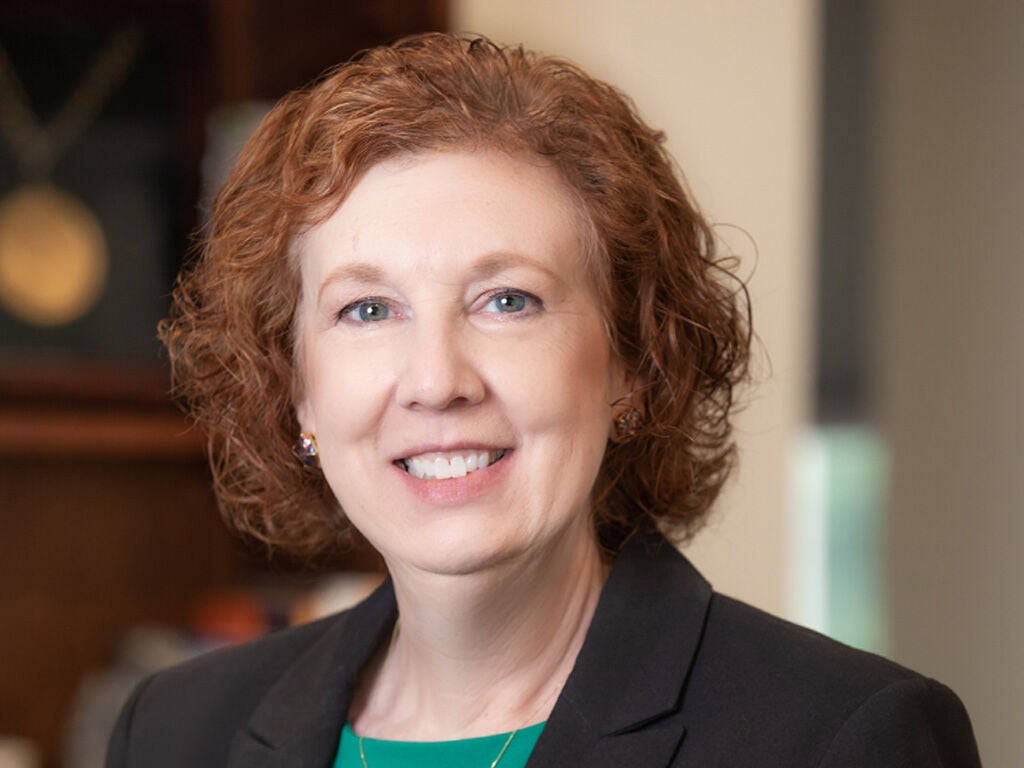
Deborah Preston started her term as Mercer County Community College’s seventh president on July 1.,

