When thinking about back-to-school season, most people naturally think of academics. However, it’s just as important to focus on social and emotional skills.
Children of all ages are still learning to manage their emotions and get along with others. As they learn these skills, behaviors that make academic learning more challenging for everyone else in the classroom may be seen.
“Social and emotional skills are crucial to a child’s academic success, but they aren’t inherent,” said Carter Peters from KinderCare’s inclusion services team. “Teachers tell us again and again that starting the school year with a grasp on social emotional learning is just as important as knowing academic concepts. Children who are struggling to manage their emotions and transition into the classroom may not be able to focus on academics.”
Consider these three skills families can teach their children before school starts to help build friendships.
Turn Transitions into Games
Making a game out of stressful transitions can help both you and your child reframe your mindsets and reduce stress. Asking your child “Can you hop like a bunny while you get your school things together?” or playing a listening game like “Simon Says” can help your child develop executive function skills such as impulse control. You could also give him or her choices. For example, tell your child “You can put your shoes on yourself or I can help you,” which lets him or her feel a sense of autonomy and control when choosing the desired solution.
Take Turns
One thing younger children often struggle with is the concept of sharing. Adults can forget that to a young child sharing implies giving something up, Peters said. If your child struggles to share, try introducing the concept of taking turns: “It’s Mariah’s turn for the slide. When she’s done then you can go,” for example. Help your child practice how to have conversations with playmates about taking turns.
Play a ‘What if’ Game
Help school-age children build a growth mindset by problem-solving responses to common friendship issues. Ask your child “What would you do if…?” and help him or her practice responses. Thinking of responses ahead of time gives your child a rehearsed playbook to choose from in the moment. The more he or she practices these responses, the less you will see unwanted behaviors such as yelling or hitting. By giving children the autonomy to choose their own responses, you demonstrate your trust in them, which can give children a powerful sense of their own abilities to act maturely.
Find more tips to build children’s social and emotional skills at kindercare.com.
For information about 4 beautiful, newly updated KinderCare centers in your area, visit our website or call 888-525-2780. Whether you live in the area or commute to a job nearby, KinderCare has you covered with safe, affordable, convenient day care solutions to suit whatever makes your family unique.
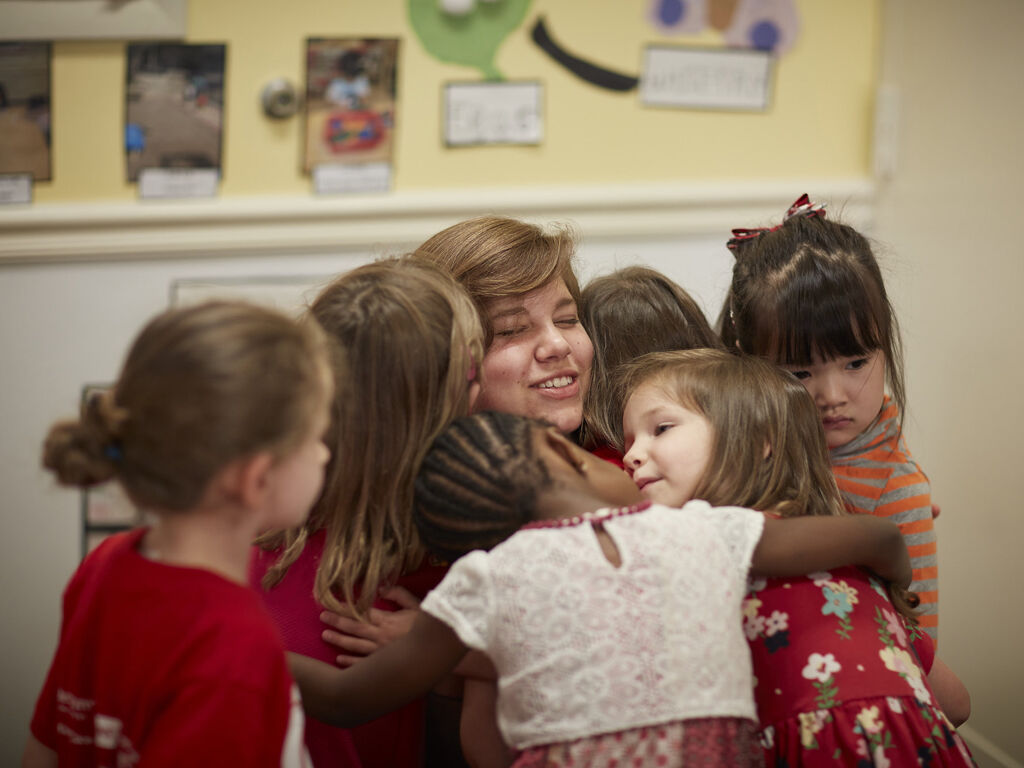
With both September and school coming up, KinderCare centers offer daycare solutions for families - as well as some friendly advice on making friends.,

