Giving a performance in the limelight of the Hamilton Murray Theater does not always require being on stage, because with only a modest 200 or so seats to spare, the student-run productions of Théâtre Intime and the Princeton Summer Theater go beyond these constraints to achieve artistic freedom of their own design.
In a celebration of three anniversaries held over just as many days, the local theater scene responsible for shaping over a century’s worth of thespians — without any direct oversight from Princeton University — is honored with a reunion and recognition of its history.
With festivities organized by the Friends of Théâtre Intime and other adjacent entities, the 100th and 50th anniversaries of Théâtre Intime and Princeton Summer Theater, as well as the 100th anniversary of the Hamilton Murray Theater, are proof that the show does truly go on.
The weekend’s schedule, which is half homecoming and general arts appreciation, starts at noon on Friday, November 4 through Sunday, November 6, at 4 p.m. For the full itinerary, speaker information, and sneak previews of the film series, visit the HMT100 website at hmt100.org.
Advance ($275) and walk up ($300) tickets, as well as Saturday-only admission ($175), can be found at Princeton University’s Ticketing website, tickets.princeton.edu.
Members of the Princeton community who might just have an interest in the screenings, panels, or a chance to see William Shakespeare’s “Twelfth Night” live may attend for the price of a $50 special pass.
Théâtre Intime, a French name translating to the “Intimate Theater,” was the first of the two to establish itself at the HMT in the early 1920s. In 1988, alumnus J. William “Bill” Charrier joined forces with several students to form the Friends of Théâtre Intime, a group that would support its future operations.
One of those original members, Geoffrey “Geoff” Peterson, founded the Princeton Summer Theater (originally called “Summer Intime”) in 1968 with Charles “Chuck” Bernstein and Jon Lorrain. There, programming ran between semesters in the warmest season — when the University would be closed — and like Intime before it, PST became a community center, but one in which the young industry professionals could finally gain experience and money.
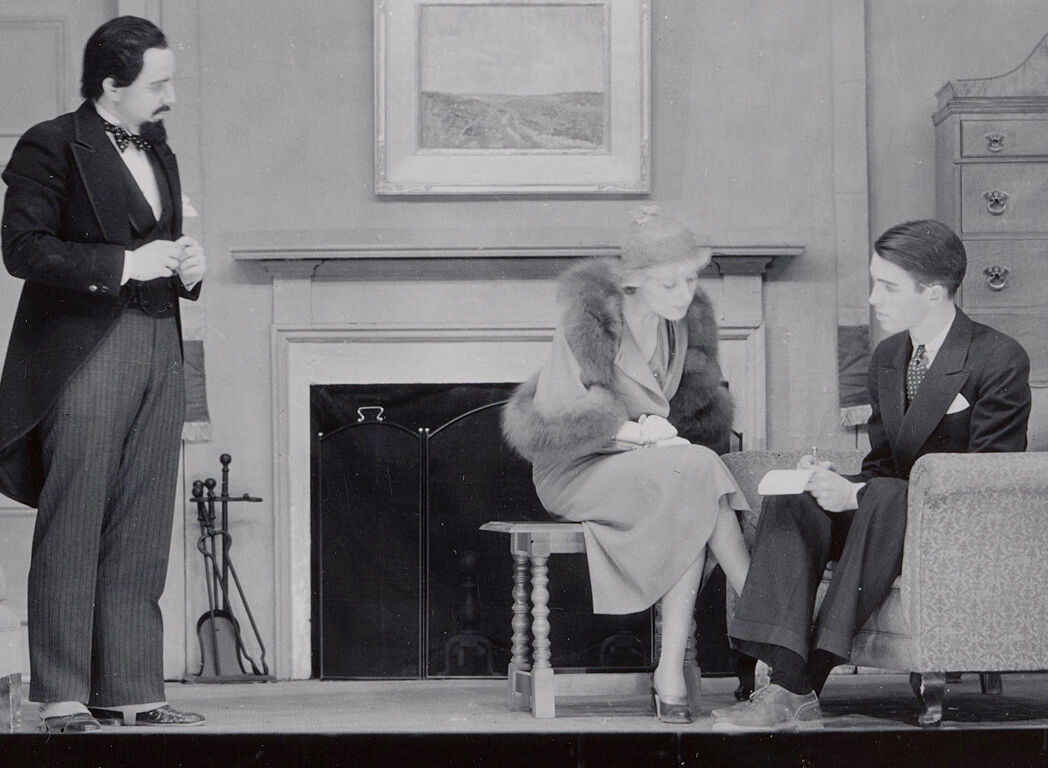
While both theater groups have been stepping stones for celebrities such as classic Hollywood actor James “Jimmy” Stewart and “Wicked” writer Winnie Holzman, PST is a key part of the upcoming Hamilton Murray Theater’s (HMT100) event for Peterson, who was more than happy to help as archivist and director of the Hamilton Murray Theater Centennial Film Festival.
“Acting, directing applause of the audience…those were all the great things, and a lot of people feel that, but for me, the big moment was always about two in the morning down in the business office with one of those old fashioned adding machines — this was before calculators — and realizing that we were making it,” Peterson said, reflecting on how “nothing else could beat” such a simple yet powerful feeling.
“The key element of that is the entrepreneurial aspect, and that’s what was always special about Théâtre Intime from the beginning, and the Summer Theater when it came over,” Peterson said. “In fact, even more so, because there you were trying to earn a living in the summer. In the school year, theoretically, you’re a college student, but in the summer, you were trying to earn a living, and that is what separates it from other theater programs, including even Princeton’s theater program, which it does have now,” he said.
After Friday’s registration, Peterson will unveil his curatorial project at the nearby Mudd Library in an exhibition encompassing over a century’s worth of history “in programs, playbills, flyers, photos, newspaper articles, letters, and more” from both Intime and PST.
The film festival takes place at the James Stewart Film Theater, first premiering at 2:30 p.m. with a reception before an initial round of screenings commence. Peterson remarks that the Stewart Theater is a fitting location for the series of new, unscreened films, given that the Princetonian of its namesake shows up in archival footage and photographs at the event.
The seven programs consist of four features and about a dozen or so short subjects, all of which were “expressly created for the festival,” the HM100 website states. Overall, the content includes 300-plus alumni and continues running throughout the weekend.
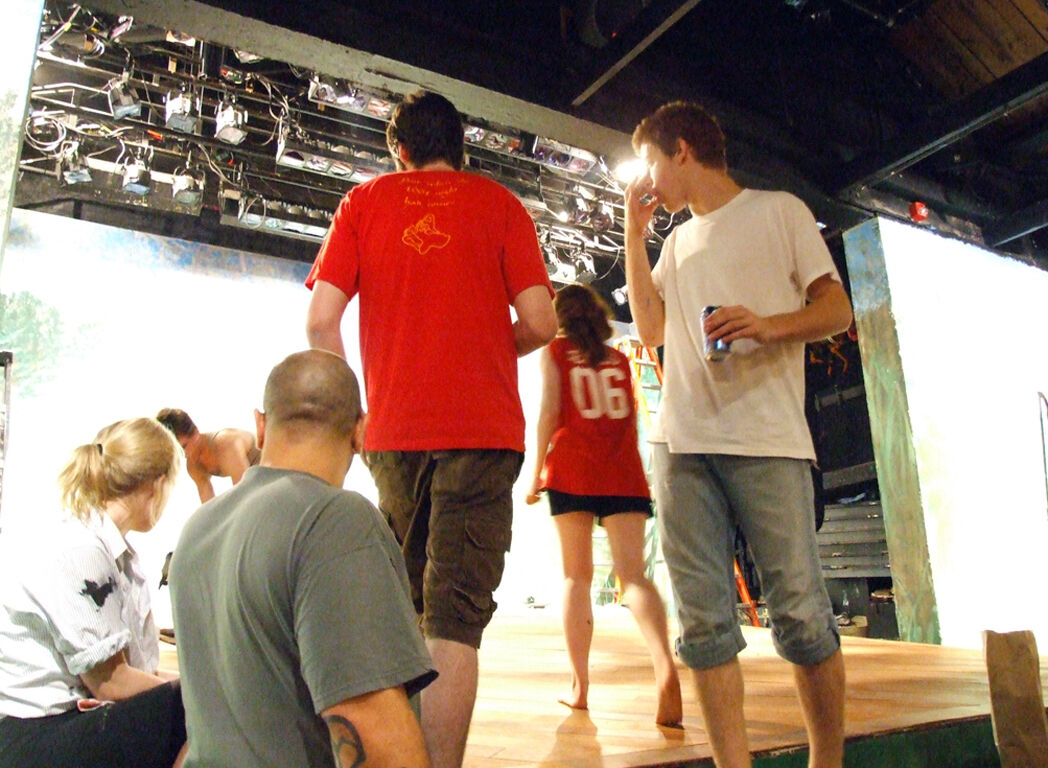
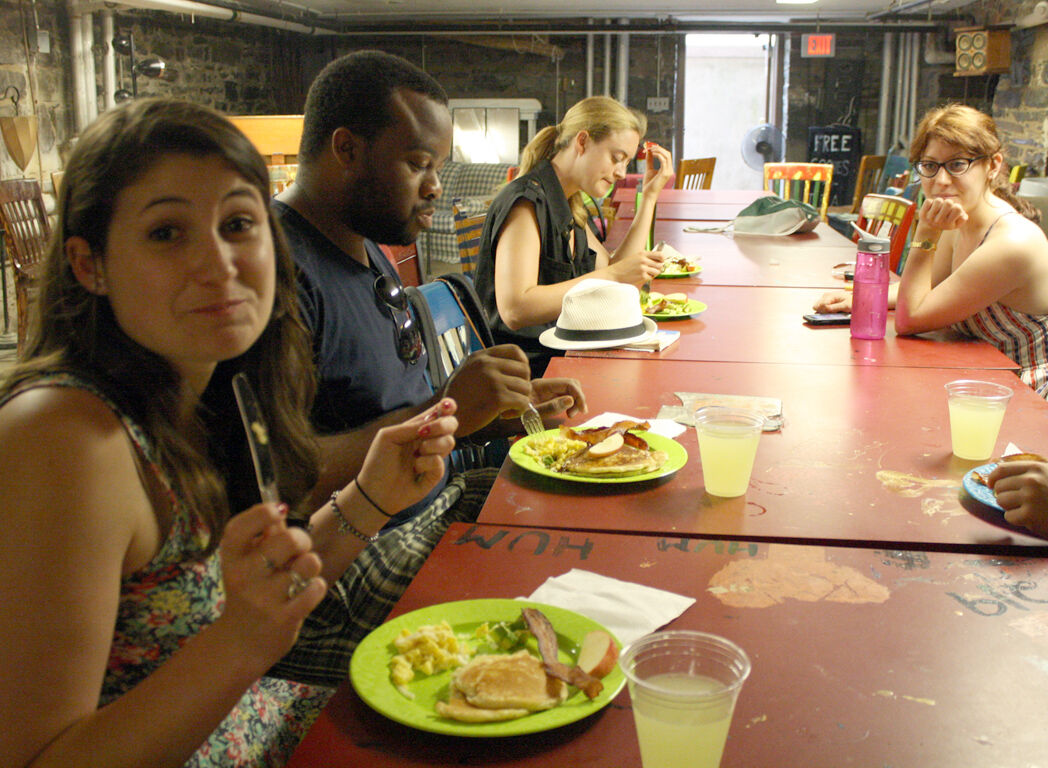
One of the more recent entries is a recording of the 2019 Summer Theater’s performance of Topdog/Underdog, which will feature the cast returning for a live chat. Another, the aptly titled “Behind the Scenes,” shows generations of the show behind the curtain.
“Keeping the Flame – The Story of a Logo,” is a brief yet humorous piece of HMT history about how student and future PST founder Jon Lorrain’s iconic, hand-drawn flame icon would change over time (albeit unintentionally). Before it could ever stand tall, the image was printed upside down in its 1966 playbill debut, still enduring but, little by little, slanting more to the right.
Then, for an Intime production of Twelfth Night — the same show being performed at the anniversary weekend by current Théâtre Intime undergraduates — the fire went from curved to falling down completely, with its then-sideways orientation leading many to assume that the symbol was, and perhaps had always been, a hyphen.
“Everybody who went through Intime thought they knew what the Intime logo was, and of course, it’s different for everybody. They just don’t know it,” Peterson said, noting that he is curious what the response from attendees will be when faced with the amusing reality.
Although it will not yet be released by the anniversary weekend, Peterson said that another film, “The Hamilton Murray 100,” will correlate with one hundred “notable practitioners in the creative or performing arts who have all gone through that little building,” he explained, acknowledging that while there are talents far in excess of that number, “If you start naming them, it’s quite breathtaking.”
“[There are] the obvious ones like Jimmy Stewart and Jose Ferrer, but also John Lithgow,” Peterson said, and like him, many of these figures dipped their toes into both the Triangle Club and Intime. “It just goes on and on.”
PST graduates like Geoff Rich, who co-produced the musical “Avenue Q” as executive director of the New Group Theatre Company, and Princeton High School alumna Bebe Neuwirth, who starred in the stage revivals of “Sweet Charity” (1986) and “Chicago” (1996), have gone on to win Tony awards.
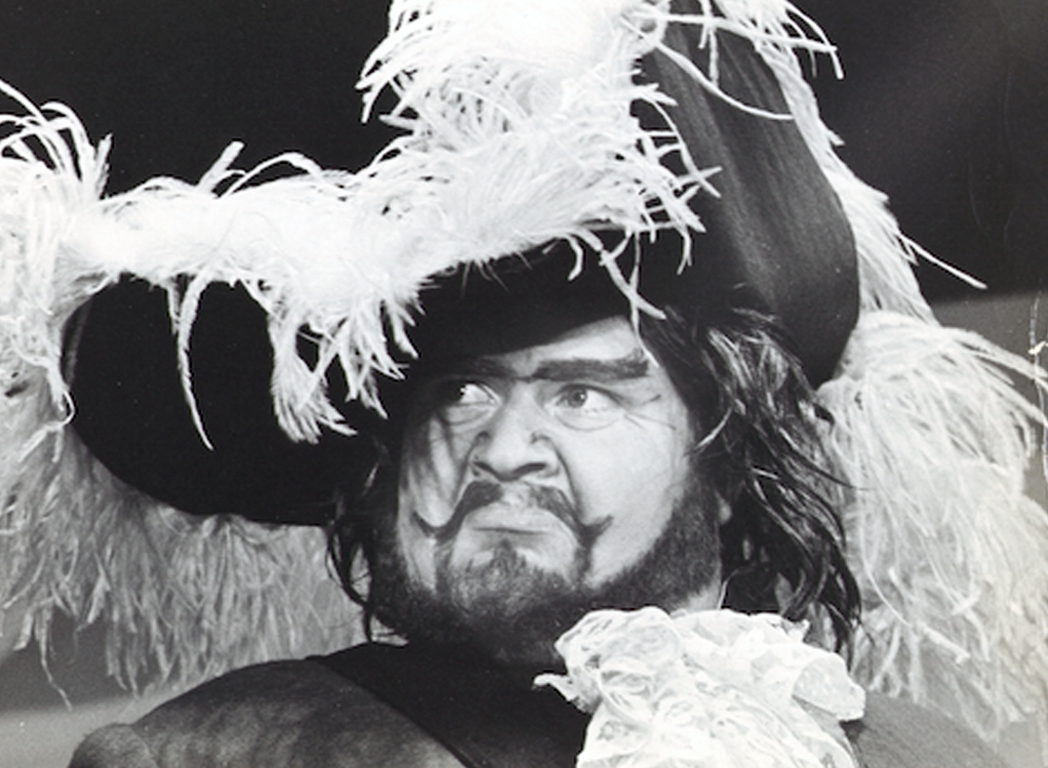
As a tribute to alums who have passed on, there will also be an “In Memoriam” screening of a short film in honor of figures like Lorrain and William Bill Hootkins — an actor of screen, stage and space with credits spanning Star Wars to Raiders of the Lost Ark.
Théâtre Intime’s 2022-23 season presents showings of “Twelfth Night” on Friday at 8 p.m., then Saturday and Sunday at 2 p.m., for free with admission.
This romantic comedy is directed by Solomon Bergquist in presentation with the Princeton Shakespeare Company, promising “love triangles, cross-dressing and plenty of mistaken identities,” according to their website, that will resume from Nov. 11 through 13. For more information and ticket prices separate from HMT100, visit theatreintime.org.
Friday night’s welcome, convocation and conversation in Alexander Hall’s Richardson Auditorium begins at 8 p.m. with a speech from HM100 celebration chair Lorraine Goodman, Class of 1983.
While at Princeton, Goodman starred in productions of “Brussels” and “Dead Giveaway,” then returned to her native New York City to become a Broadway stage actress. For two decades, she took on roles covering for Audra McDonald in “Master Class” and as Grizabella in “Cats: The Musical,” then shifted to work in the nonprofit sector.
Goodman, who is now the director of advancement for Big Brothers Big Sisters of Mercer County, was previously profiled by the Echo’s sister paper, U.S. 1 Newspaper, for her crossword contributions to the book “New Jersey Fan Club: Artists and Writers Celebrate the Garden State” in June.
She acknowledged in a joint interview with Peterson that HM100 is more than a reunion; it is a step towards what lies ahead for the industry.
“As a consequence, the people on our Friday night panel are all really up-and-coming movers and shakers in the big theater world for the theater of tomorrow,” Goodman continued, adding that one of the speakers, American Repertory Theater at Harvard University executive director Kelvin Dinkins, Class of 2009, was the manager of both Intime and PST.
Strides to feature more “diverse voices” in the performing arts sings true to the themes that Goodman wants to address, where “by having a panel that’s about the future of theater, starting off at something that’s about the past of theater, I think that helps find that bridge how to propel theater going forward.”
Saturday’s gala banquet also features keynote speaker Winnie Holzman, Class of 1976, the Emmy-winning alum best known for writing the 2003 Broadway musical “Wicked,” as well as the teenage drama TV series “My So-Called Life” with Claire Danes.
Other events on the schedule include an indoor BBQ reunion dinner and alumni piano bar on Friday, a live concert from jazz pianist Barry Miles on Saturday, and a farewell champagne brunch on Sunday for the weekend’s bittersweet curtain call.
The first of Saturday’s Alumni All-Star’ panels highlights storytellers like “2022 Woman to Watch on Broadway” Marlo Hunter, Class of 1999, and actor-filmmaker Kurt Uy, Class of 2001.
Goodman explained that the second discussion of the day, “How Theater Influenced My (Non-Theater) Career” at 2:30 p.m. in McCosh Hall is about the types of professionals who, despite their love of it, ultimately pursue occupations unrelated to performing.
“It’s not just people interested in having a career in the arts; there are people who are interested in the arts, but know they’re going to do something else,” Goodman said, and because of that, “that’s why we have a Maria Ressa. That’s why we have a Stephen Hellmuth.”
Ressa, now a journalist in the Philippines, is a recipient of the 2021 Nobel Peace Prize and Time’s 2018 Person of the Year, yet as an undergraduate, she was an active member and dedicated playwright at Théâtre Intime; with a similar background, Hellmuth now works as the executive vice president of media operations and technology for the NBA.
“I think that in and of itself is also remarkable, because that’s what makes it different [from] a conservatory program,” Goodman adds, giving her own example as well.
During an Intime production of “Brussels” that she said was “re-conceived” by author and documentarian Douglass Rushkoff, the alum serving as moderator of the “Non-Theater Career” panel, Goodman gained a valuable tool in an unlikely place.
According to Goodman, Rushkoff had assigned songs for everybody to learn in time for callbacks, but when hers was different, she pried about the reasoning. Rushkoff referred to his choice of Jacques Brel’s “Sons Of,” memorably recorded by Judy Collins, as a number that performers are unable to “sing [their] way out of,” meaning they must instead focus on the emotional acting of it — in this case, anger.
After Goodman got the part, Rushkoff tried to invoke those volatile emotions in Goodman by encouraging her to “throw books across the room” in rehearsals, an unconventional but helpful tactic to have her channel the feeling behind the lyrics.
“He brought out something in me that I had never experienced as an actress before, or gone to as an actress before,” Goodman said, adding that later, “in my professional career, I played Grizabella [from ‘Cats’]. If you walk out of that show, and you’ve seen somebody sing ‘Memory,’ and you haven’t felt something as an audience member? You haven’t gotten the price of your admission.”
“That’s where I learned how to access that — not in acting class, in that Bill Charrier room,” she explained, noting it was actually the longtime chair himself who spearheaded her further involvement with the Friends of Intime after she joined years ago.
Goodman briefly handled communications for the group until tending to volunteer work in Manhattan, yet when she moved back to Princeton, Charrier asked if she would be interested in leading a potential project coordinating an anniversary weekend for alumni.
She adds that the only model the group had to refer to was musical-comedy theater troupe the Princeton Triangle Club, which, “for many years, had a structured board” while the Friends of Intime adhered to more of a “loose” system where “people came and went.”
Since she started preparations in 2018, Goodman has assembled a supportive team from the Friends of Intime, its undergraduate leadership board, and PST’s board of trustees. Even when the pandemic postponed their original 2020 date, when given the green light this March, it happened to be perfect timing for the centennial of the Hamilton Murray Theater.
The commemoration is an unprecedented one not only because of the sheer magnitude of the event, but the contributions and participants from across the graduation classes.
Goodman thanked some of the following HMT100 committee members for their hard work: Norman Leung, referred to as the “BBQ Czar,” New York’s Prospect Theater’s Cara Reichel, alumni panel manager; Mac Sykes, who created a new plaque; Dan Candeto, HM100 website designer; and Former Intime/PST general manager Wesley Cornwell, who she called a “dynamo” throughout the planning process; Marni Morse; Alisa Matlovskly; Jena Joyce; John Coventry; as well as those “at Princeton’s Office of the Dean of Student Affairs, and especially Pat Rounds, who is the Arts Program Coordinator there,” she added.
Peterson noted that such a grand level of response has stayed true for the archives as well, with their efforts effectively tracking down “thousands” of alumni; what resulted is the beginnings of a historical database documenting, for what Peterson believes is the first time ever, an extensive who’s-who of this Princeton performing arts community.
The group is looking to improve in areas that are still lacking information, as they are working to obtain copies or records of every playbill, Peterson said. When pieced together in its entirety, there is a plan “to create a comprehensive archival website where people can make contributions of data over the years to come.”
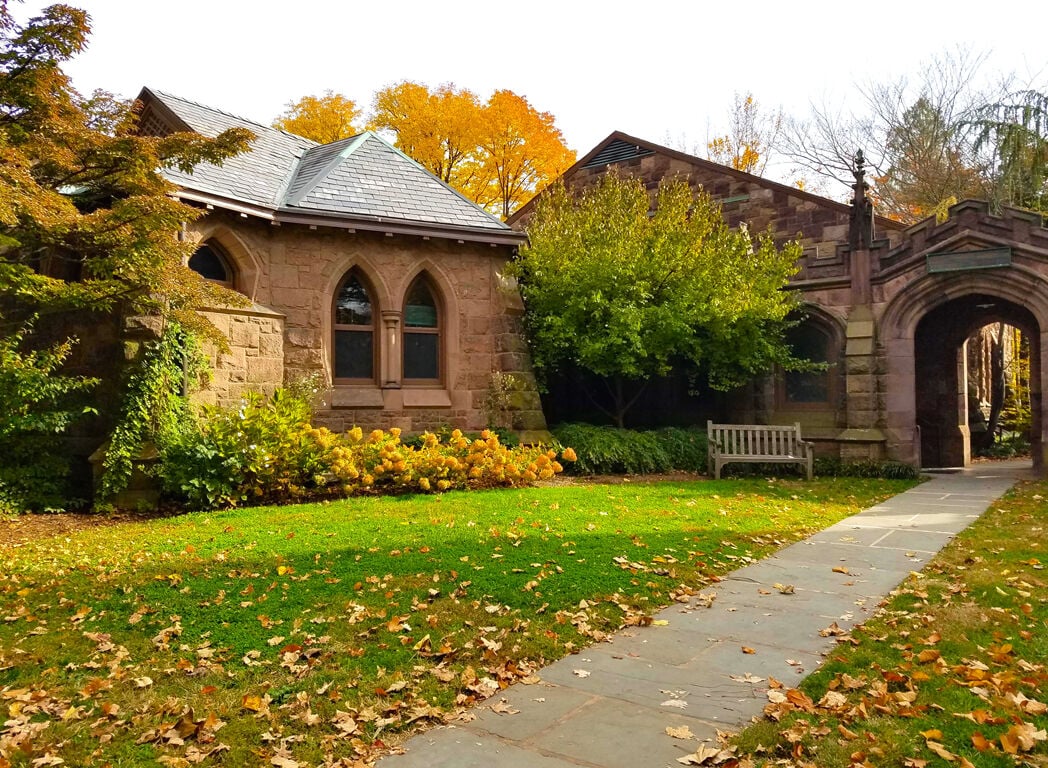
According to Peterson, the HMT was constructed back in 1879 and named in honor of Princeton graduate Hamilton Murray who, along with his sister, was lost at sea when French ship the SS Ville du Havre crashed into another vessel.
Originally designed as a chapel after Murray left the university $20,000 in his will, the theater lobby now includes a brass plaque displaying the latitude and longitude of the incident that caused an estimated 200 deaths.
The hall was used by the Christian group known as the Philadelphian Society, or the Philadelphians, but took on a new purpose when a “very fledgling theater group,” the Théâtre Intime, grew fond of the similarly cozy, minimalistic building.
One petition later, and the 1921-22 theater scene transformed from understudy to star. No longer did the Intime’s founding members — who had used a combination of a blanket and string to imitate a stage curtain in their 1920 “parody of Nijinsky and the Ballet Russe,” according to the Théâtre’s website — have to perform from their dorm room to live out their greatest ambitions.
The space became a second home for them, and countless others, to take on opportunities that combined the arts with the administrative. In 2000, the Friends of Théâtre Intime were able to successfully renovate HMT and finally address damage the structure had sustained in a 1933 fire.
“It was never under the protection of the university. They certainly helped because they gave you a building, but they weren’t running it in any way. It was completely on its own, and that was really the remarkable aspect of that experience,” Peterson explained.
Everything from directing to the concession stand was fair play for the students, but stepping into these roles in an independent, camaraderie-filled environment helped train the repertory group regardless of if they were on stage or off.
“There’s no question but that Hamilton Murray Theater, that building, is the most important building in my life,” said Peterson, who grew up in Chicago before enrolling at the university.
His connection to the HMT has changed from performer, to partner, and ultimately, its preservationist — while that often entails him chronicling the history of others, he forged his own family legacy of memories within those same walls.
Peterson met his wife of over 50 years, playwright and actress Deborah Savadge, during his first Intime play, “Les Romanesques,” or “The Romancers,” by French dramatist Edmond Rostand. The piece is more commonly known as the basis for the off-Broadway show “The Fantasticks,” with a 42-year, international record for being the longest-running musical.
When the couple crossed paths, Princeton University had yet to become coeducational, but Peterson said that Théâtre Intime included women “almost from its very first year.” He founded PST a year before his 1969 graduation, but by then, Peterson’s perspectives had evolved to shape his future professional career.
“The Summer Theater in Princeton, which was a real business activity…that was quite a learning experience, and I’m not in any way the only one for whom that is true. There are a lot of Summer Theater people in particular who will tell you that it was an important moment in their careers,” Peterson continued, with many of them set to return this upcoming weekend.
Peterson relocated to New York City with Savadge, where they still reside upstate in a shared studio space. He went from local to lauded when, after eight years working as a ticket clerk, he became the managing director of the Metropolitan Opera Guild in 1978.
At the time, Peterson clarified in a follow-up email, the organization “was one of the dozen largest (by budget) performing arts nonprofits in the U.S.,” and he oversaw it until his retirement in 1984 to become the president of a production company in the same state.
By 2004, Peterson’s son, Jed, was the general manager of the Princeton Summer Theater 36 years after it was founded by his father. Geoff even returned to play a small part, calling it “a real treat to watch [Jed’s] work” in the place they had both led.
Peterson produced about a dozen years of video and DVD work for the Princeton Triangle Club, where he remains an emeritus trustee, but has also written musicals in the past. He said that his wife is the main author of the two; during the pandemic, Savadge wrote an 8-minute short film, “Wedding March,” produced by Peterson and directed by fellow Princeton graduate Nadia Talel, that “aired on the PBS NY Channel 13 ‘Reel 13’ program.”
In consideration of the larger impact, Goodman explained that before the Lewis Center for the Arts opened with programs for theater and other creative disciplines, Princeton’s performing arts were not as publicly appreciated in comparison to schools like Harvard or Yale.
But since the Lewis Center was established, she contends that the area has been moving towards “a new era in the performing arts” where the benefits of an education in theater — no matter if students wish to be future executives or executants — are being acknowledged.
“[Empathy] stems from when you sit, and you write a character that isn’t you. When you play a character that isn’t you, you learn to step into somebody else’s shoes,” she explained. “Performing arts, and arts in general, foster creativity; it fosters entrepreneurship, it fosters invention, and I think Princeton has finally recognized that.”
“I think the world needs to recognize that — certainly, Americans need to recognize that more palpably. But that’s what Théâtre Intime does and has been doing for the last 100 years and will continue to do,” Goodman said.
The seating might be sparse, but the atmosphere at the Hamilton Murray Theater embraces the nostalgia of seeing familiar faces with just as much comfort as it opens the door for new stories and a triple-threat of anniversary observances.
For more information on the anniversary celebrations, see the HMT100 website at www.hmt100.org.
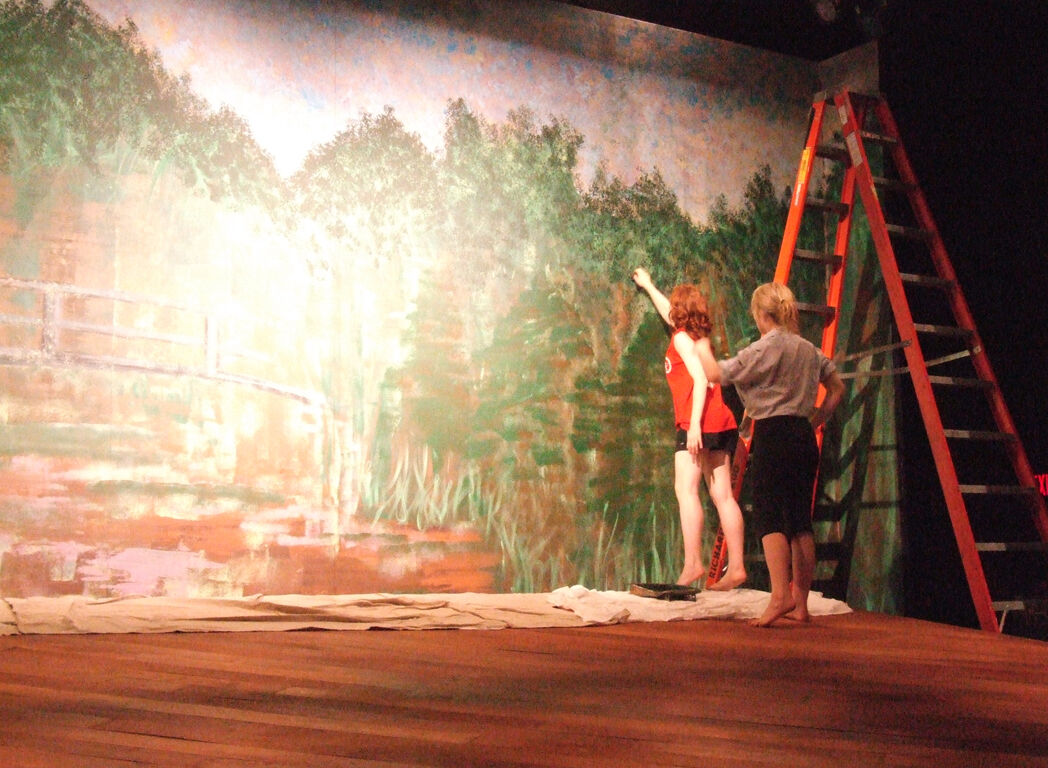
In "Behind the Scenes," a short subject at the Hamilton Murray Theater Centennial Film Festival, artistic director and scenic artist Heather May '10 works on a backdrop in the summer of 2008.,
Actor William "Bill" Hootkins '70 as he appeared in the 1968 Intime production of Moliere's 'The Misanthrope.',

The first Intime logo was a flame, but over time, that shape would change, then later return to its origins.,

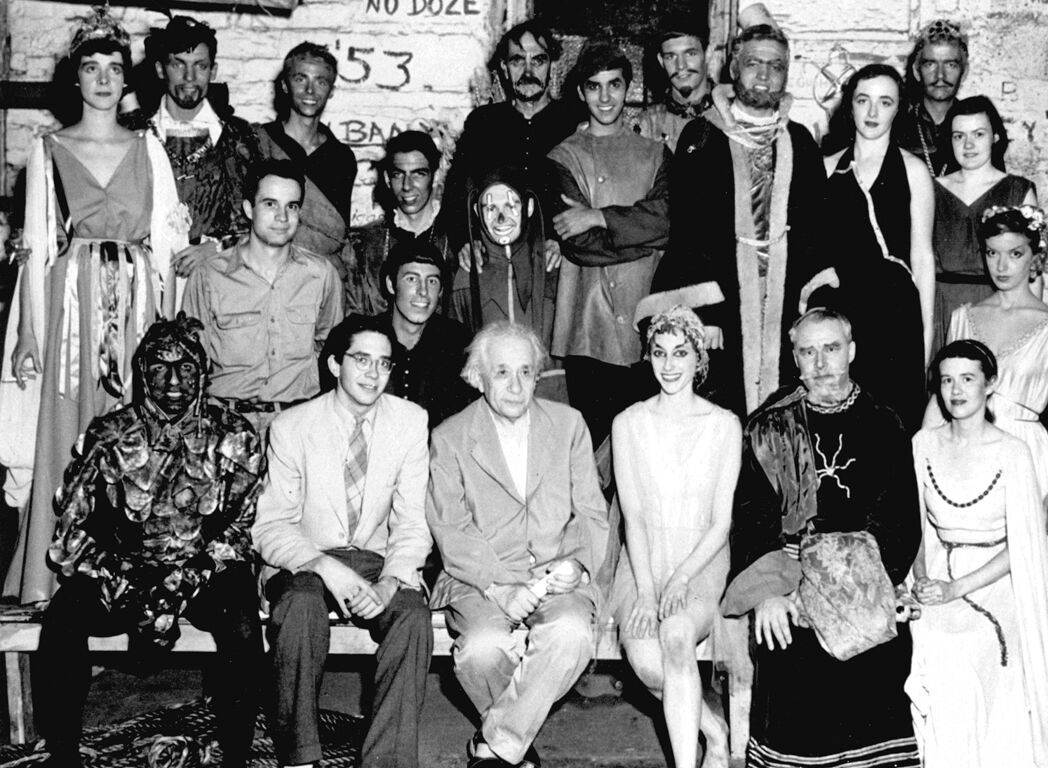
Two-time Academy Award winner James Stewart (right), on the Murray stage in 'Nerissa' in April, 1932.,