January has few holidays after the new year, but a lighthearted observance that makes the weight of a dark winter better is the month’s national recognition of hot tea.
Stay snug with a satisfying cup of your own, or, for an experience combining the leisurely with the educational, put that kettle back on—the wisdom of these tea shops is steeped in years of creativity and care.
Holsome Teas and Herbs
The rows of colorful Chinese tea bins lining the walls at Princeton’s Holsome Teas and Herbs shine like hidden gems in this “hole-in-the-wall” establishment, each resembling vibrant jewels with their own origins, flavors and brewing customs.
Holsome, which takes its name from the word “wholesome” minus two letters, is in the rear of the building at 27 Witherspoon Street, reachable either through the brick back alley and egress or by walking straight through the storefront of Junbi, the bubble tea shop that Holsome’s owner, former chemist Paul Shu, rents the space to.
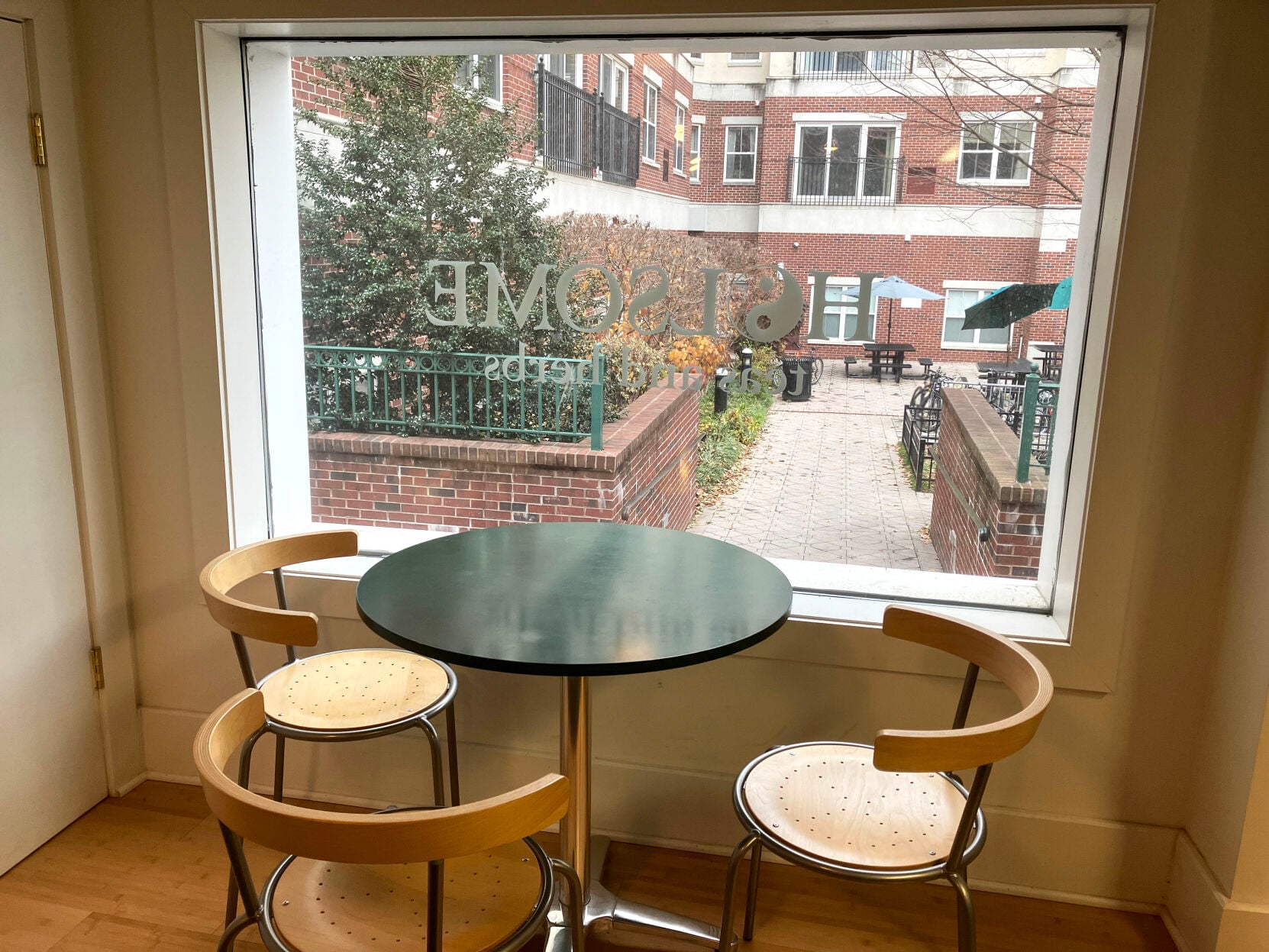
According to Shu, the longtime spot described on its website as “Princeton’s best kept secret” was the first tea store in the downtown Princeton area, opening in 1996 at 20 Nassau Street prior to moving to its permanent home on Witherspoon. The welcoming white interior, accentuated by an emerald seating area of modest tables and a prime outside view, is a window into the scientist’s second dream.
Holsome has successfully tested Shu’s hypothesis, carrying a combination of three aspects—high-quality teas from around the world, Chinese herbal medicine, and nutritional supplements and vitamins—over 26 years of business, long before you could buy bubble tea on every block.
Shu’s teas, whether traditional or flavored, come from a variety of countries, including China, Taiwan, Japan, Sri Lanka and India.
“A tea shop like this can do well because our tea’s so different, it’s really so different. You will come to a tea shop to buy tea; you can actually see it, smell it, and taste it,” Shu said. “But if you go online, that quality and service are not there.”
Shu also mentioned that relying solely on descriptions for reference raises the risk of “disappointment,” a scenario easily avoided by providing a physical, pleasant environment for perusing and purchasing tea.
Holsome is open Monday through Saturday from 1 to 5 p.m. Shu’s wife used to help, but he has since encouraged her to do all the paperwork and bookkeeping from home while he oversees the storefront.
Shu is an impressive one-man show, balancing phone calls, brewing tea, and measuring out the leaves waiting to be weighed, which can be purchased for the minimal weight of a quarter pound.
Born in China, Shu moved to Taiwan when he was about 6 years old. In 1965, he came to study in the United States, obtaining a master’s degree in chemistry from the University of Notre Dame and his Ph.D. in the same subject from the University of Michigan.
After graduating, Shu completed his postdoc at the Johns Hopkins University in Baltimore, then started as a research scientist with 3M, a manufacturing company based in Saint Paul, Minnesota.
ExxonMobil, then known as the Mobil Oil Corporation, used to have a research and development center based in Hopewell Township that offered Shu a position. He arrived in Mercer County in 1981, worked there for 15 years, and registered an estimated 74 patents in his name.
While he trained as a chemist, Shu rarely stuck with a single passion and “always had more than one job at one time,” leading him to found the Whitewaters Swim Team in 1983. During his 40-plus years of involvement, Shu says that the group “became one of the best in New Jersey.” In June of 2022, the American Swimming Coaches Association, or ASCA, named Whitewaters Swimming one of the year’s Top 100 Age Group Teams.
Shu is now the director, but before he stepped back to focus full-time on Holsome about three years ago, Whitewaters had “the longest history of one coach and the same head coach” in the area.
When Mobil exited the area in 1995, Shu accepted what he described as a “package deal” for early retirement from Mobil, which left him wondering about what to do next in his career.
Thinking about his family background, Shu knew that both of his paternal and maternal grandparents were “very knowledgeable in traditional Chinese medicine,” even applying what they knew to serve as healers in their hometown communities.
Those who practiced Chinese medicine back then, Shu said, were not often “formally trained in college or university,” learning instead through “self-study.” But, “more importantly, because Chinese medicine is very closely linked to our philosophy, our Chinese philosophy tends to be [that] we are more into nature; it’s not artificial, so whatever goes harmoniously with nature, that’s the way they approach.”
“Prevention is the ultimate goal in Chinese medicine, therefore, a good doctor never needs to treat sickness,” he added of the viewpoint.
Shu observed how a greater number of people in America were taking an interest in this practice so “deeply ingrained” in his culture. The supplement industry was also booming, with health stores in malls like GNC making vitamins more accessible to the general public.
Around the same time, Shu had recently discovered his affinity for tea while revisiting Taiwan, returning to America with some that he eagerly shared with friends. Back in the late ’90s, he said that because America was such a “fast-moving” country, people tended to gravitate towards soda or coffee, consuming the latter in instant form rather than taking the time to properly prepare their morning java.
Shu envisioned a company that would be informed by both his principles and professional experiences in chemistry. Such expertise, he added, allowed him to “pick up new information”—such as how to run a business without official training—quicker.
“Science is based on all the information you collect and organize; you find a rule, law, or rationale, and then it becomes [a] theory,” he said. “Everything is in nature. It’s already there, and we just don’t know enough. We gradually learn more and more about it, but people think we’re discovering it. You didn’t discover it; it was already there. You bumped into it.”
Because of Shu’s capacity for analysis, he emphasized the importance of remembering how “nature came first. Science is after that. Only [when] we know enough of nature, we develop a science, and then use the science to understand more [about] nature.”
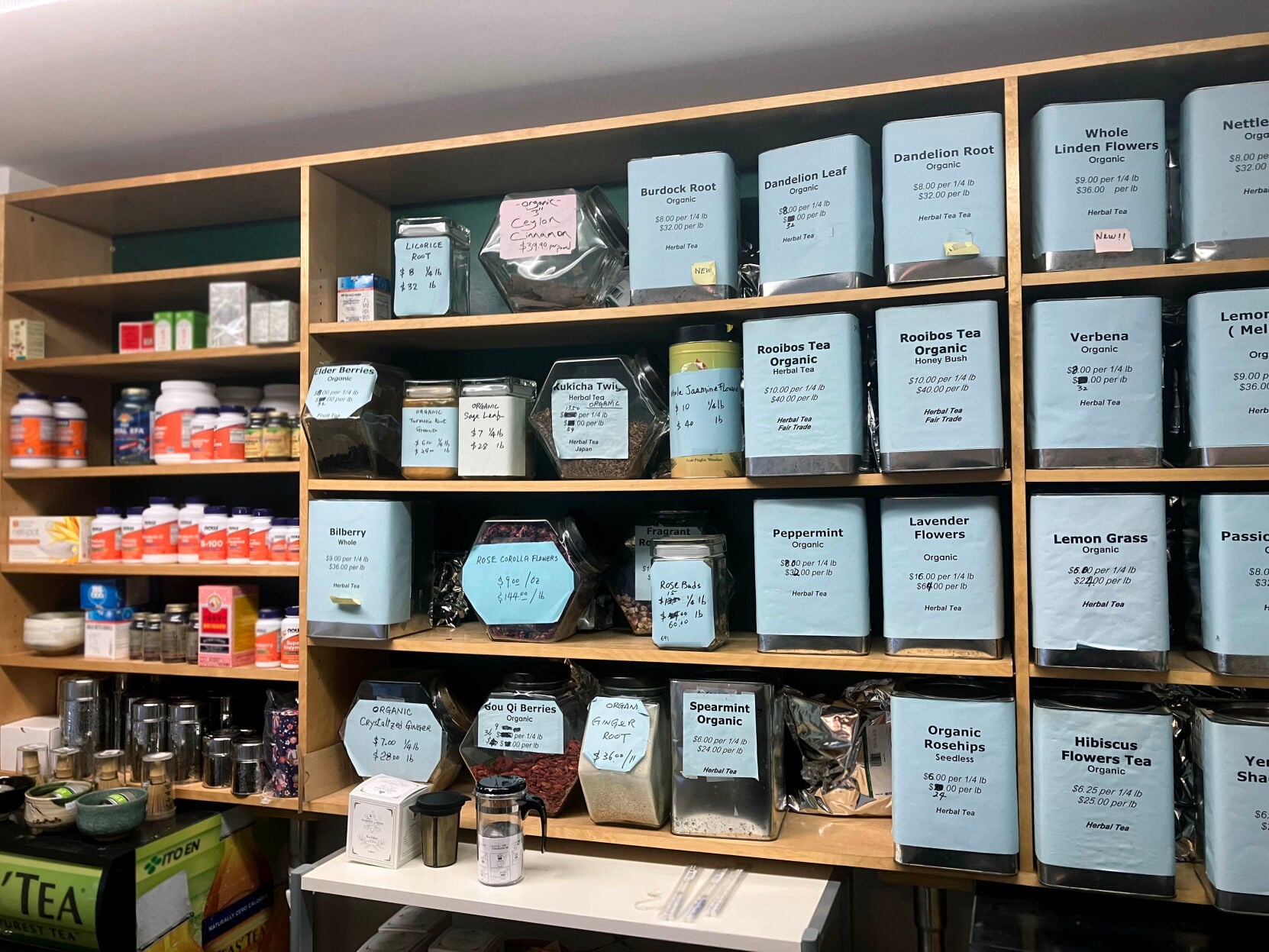
Shu wanted to improve his clients’ quality of life and health under the belief that he could “fundamentally help people’s overall wellbeing” in an informed, practical manner. Now, he sells organic ingredients such as burdock root, goji berries, rosehips, lavender flowers and peppermint.
By bringing products and tea to an American audience not nearly as familiar with such a market back at the beginning of the 21st century, Shu capitalized on a niche that has since been embraced in the public sphere.
This change can be visibly seen just in Princeton alone, which is now bustling with various shops to buy, try and enjoy tea. Many of these places also sell bubble tea, a sweet, Taiwanese tea-based drink that typically features boba—chewy balls of tapioca “pearls” with a divisive texture—as well as milk, sweetened red bean, coconut-based flavored jellies, and other additions.
“When I first moved to Princeton, Princeton was a sleepy small town, essentially,” Shu said, remembering a time when the shops were scattered solely from Nassau through Witherspoon, as well as in Palmer Square. One of the only businesses still operating, he added, is Small World Coffee, which he believes was the first coffee spot when it opened three years before Holsome in December 1993.
“I’ve seen so many businesses come and go,” Shu said. “Fortunately, I’m still here,” with the owner attributing that to the fact that his “original formula seems to be working.”
Back then, there were numerous banks and a few restaurants in Princeton, but only one chain: a single Burger King. Similar fare was seen as unbefitting of the town’s atmosphere, so when industry giants like Starbucks came along, “that was a shock at the time,” Shu said.
This attitude of wanting the town to “have its own distinct status and reputation,” Shu continued, has now fallen by the wayside in favor of more chain stores.
Shu was pleased that Holsome had been successful “from day one,” and when Urken Supply Co., a family-owned hardware store on Witherspoon, closed, Shu’s enterprise expanded into its larger location around 2001. Once he acquired the building, Shu ran his tea shop in the front, while a multipurpose space in the back served as an art gallery where, “every two months,” a new, local creative would showcase an exhibit of their works.
A Spring Street yoga studio had shut its doors as well, and Shu received equipment from them and then gave the instructors, who were eager to continue teaching, a space for doing so at Holsome Teas and Herbs. The “Holsome Yoga” program ran for years until Gemma Farrell took over, relocating as “Gratitude Yoga” to the second floor of 86 Nassau Street in 2021.
Shu acknowledged that although Holsome was able to incorporate more of a holistic flair, the 2008 financial crisis had a significant impact on the company. Substantially larger entities were also beginning to stock similar vitamins of lower quality but greater availability.
Eventually, Shu made the decision to begin renting out the front of the building, which turned out to be a “very valuable” source of income, as Holsome carried on in the rear. To do so, he redid most of the interior, carving out a corridor and a second egress for additional room.
Shu said that Junbi, which means “preparation” in Japanese, opened in March 2021 with a lineup of matcha-forward drinks, bubble teas, coffees and more. Junbi is “very popular for young people,” he added, with bubble tea frequently serving as “the first step” toward regular tea consumption for these generations. Holsome even sold healthier, “unconventional” bubble tea back when they were in the front area, yet now that Shu is without a kitchen of his own, his recommendation is to take full advantage of Junbi’s menu.
Now, the owner is considering converting the old gallery into a place where people can come to sit, study, and learn while drinking tea. Shu noted that he is more than “happy here” at Holsome’s spot, gesturing to the wide window, a personal request of his, which fills the room with light as it looks out onto the courtyard area.
“This is almost like my own backyard. When you sit here, it’s almost like they let me share their garden,” Shu said with a sincere smile.
Throughout times of uncertainty, Holsome Teas and Herbs has remained true to its roots—and name—by inviting customers to pause and savor the simple things in life.
“People just come to talk to me for any health advice. If I know, I’m more than happy to provide it,” Shu explained. “My philosophy here is, I like to provide knowledge.”
Shu insisted that he is not interested in any products with unproven abilities or hypes, and everything he does retail has been vetted in terms of efficacy and safety.
Shu has built trust in his relationship with customers over the years, meaning that if someone asks about a particular problem or product, he will be “very honest” in letting them know the truth, even going so far as to refuse to sell it to them.
Shu said people he has known for years regularly call him for questions and conversations, becoming like his old friends. Many of them have since moved away, but despite the distance, he arranges for products to be delivered to them wherever they are now.
The owner maintained that because such a feature had always been an integral part of Holsome’s business model from the start, he did not notice a dramatic increase in the sale of “natural alternatives” during the pandemic. The modest storefront, which only accepts in-person or phone orders, does not have an online store.
Just as simply, with green tea being the least oxidized and black tea being the most oxidized, Shu’s favorite tea, oolong, is semi-oxidized and falls somewhere in the middle. Shu said that depending on how much air the leaves are exposed to in production, the color will fluctuate, giving a “different taste and flavor” to the tea.
His recommendations, however, revolve around each person’s individual tea experiences, as a match must “depend on their interest, state, and appreciation level.”
Everyone “has a different value system,” Shu explained, meaning that there are differences between the palates of beginners and those who have dedicated time to honing their taste preferences. He believes that rather than selecting the most expensive tea, an introduction to tea should begin with sampling and exploring flavor profiles through more affordable options.
Shu equated the experience to that of wine, stating that college students are likely to opt for a cheaper option that works for their roommates at the time. But once they develop a discerning palate, those same people might buy “a particular year or variety” at a higher price.
“Tea drinking is very similar to that,” Shu said. With thousands of years of customs and history behind it, the craft has “evolved continuously” throughout time to the point where drinking tea, according to Holsome’s owner, “is almost like an art” in and of itself.
“You can brew a nice cup of tea your way, [with] your knowledge, and then you can appreciate the result,” he said. Shu explained that although manipulating the climate, and temperature can influence the overall flavor of a tea, the maker has a level of control over the final product that far exceeds that of coffee, where the definitions of a dark or medium roast differ from shop to shop.
“If you understand the tea brewing process,” he said, “a good cup of tea is very easy.”
While he referred to tea as “more subtle,” Shu also drinks coffee, brewing it with the same care as his tea. Customers who enter Holsome with a cup of java in hand, though, always seem to apologize to the owner as if he would look down on them for their choice; when this happens, he reassures them that there is no need to worry over such a trivial detail.
“Coffee and tea—they all can improve our lives, so what’s the big deal?” Shu said.
Since tea is a natural product, Shu acknowledged that there is no surefire way to ensure the exact consistency of each tea from batch to batch, but he has long established a rapport with producers that allows him to get as close to the same result as possible every time.
Despite coming from “the same tea garden, the same facility, the same tea-making master, every year’s different,” he explained, comparing those variations to the harvest from a vegetable garden.
As shops across Princeton may go about tea in a “different style,” Shu shared, he is glad to see the shift in attitudes about what can be savored as a beautifully understated selection, one that is less ubiquitous in America.
Back when Teavana was in business—the now-defunct tea store and mall staple that was bought out, then dissolved by the Starbucks brand—Shu was still pleased, noting that they provided more ways “to introduce average people to tea drinking” on a larger scale.
“We’re all promoting tea drinking,” Shu said in earnest, adding that to create an art and culture of tea here, others must aid the general mission to “broadcast” the practice. Coffee might have reigned supreme at the beginning of Holsome’s journey, but now that people have a better understanding of tea or are eager to learn, the clientele’s choices have changed accordingly.
“I can see many of our customers are coming with good knowledge and taste in tea, and that’s very encouraging. My original idea is working, but it takes some time,” Shu explained.
He has no interest in moving on or elsewhere, keeping busy with over two decades’ worth of dedication and regulars. If he ever does find a successor, Shu said he would need to ensure that their interest in tea is just as strong as his—someone who can apply his scientific precision, as well as Shu’s peaceful understanding and enduring philosophy, to the business.
Tea-For-All
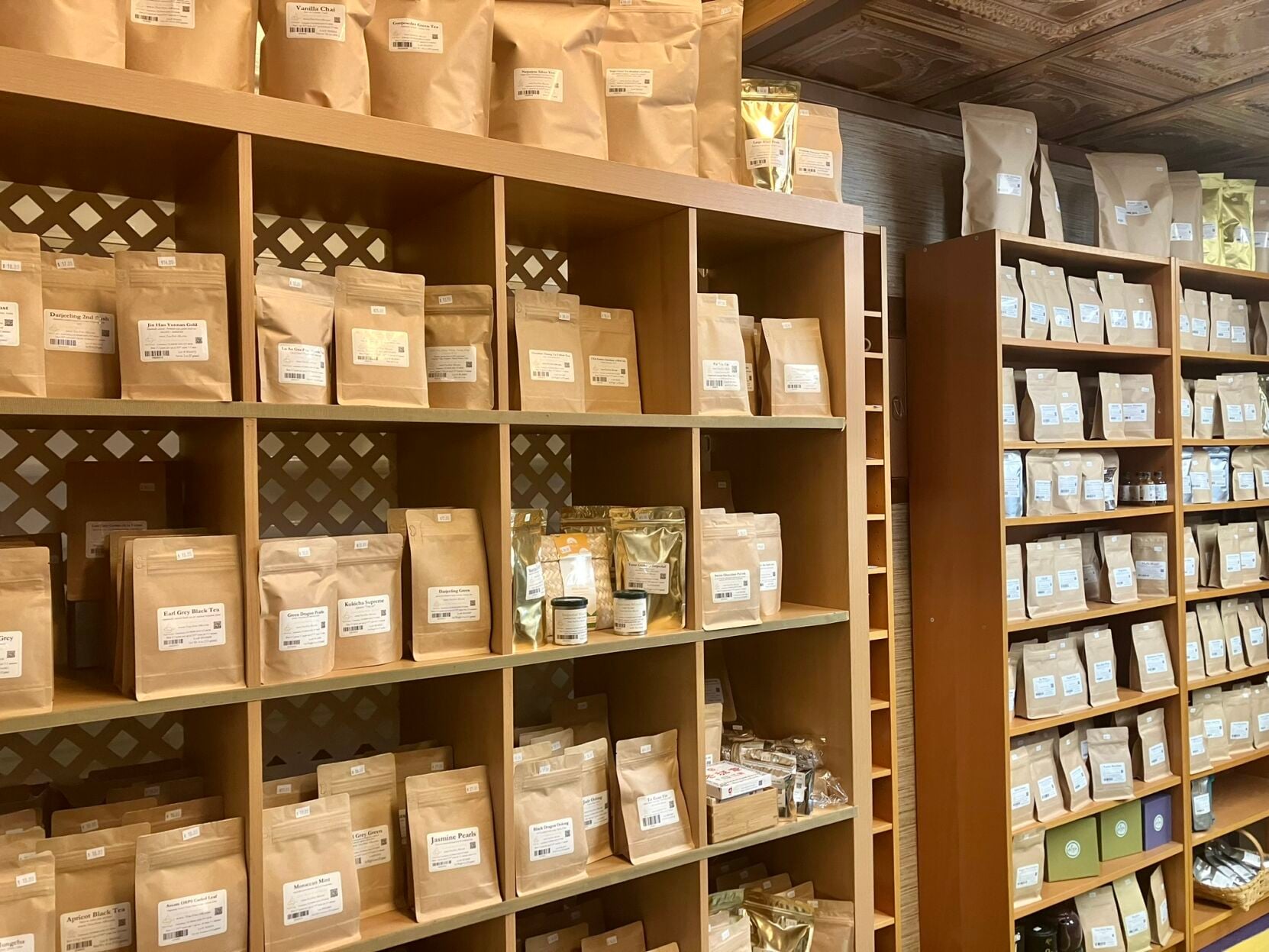
Tea-For-All is located in the north end of the Trenton Farmers Market at 960 Spruce Street in Lawrence, down the main corridor of permanent and rotating vendors, right by the vegan eatery Savory Leaf Cafe and Out Of Step: Offbeat Boutique & General Store.
Ran by couple Deborah “Debbie” and Michael “Mike” Raab, Tea-For-All has been in business since 2011, opening in the Trenton Farmers Market eight years later in a spot that comes complete with a tea bar and retail space.
Just four months into this long-awaited storefront, though, the COVID-19 pandemic temporarily closed their physical location, so the Raabs, like true tea entrepreneurs, pivoted to take away teas, porch deliveries and off-hour curbside pickups.
Debbie was used to reinventing her approach as the owner and principal; after retiring from a career in corrections in 2009, she honed her business skills through pop-up markets and partnerships. First, she graduated from Trenton State College, now known as The College of New Jersey, with a bachelor’s in sociology and a minor in psychology, then worked in the field for over 30 years, starting as a state social worker before becoming a program director.
Mike joked that Debbie “was terrible at retirement,” because rather than enjoy her free time, she began studying her second interest in tea whenever and wherever she could, with the thought of starting her own, all-encompassing business.
Instead of just focusing on tea and its corresponding products, Tea-For-All centers on education by coordinating a monthly tea club membership program as well as “about 20 or 30 different lectures” that, for a fee, touch on topics from history to wellness. Tea-For-All is also a regular at places like the West Windsor Community Farmers’ Market, where the company can interact with a broader audience.
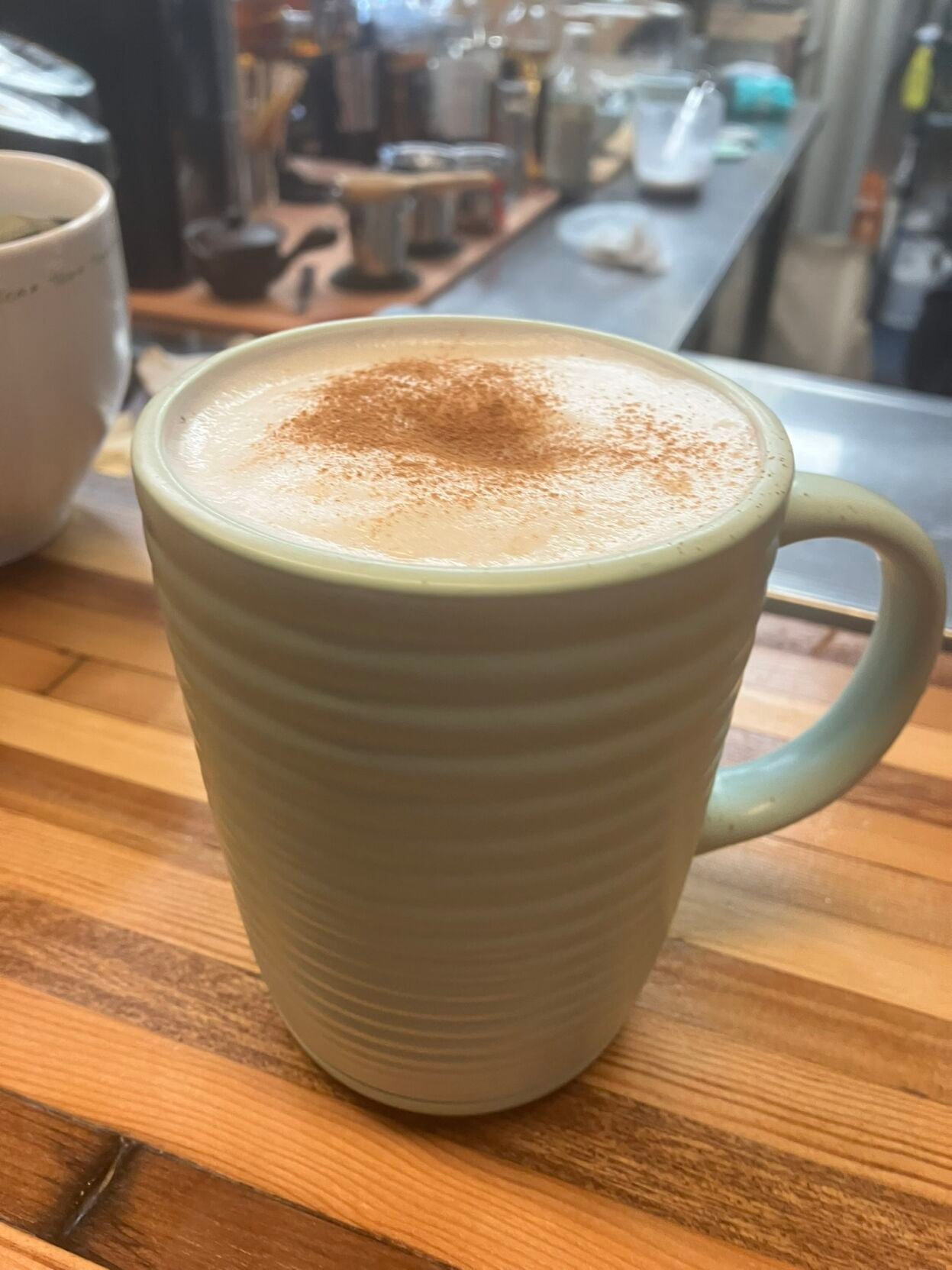
For January, Tea-For-All is expecting to host more of these educational classes and private tastings “two or three times a week,” while due to the onset of the cold weather, they have been selling more warm beverages such as tea lattes, hot chocolates and apple ciders.
Tea-For-All is currently open from Wednesdays through Saturdays from 9 a.m. to 6 p.m., as well as on Sundays from 9 a.m. to 3 p.m. While the Trenton Farmers Market is closed on Wednesdays, several shops, including Tea-For-All, Out of Step, Savory Leaf, and the Lady and the Shallot, remain open to the public and can be entered through their respective entrances.
Mike, whose background is similar to Shu’s in their shared love of science, spent 25 years in sales, complemented by his experiences in engineering and marketing. He received his bachelor’s degree in applied mathematics with a minor in engineering from Northrop Institute of Technology, followed by his MBA from the same institution, which closed as Northrop University in 1990.
Growing up with a dad in the Navy, Mike spent his childhood in “every place that God put water” before living in California for roughly 30 years. Once in the chemical industry, he held a number of managerial, liaison, and leadership positions. Mike’s company, the Chemtura Corporation, wanted to move him to the marketing department on the east coast, so he made arrangements for his teenage son, Andrew, to come along with him.
Once in New Jersey, the plans to bring Andrew fell apart, so Mike let off steam by walking the three miles from Lawrence Square Village to the Quaker Bridge Mall. As he passed by the now-closed store called This End Up Furniture Co., Mike decided to look for a desk for Andrew in the hopes that he could still come in the future.
There, he met Debbie, who was working there as a second job. The two chatted for a long time, and Mike promised to come back once given the official go-ahead. When Mike returned a few weeks later, Debbie was not on shift, so Mike—always a salesman at heart—told her coworker that he wanted to ensure she received credit for the purchase, then passed on a note with his contact information.
The two soon became a couple, bonding over their mutual love for outdoor activities such as hiking and camping, even training all summer for the MS 150 Bike Tour in Woodstock, a cycling fundraiser for the National Multiple Sclerosis Society. But the week before the event, Mike got sick with the flu, while the facility Debbie worked at had just closed.
Both upset and physically weakened on Mike’s end, they canceled. After he recovered, Mike went out looking for condos with Debbie, having just sold his place in California. When the curious realtor asked about their relationship, Mike confessed to him that he was going to propose to Debbie at Woodstock, which unfortunately was not to be.
At dinner that night, Debbie asked him what he had said to the agent, so as frankly as possible, Mike’s magic words, devolved from a once-grand plan that was never fully realized, still makes the two of them laugh: “Are you gonna marry me or what?”
This December marked 30 years of marriage for the Raabs, with Debbie explaining that their union “was like the Brady Bunch” due to their combination of children from previous relationships: Andrew; Mike’s younger son, Chris; and Debbie’s son, John Major III.
Mike retired “just a few days short of 62” in 2013, a decision that meant he was unable to collect social security, and then consulted for another five years or so. He followed in his wife’s footsteps in learning about tea, and once he completed his own certifications, Mike went from a founding partner to co-owner at Tea-For-All.
“My sales experience was always face to face, and it absolutely informs how I treat people,” he said. “What fascinates me is the chemistry and biology of tea, the science of tea.”
Debbie and Mike are certified by the Specialty Tea Institute (STI), a nonprofit organization under the national Tea Association of the USA with an educational focus. Those who become qualified to teach, such as the Raabs—who are also “the first male and female couple in the U.S. to be certified,” according to Mike—can lead prerequisite courses on the “Foundations of Tea” at two levels.
STI’s network of professionals also “keep their thumb on” issues of legislation and regulations, Debbie explained, as well as emerging issues in the industry like climate change.
“It connects you with a lot of really well-placed people and good resources for, if you don’t know something, you know somebody you can go to,” Mike added, with their resources spanning fellow tea associations in Canada, England, and around the world.
The Raabs attended their first of many World Tea Expos, an annual convention usually held in Las Vegas, about 11 years ago. It was there they met not only representatives from STI but also the Mid Atlantic Tea Business Association, or MATBA, another group that aims “to promote an increased awareness of the many tea-related businesses in our region and to support fellow entrepreneurs rather than focusing on competition,” according to its website.
The couple, who now attend MATBA meetings as members, were also presidents at two separate times; Mike’s four-year term ran from 2014 to 2018, while Debbie took over next and finished midway through 2022.
Back when she was scouting for locations, Debbie spent roughly five years partnering with places like Hopewell’s Le Chardon, a tearoom specializing in afternoon high tea whose name translates to “thistle” in French. When the owners sold the business to another one, Paint the Roses Tea and Café, Debbie maintained this arrangement with them until their closure; this had also been the unfortunate fate of another location, Trenton’s Studio B Bakery & Bistro.
But what finally brought Tea-For-All to the Trenton Farmers Market was when a friend of Debbie’s, DJ and photographer Ms. Sue Ms. Sue, asked Debbie to serve tea during her showcase of work at Artworks Trenton.
Unknown to Debbie, she said, former Trenton Farmers Market manager Chris Cirkus was in attendance and followed up with her to see if she was interested in selling at one of the market’s vendor tables. Debbie initially declined, but after a successful “stealth visit,” she agreed to accept a table “under the condition that” if a permanent spot became available, Tea-For-All would take it.
When she seized that opportunity in 2019, Debbie compared her vision for the tea bar as being “like Cheers for tea,” evocative of the famous sitcom, and becoming a place where customers could socialize with sips of their choosing. Unfortunately, this dream was only realized for a short while before Tea-For-All’s guests were forced to put down their cups and watch the world change from home.
“What the pandemic taught us was a couple of lessons. Number one, adapt. Don’t be rigid in your business approach, because if we had been rigid, we’d be closed today. We had to adapt,” Mike said, choosing to fortify their online presence rather than give up on the company. The other part, which he called “a personal success story,” is the Raabs’ ability to constantly collaborate with and motivate each other as partners in every sense of the word.
When the weather warms up again, Tea-For-All will continue venturing to outdoor farmers markets, as Mike noted they serve “two benefits: one, it’s a revenue generator, and they’re all profitable, but they also are a major part of our promotion and advertising.”
Using what he knows, Mike’s skills can soar in an environment outside of the tea bar. Their new truck with the Tea-For-All name is hard to miss, and Mike is pleased at how the ruby red ride has been able to build brand recognition from just being out on the road.
“One of the, I hope, infectious things is why people do business with us—because I think we treat people the way we want to be treated. We greet everyone that walks in. We don’t overshadow them,” he said, giving patrons the space to move at their own pace while still providing “accurate knowledge” as needed.
In their travels, the Raabs have traveled to regions like China and Taiwan, but also lesser-known areas of the U.S. that produce tea, such as commercial farms in the states of Mississippi—where they picked, plucked and processed black and green tea firsthand—and South Carolina. Mike added that Tea-For-All is “probably one of the only continental US companies that have Hawaiian tea for sale,” with two visits under their belt and another planned in March.
As a “guiding principle,” Mike and Debbie also want to positively impact younger generations by providing them with opportunities for employment and customer interaction.
“We take them on as our own sons and daughters,” he said. This staff includes another family member interested in tea, the couple’s grandson, John Major IV, or “J.”
Another addition to the team is the talent of Kathleen Hippeli, the former owner of One Steep at a Thyme, a Jamesburg tearoom that closed during the pandemic. On Saturdays, Hippeli steps in to help, bringing her expertise and freshly baked goods.
This welcoming atmosphere is perfect for customers who want to expand their tea horizons from the familiar to the esoteric.
“Many people just grew up with a cup of Lipton when they were sick, with some honey in it from grandmom. They don’t really know a lot about the different types of tea,” Debbie said, sharing her own example of how tea can capture the comfort of family love, much like she did with her mother, and then cultivate that into a profound appreciation for the drink.
“Whenever possible, if a customer is not sure that they would like a certain tea—as long as we have the ability to do so—we try to give them a taste so that they can experience it and make their own decision,” she added.
“It’s always amazing to me that I love watching the light bulb go off with people, first of all, when they learn that all tea comes from one plant, and secondly, when they taste five different black teas, and it’s just unbelievable to them at the difference in the flavor profiles.”
Debbie explained that British tea does have its own appeal, but she is “just so much more fascinated with the different cultures of tea” across the globe.
Mike said that they do not sell a single tea that he does not like, but Tea-For-All also counts its vendors as a “backup knowledge base” with a focus on quality control that matches the veracity of their claims.
“Left to my own devices, if I were to pull something off the shelf, it would probably be an oolong or a pu’erh,” Debbie said, the latter being “bioactive,” as Mike pointed out, with a host of health benefits.
The couple includes a good green in their winter rotation but prefers tea without flavors or sweeteners all year. Because Tea-For-All has “a marvelous selection and palate of really excellent quality teas,” according to Mike, he admitted that his tastes in tea have matured. Various additions are available based on customer preference, yet Mike does not mean to downplay the importance of flavored teas.
“Nine out of every 10 cups of tea out of this shop, or any of our pop-ups, it’s going to be a flavored tea. It’s going to be a pineapple coconut, or it’s going to be lemon souffle, or it’s going to be any of these, which are wonderful, strong flavors, and that’s much more accessible to a wider audience,” he said.
Green teas, which the Raabs prefer on the higher end, can also be polarizing if prepared improperly, turning matcha, a type of green tea ground into a powder with a vegetal, nutty, and grassy taste, “almost astringently bitter,” as Mike warned.
Matcha is usually associated with either the culinary grade, which should only be used for cooking, or overly sweetened versions where any true flavor is lost amid the other ingredients.
Debbie said that if she has the time to make matcha correctly for a customer who has sworn off it after a bad experience, she will prepare both of the two grades that Tea-For-All carries: one is “very close to ceremonial grade,” or what would be utilized in Japanese tea ceremonies and made from younger tea leaves, while the other is just below it in ranking.
“Four out of five times, the person ends up buying the ceremonial,” she continued, with people able to note the differences in taste between them.
Tea-For-All has a machine for making tea bags of their own, but most customers are coming in exclusively for loose teas, according to Mike. There was also a significant uptick in the purchase of caffeine-free herbal teas, or tisanes, as a byproduct of the pandemic, with many people seeking out other ways to alleviate health symptoms or boost their immune systems.
One of these herbal teas, the butterfly pea flower, blooms blue and brews a drink of the same color that transforms into purple when exposed to the acidity of a lemon; ; it also helped Debbie think outside of the box when a little girl named Savannah came along asking for pink lemonade. Traditionally, Tea-For-All uses hibiscus to transform the color, but as Debbie was out of that ingredient, she eyed the blue she had already made and poured it over the top.
After the young, delighted customer saw the drink turn from a deep blue to pink, Debbie decided to use the young customer’s name for her new concoction, with the happy accident causing an influx of people to request the “Savannah” after seeing it promoted on Instagram.
Mike said that he regularly directs customers who come to him with questions about what teas have the most or least caffeine to the herbal shelf, noting that “even decaffeinated tea has some caffeine in it,” providing an alternative for people with allergies or other concerns.
Without a proper chemical analysis, he continued, a seller cannot properly gauge those qualities in a tea, since countless factors are at play that affect the resulting levels.
“In general, certain tea types have less or more caffeine, but green teas are the perfect example. You drink matcha, and it’s probably one of the highest caffeine contents that you can imagine, as opposed to one of the other green teas that, maybe, is a late-season green tea,” Debbie added.
Since customers have been looking for and requesting more herbal options, the Raabs have been continuing their own learning to be certified in courses about this rising trend in holistic health. Tea-For-All’s selections reflect the diversity of their customer base, harkening back to countless homeopathic remedies passed down through generations.
While the owners hope to better understand the nuances of products such as licorice root or raspberry leaf, Mike said that Tea-For-All lets the medical professionals study and decide what advantages such products might have.
“Tea is an element of a healthy diet; however, it is not a panacea to correct health issues. It may help, but for most people, you’re not going to get what I guess they call a therapeutic dosage of that element that’s going to be sufficient to actually affect your particular malady. People should make it part of their healthy diet, but it’s not going to solve people’s medical issues,” Mike said. “We don’t need to make those claims. We’re happy to tell you what we know the benefits are.”
Tea-For-All sells an array of accessories, including teaware sets of cups and pots, infusers, brewers, mugs and more. The couple has handmade products from Pittsburgh-based potter Mark Mohler of Sanguine Teapots, who, according to his website, “completed a year-long work study in Taiwan under local potter Peter Kuo.”
The ceramicist and craftsman’s signature, as Debbie pointed out, is that every piece “has a little face on it” for additional charm. Tea-For-All believes and is proud to be the first shop on the east coast to showcase Mohler’s work.
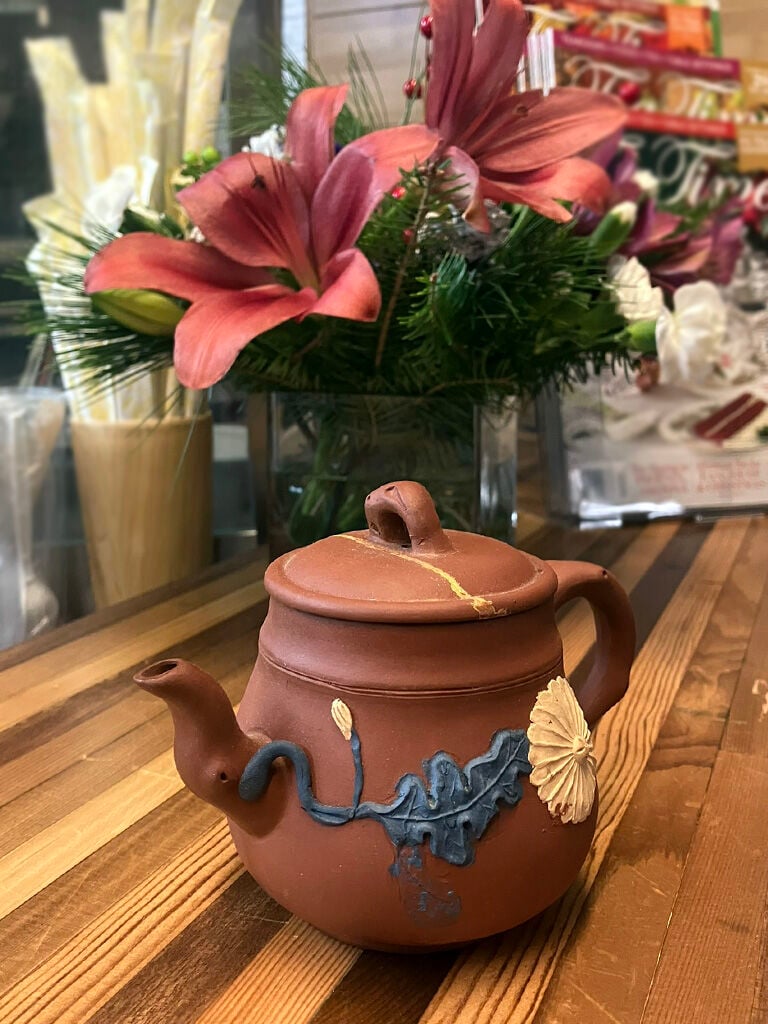
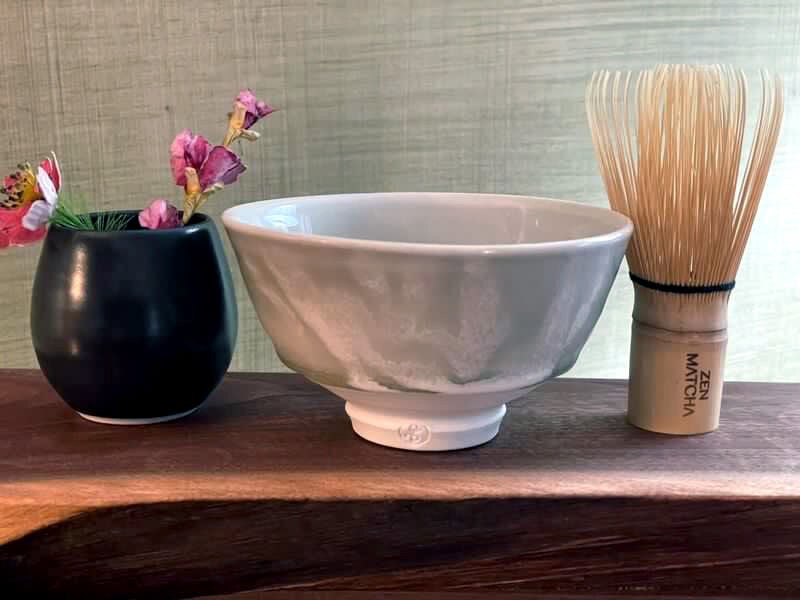
It’s this everlasting meeting of artistry and philanthropy that encouraged Mike to tell the story about the “Texas bowl,” a piece of pottery that is safely at home in their china cabinet; to demonstrate, he uses one of a similar design.
The matcha bowl with a black streak becomes a vessel for both tea and the tale itself, taking the couple back to about five or six years ago, where a friend of theirs was helping teach a program at a tea festival in Dallas. One of the seminars included about ten or so students from the nearby school district with two of their tea-loving teachers, who had started an after-school tea club for the children.
During this experience, the students were encouraged to go over to a potter’s table, where the sculptor had created matcha bowls of varying structure and size. “If you notice, this one is not perfectly round,” Mike explained, showing the piece in his hand but refraining to call those aspects “imperfections,” calling them the work of an artist.
“This one little girl picked up this bowl, and she said, ‘You see how it’s murky down here and it’s not clear? That’s the early part of my life. I don’t see that. But it gets up here, closer to the top,’” Mike recalled, visibly moved by the memory of her words that day.
“‘It becomes much more clear, and how much more perfectly rounded it is, and how it had these indentations and imperfections at the bottom, but…’”
Mike stopped where he was in the story with tears in his eyes.
“We like to see kids succeed, and needless to say, I bought her bowl,” he finished with a laugh, just in awe at how the children “developed this marvelous relationship over tea because they could all relate to that.”
Debbie added that the program had other components to it, such as learning proper manners and etiquette, as well as discovering how to describe sensory experiences; the group even learned to taste tea with clothespins on their noses and then observe the differences.
All of these practices revolve around the Japanese concept of “wabi-sabi,” which Debbie defined as about “how life’s not always perfect, but learn to find the beauty in imperfection.”
“People aren’t in our lives forever, but accept that and celebrate them for when they are there,” she explained.
When someone accidentally broke a bowl at Tea-For-All, another customer, Steve, took it upon himself to practice kintsugi, a Japanese art that breathes new life into fragments by adhering them again with a golden line of lacquer. Kintsugi, which translates to “golden joinery,” embraces any perceived flaws as part of an improved, more elegant piece of pottery.
For Mike, this built on his resounding message of “Yes, it’s imperfect, but so what? It’s beautiful.” Just as time might need to pass for a bowl to become its most colorful iteration yet, he conveyed that younger people deserve to be given the proper space to heal and process.
As the Raabs aim to help from the heart, Tea-For-All has also been making strides to be more sustainable, whether that is in their packaging or products for sale like the “completely compostable, biodegradable” HAY! Straws, which are made from gluten-free wheat stems. Customers are also encouraged to bring their own cups for a discount or tins for refills, as long as they call ahead for the latter so that the owners can ensure the tea is in stock.
It’s an expensive endeavor to be more environmentally conscious, Debbie acknowledged, but one they prioritize given its match with both their values and the aesthetic of the farmers’ market.
Trips to the World Tea Expo and possibly Japan are scheduled for the new year, but each endeavor shares the same resounding mission statement that Tea-For-All has always echoed from the two who know it the best.
“I think ours is a story of adaptation and teamwork,” Mike said. “We treat people the way we want to be treated. We try to always speak with knowledge and understanding of where the customer is, always willing to share what knowledge we have. We’re also willing to be told we’re wrong, or we need to know more, and we charge a fair price for a cup of tea—and a quality cup of tea.”
“We’re having more and more people that are coming in, too, that are saying, ‘we like to come here and get the tea, because we always get an education with it,’” Debbie said, with that love of endless intellectual exploration forming a mutual bond between owners and customers.
“We continually learn about tea. It’s not an endpoint, it’s a journey; that’s one of the things we pride ourselves on,” Mike added.
Shu and the Raabs continue to cultivate their crafts and curious minds with a ceaseless resolve—retiring has never stopped them before—and there is always more tea to pour, more kettles to fill, and more knowledge to impart with an equal helping of smiles. But if you take anything in your tea, let it be the lesson that these two businesses in Mercer County are serving up cups of endless enthusiasm to ease the brunt of the cold winter season.
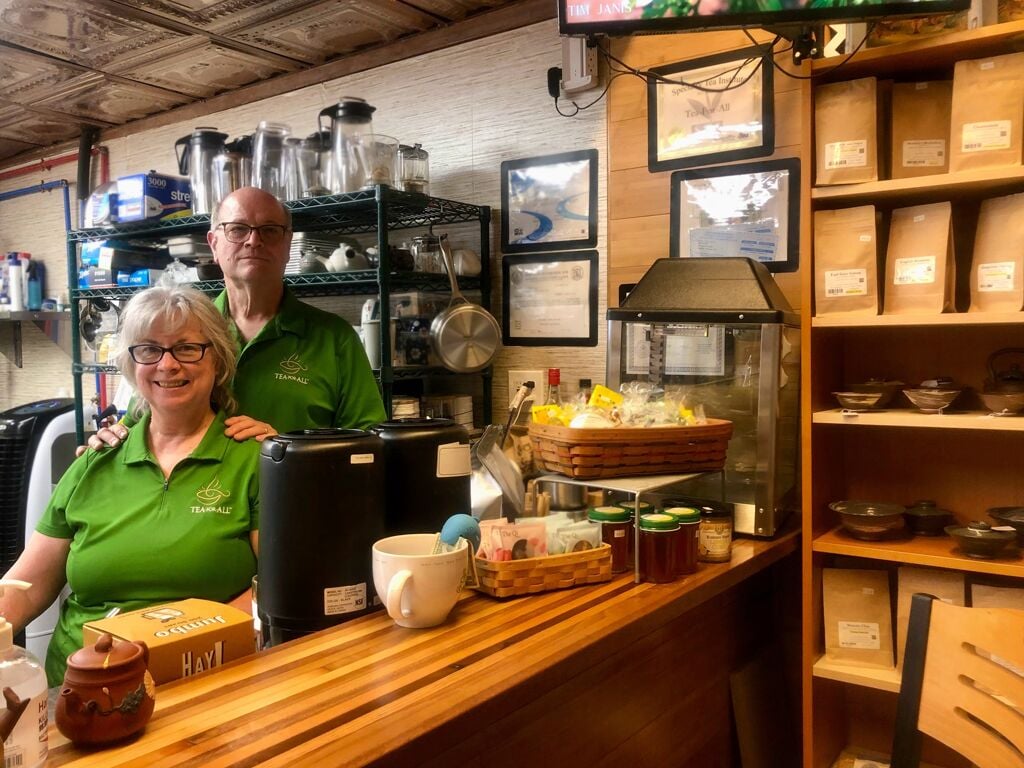
Debbie Raab, left, and husband Mike, right, stand behind the counter at Tea-For-All in the Trenton Farmers Market in Lawrence.,
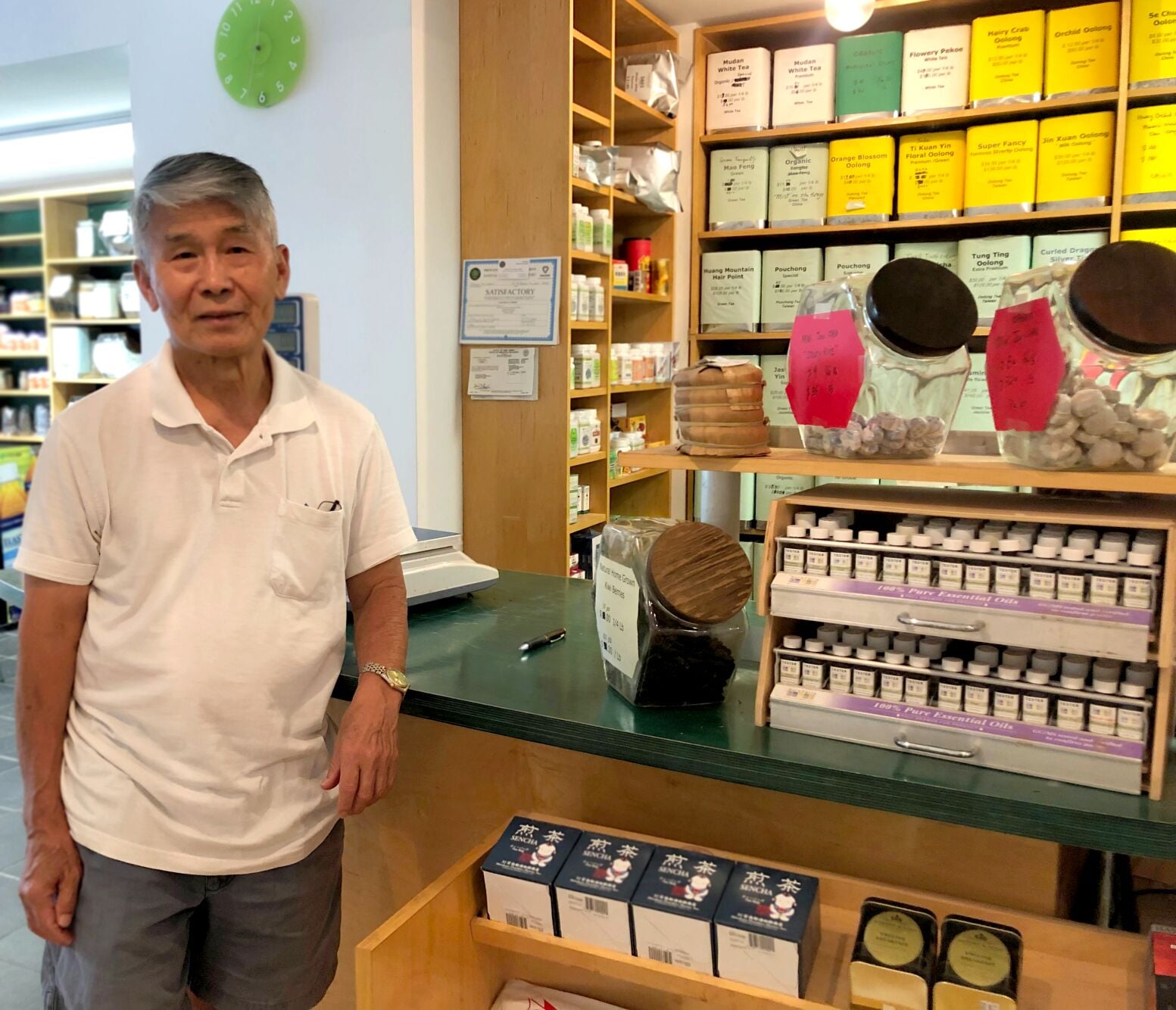
The herbal section at Shu's store avoids the "hypes" and promotes wellness.,
The "Texas Bowl" from Mike's story.,
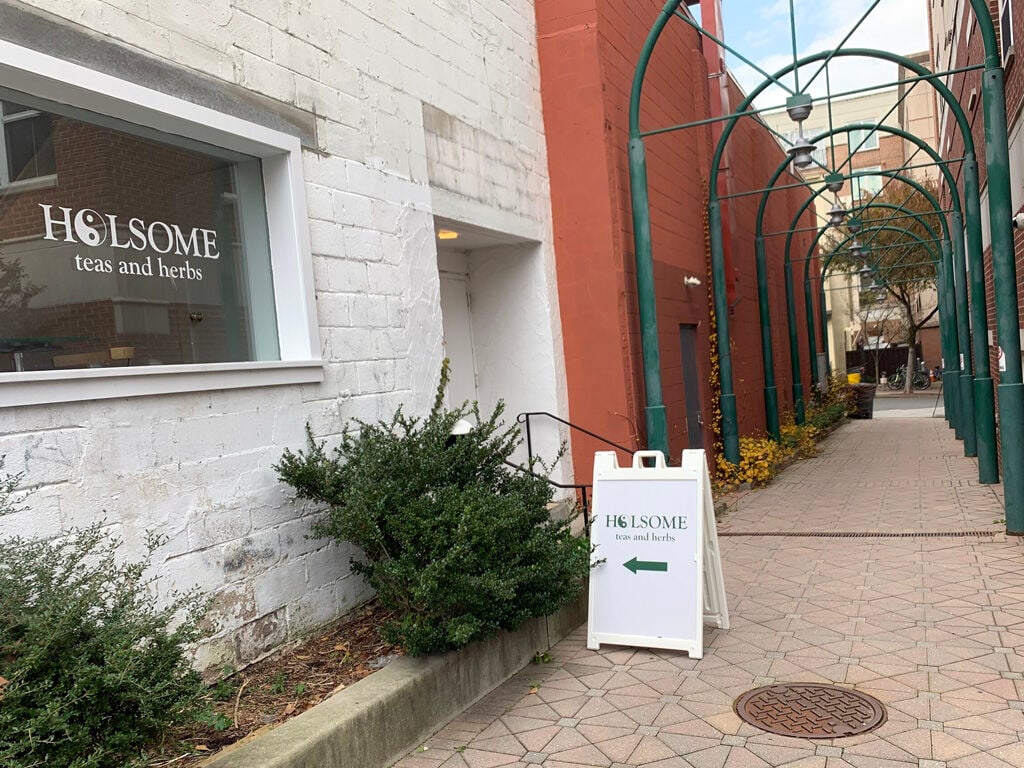
Browse the beautiful displays of teas at Holsome Teas and Herbs.,