The Trent House Association has been working to resume its robust schedule of public events, including the upcoming h virtual talk, “The Chilocco History Project – A Century of Stories from a Federal Native American Boarding School,” set for Saturday, October 23, at 4 p.m.
Although this free presentation focuses on the experiences of Native Americans attending an Oklahoma institution between 1884 and 1890, it reflects recent Trent House efforts to understand the deep history of property residents, including New Jersey’s indigenous people, the Lenni Lenapes, as well as slaves from Africa and indentured servants.
That understanding was enhanced during 2021 when Hunter Research continued its ongoing archaeological work on the historic property whose colonial owner gave the city its name.
In a desire to share this important work in our region, Trent House trustee Samuel A. Stephens used his Ph.D. training in sociology to work with Hunter Research to create the following article that he offered to U.S. 1:
Treasures Below Ground: Archaeology at the Trent House
The two acres of the William Trent House Museum grounds contain treasures of incomparable worth. Not precious jewels or valuable metals, but fragments that help tell the stories of the many people who have lived there hundreds, even thousands, of years ago. With the tools of archaeology, the museum is uncovering those treasures and telling those stories. Archaeological investigations on the museum’s grounds have been conducted since the mid-1990s by Hunter Research, a cultural resource management firm based in Trenton. According to Richard Hunter, “This is a prime piece of archaeological real estate of inestimable historical value displaying an unparalleled record of Delaware Valley history stretching over at least 6,000 years.”
New Jersey was (and still is) home to the Lenape or Delaware people and their forebears for thousands of years before Europeans arrived, and the area around Trenton is rich in artifacts reflecting Native American occupation at the falls of the Delaware River. The site of the Trent House is in many respects an extension of the nearby Abbott Farm National Historic Landmark, just south of Trenton, where Native American activity focused on the rich natural habitat around the mouth of Crosswicks Creek. Excavations on the Trent House property have yielded hundreds of Lenape and earlier artifacts, testimony to their hunting and gathering and seasonal camping. A quartz teardrop-shaped tool recovered during the 2021 season and likely 2,500 to 3,000 years old, may have served as a spearpoint but may also have been useful as a multi-tool for cutting, scraping, and drilling. Many similar items from this part of the Delaware Valley may be viewed in the exhibits at the New Jersey State Museum, and the Tulpehaking Nature Center in the Abbott Marshlands is about to launch a series of children’s programs on Lenape lifeways and material culture.
With the arrival of the Dutch and Swedes in the mid-1600s, the Lenape began trading relationships with Europeans, exchanging furs, especially beaver pelts, for goods like copper pots, firearms, iron tools, wool blankets, and glass beads. Certain types of artifacts provide clear evidence of this contact between Native Americans and early Europeans. Two telltale types of material from this period are copper fragments and glass beads, both much valued by the Lenape and used for personal ornaments. Trimmed copper strips were found in levels of soil under the 18th-century kitchen out-building. These could be used by Native Americans to make several different items such as clothing decorations known as “tinklers” for their sound or even arrowheads.
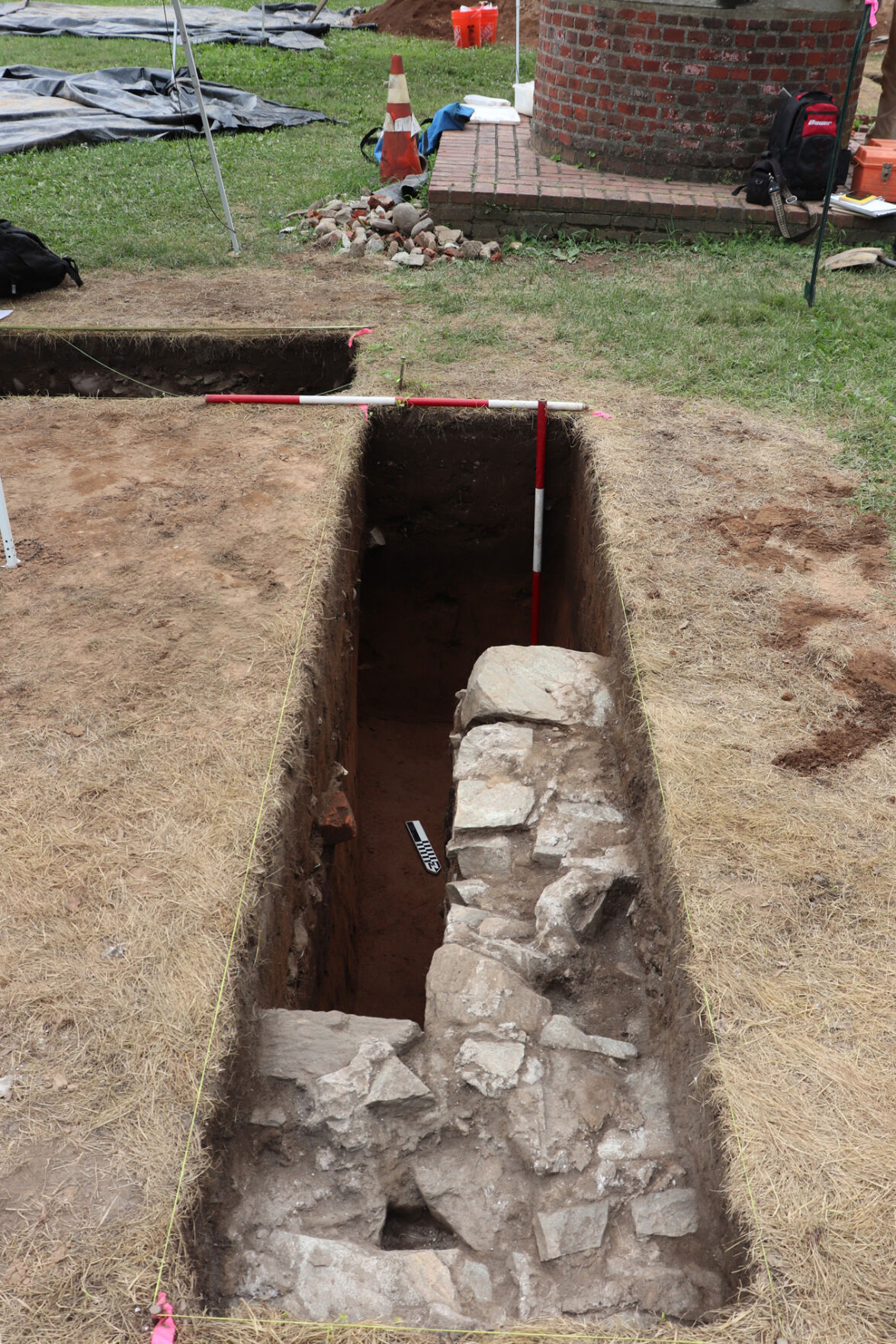
Recent excavations have focused on uncovering what remains of a two-story brick building that had been connected to the main house. Built in 1742 for Lewis Morris, Royal Governor of New Jersey, it served as the kitchen, replacing the frequently flooded original kitchen in the cellar of the main house. At Governor Morris’s request the new building had rooms on the second floor to house his enslaved servants.
With an early gift from an anonymous donor, generous multi-year support from NJM Insurance Group, and a grant from the New Jersey Historic Trust, archaeological projects have revealed details of this building, including foundation walls enclosing the well, the footings of a fireplace and hearth, countless fragments of pottery and glass, kitchen implements, and bones from animals whose meat was cooked there. An almost complete, very large redware milk pan was recovered from the kitchen wing and probably dates from the later 18th or early 19th centuries. It could well have been used by enslaved people working in the kitchen. Princess Hoagland, president of the Trent House Association, noted that the mission of the museum is to include the history of all those associated with the historic property. “We mean to correct omissions of inconvenient truths by uncovering evidence of the people whose lives were forgotten, such as the enslaved people who worked in the kitchen built for the convenience of Lewis Morris.”
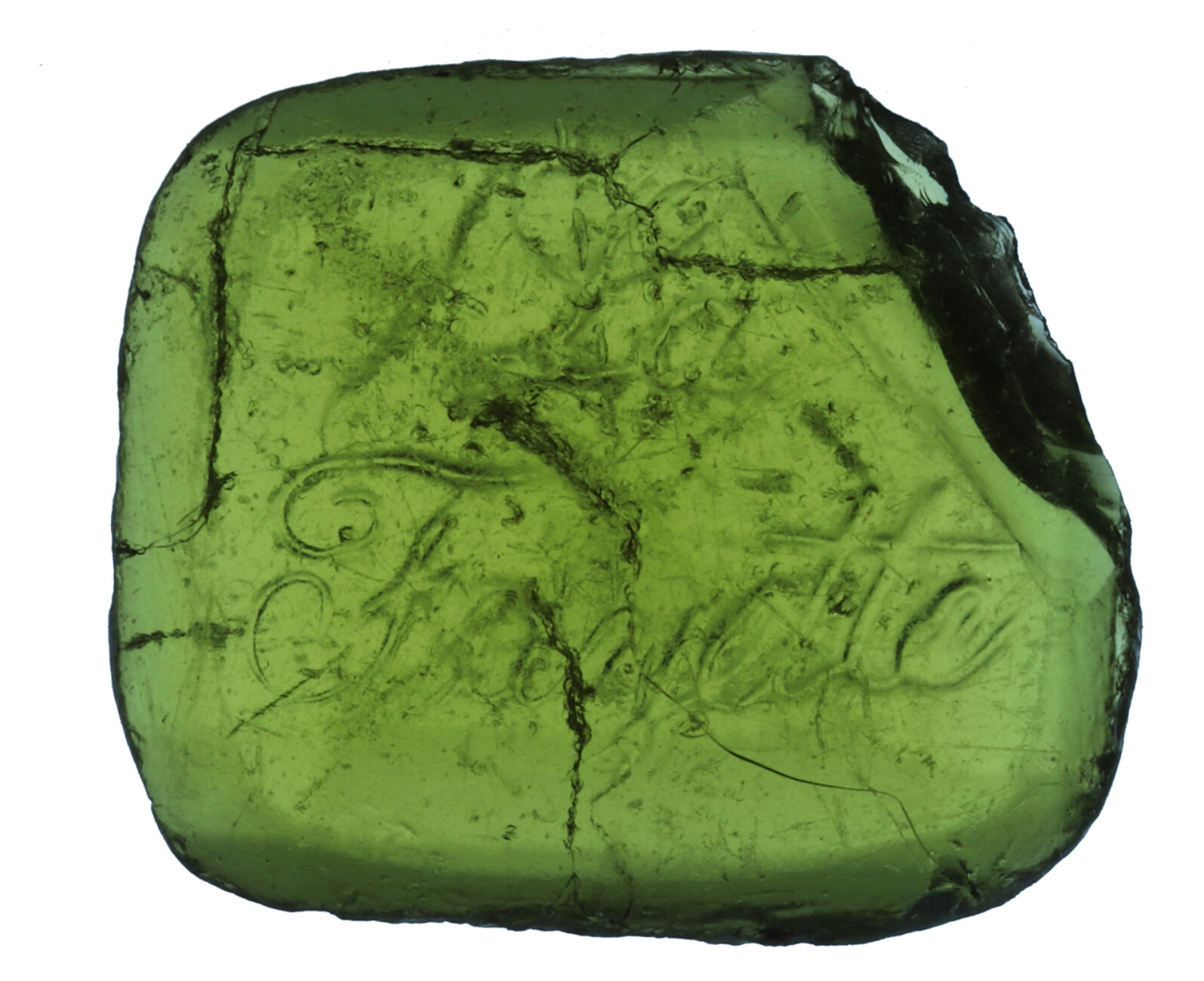
The Trent House property figured prominently in the American Revolution. It saw action at the time of the Battles of Trenton in the ten crucial days over Christmas and New Year of 1776-77, then served as a military supply hub and home of Assistant Quartermaster General John Cox, and finally hosted the French and American armies en route from Newport, Rhode Island, to their victory over the British at Yorktown in 1781 (and on the return trip a year later). A rare archaeological find from this period is a brass seal inscribed “L F K,” believed to have belonged to Lucy Flucker Knox, wife of Washington’s artillery commander Henry Knox. Another archaeological echo of the Revolution is a glass intaglio sleeve link commemorating the war’s hero Marquis de La Fayette’s tour of the United States in 1824.
While there are undoubtedly more historical treasures remaining underground, in the near term the Trent House Museum plans to focus on more fully interpreting the 1742 kitchen building. As Hunter notes, “We have much more analysis to do on this front to understand more fully the layout and functioning of the kitchen. Our hope is to delineate and interpret the footprint of the kitchen wing at ground level so that visitors can appreciate better how the Trent House’s inhabitants, including those who were enslaved, lived on the premises.”
The Trent House offers the free virtual presentation “The Chilocco History Project – A Century of Stories from a Federal Native American Boarding School,” Saturday, October 23, 4 p.m. Connect by Zoom at bit.ly/3AejSoa.
The Trent House at 15 Market Street, Trenton, is open Wednesdays through Sundays, 1 to 4:30 p.m. $4 to $5. For more information: 609-989-3027 or www.williamtrenthouse.org.
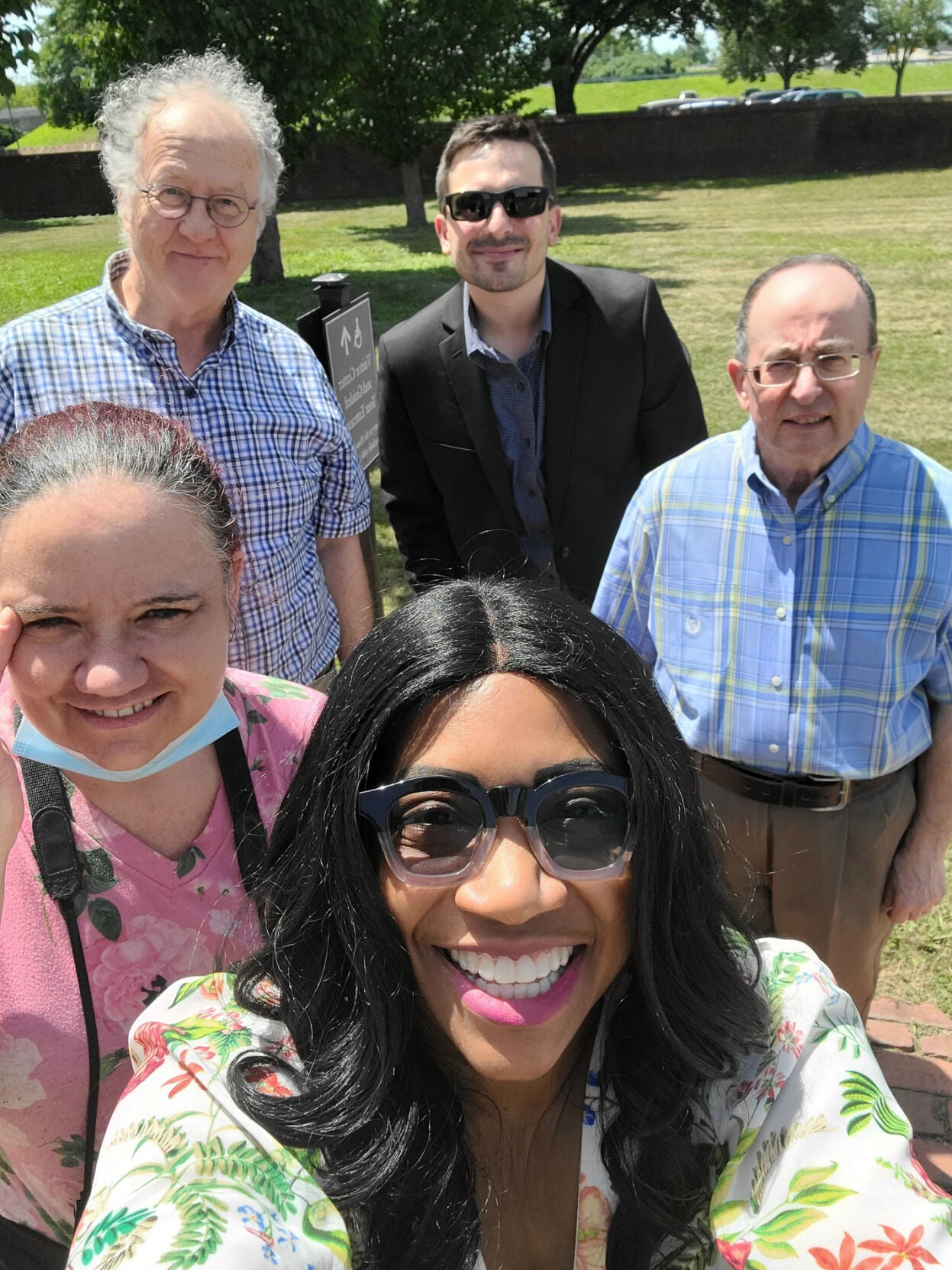
Richard Hunter of Hunter Research, back left; Jeff Richardson of NJM Insurance Group; and Trent House trustee Sam Stephens; and Shawn Carney, Trent House Association administrative consultant, front left; and president Princess Hoagland.,