The National Guard Militia Museum of New Jersey in Lawrence has reopened in with a new building.
The NGMMNJ, located on the grounds of the New Jersey National Guard Armory on Eggerts Crossing Road in Lawrence, uses military weapons, uniforms, photographs, documents, and interpretative texts to chronicle the state’s militia and National Guard history from the early Dutch and Swedish settlements through the present day.
It also claims to possess “one of the largest collections of New Jersey-related Civil War research material in the country, including copies of diaries, letters, newspaper clippings, memoirs, regimental histories, and articles,” and pays “particular attention to the diversity of the New Jersey citizen soldier and his or her experience.”
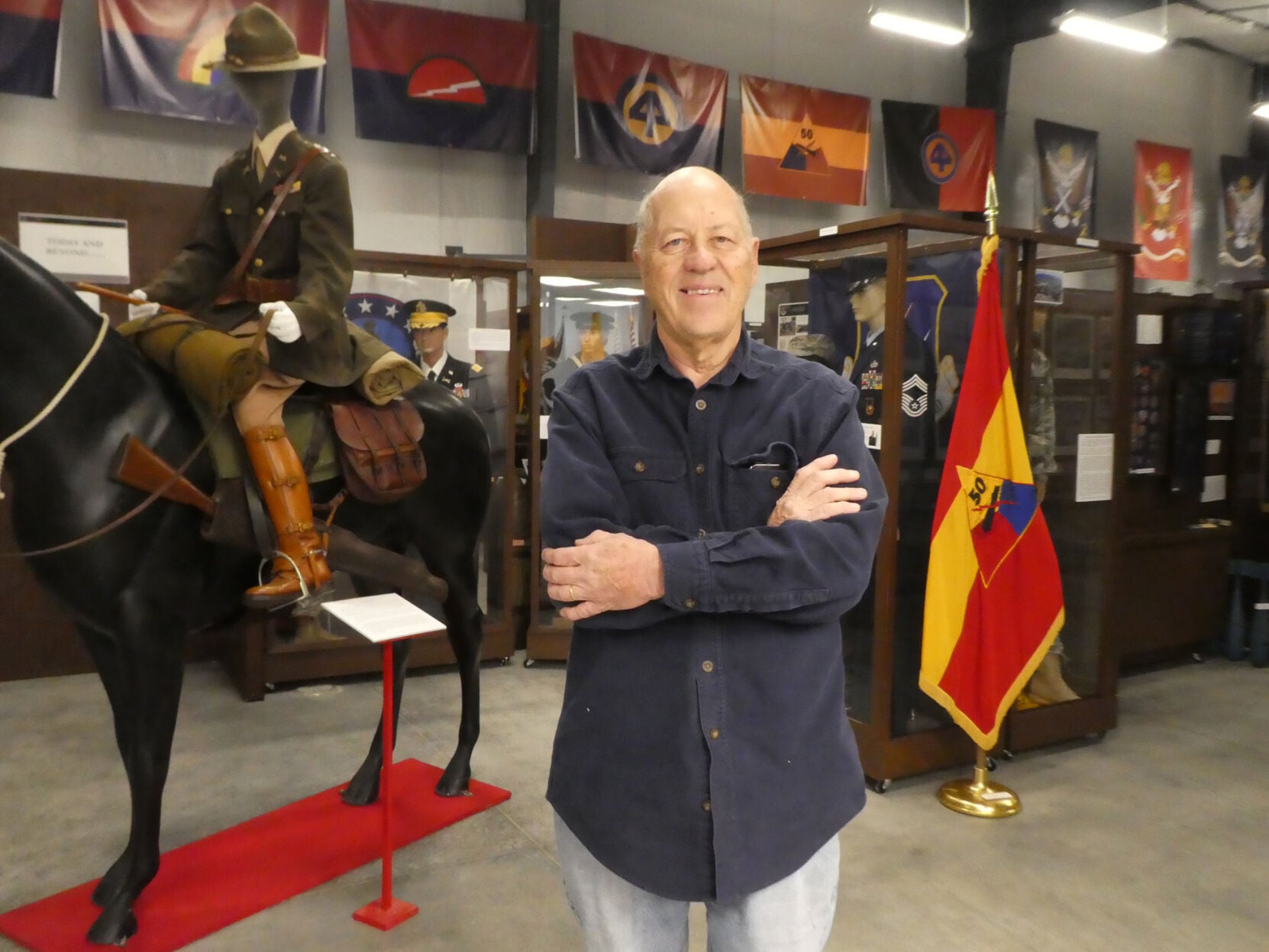
Curator William Kale says, “We primarily address the civilian solider, the National Guard, and people who mobilize in time of war and leave their homes. We don’t follow professionals like Eisenhower. We focus on citizens.”
He made the statement during a recent interview and tour of the 6,000-square-foot facility that houses the museum’s exhibition area, research library, and administrative offices.
He says $1.2 million federal and state funds were used to create the new space for the museum established there in 1989 as the western New Jersey adjunct to the original and sister NGMMNJ site in Sea Girt.
Kale connects the decision to build in Lawrence to a desire to highlight the important New Jersey Revolutionary War battle sites in Trenton and Princeton. Exhibits were previously in an armory building but were moved to accommodate National Guard expansion.
Kale shares much of the museum’s background while standing at the museum’s entrance. It’s the spot where visitors begin their tour by being greeted by Bucephalus, the life-sized model of the armory’s legendary horse. Named for the famous steed used by Alexander the Great, the artillery horse was noted for its fierce independence and fidelity to its rider.
The tour proceeds to the left where visitors meet a mannequin immediately making the state connection by wearing the “Jersey Blue” uniform worn by soldiers from the first militia regiment formed the state provincial legislators in 1673.
The blue coat and red facings remained unchanged until the early stages of the American Revolution. In 1779 General George Washington established uniform regulations that required the facings to be buff colored.
While the Third New Jersey Regiment refused to give up the red, others state regiments did and created an alleged connection to today’s New Jersey. As the museum notes, “The color of the flag adopted by the newly independent state of New Jersey was supposedly patterned after the buff facing of New Jersey’s soldiers in Washington’s army.”
Quickly visitors learn that there were two uniforms used by New Jersey Revolutionary War soldiers. One was the French-made uniform consisting of a blue coat and with “white trim on the hat [that] depicts infantry and the white brocade [that] symbolizes the alliance with France.” The other was the Colonial Rifleman uniform of flax, cotton, wool, and a rifleman’s hat. They also adopted the use of wearing moccasins for comfort and, since riflemen often served as skirmishers and had to move quickly, mobility.
After a quick stop at the Whiskey Rebellion, when in 1794 the New Jersey Militia organized 4,000 men to form three infantry regiments and two cavalry regiments to become part of a four-state militia force to address and suppress a Western Pennsylvania insurrection against a federal tax on whiskey, visitors then arrive at the Civil War area.
Here one learns that New Jersey provided more than 88,000 men to the Union cause, some 10,000 over its quota, who participated in 37 infantry regiments, three cavalry regiments, five artillery batteries, and several independent militia companies. These units fought in both the Eastern and Western theaters of operations and were involved in almost every major battle.
The exhibit also cites several Civil War military leaders, including Major General George B. McClellan, who later became governor of New Jersey and is buried in Trenton, as well as how African Americans participated in the Civil War. Text notes that while a New Jersey census listed 4,866 black males between the ages of 18 and 45, approximately 3,000 served in the Union Army and Navy. “Most enrolled in the United States Colored Troops after they were formed in 1863. Prior to that date, blacks enrolled in the Union Navy and other states’ colored units.”
Also on view is a map of Trenton area Civil War Camps, including Camp Olden and the Trenton Barracks, and materials from Trenton Grand Army of the Republic memorabilia.
The next stop is focused on the 1898 Spanish American War, where visitors learn that “the declaration of war with Spain found the New Jersey National Guard ready and eager to meet the call for troops.”
Then 20th and 21st-century conflicts take over a major section of the exhibition area with objects from World Wars I and II and the Vietnam War, which yielded the last U.S. military weapons on display at the museum.
While “war trophy” weapons from the Gulf War are on display, current military weapons are not, says Kale.
The Gulf War exhibition area also brings home the danger of war in what Kale cites as one of the museum’s most unusual objects. It’s a tank window with a hole that shows both the impact of an enemy shell and the technology that enabled soldiers to survive.
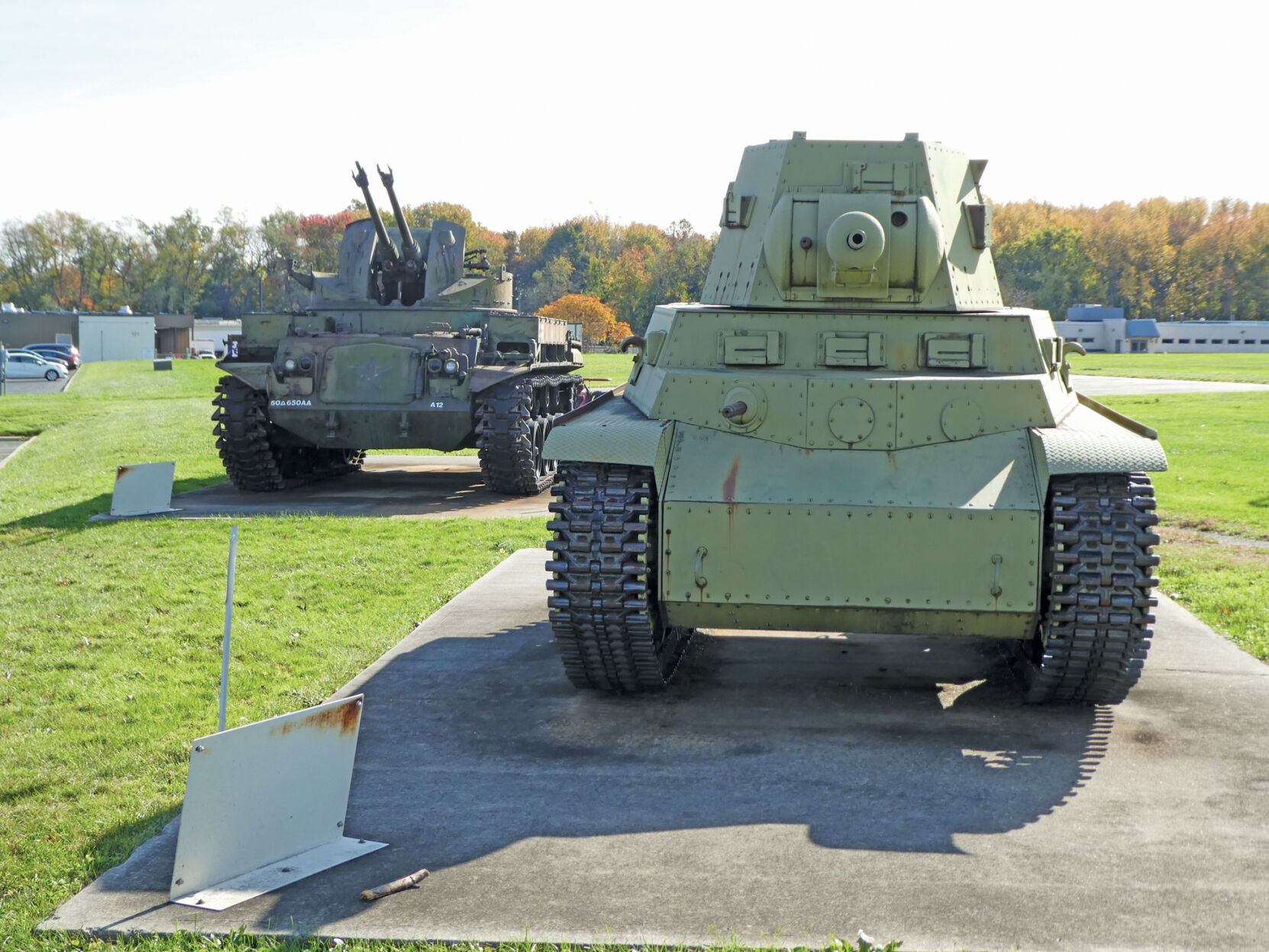
Other attractions include a display of models, images of various conflicts, and the outdoor exhibition of more than a dozen tanks, anti-aircraft guns, and caissons.
The retired USA lieutenant colonel says he became curator in 2014, replacing his brother, Donald, a retired army colonel who was part of the team that established the Lawrenceville division of the museum.
The son of a World War II army veteran and member of the New Jersey National Guard in Lawrenceville, Kale says he was born in Trenton and after graduating from Trenton Central High School went to Rider College, where he joined the ROTC and then the army. In addition to serving at several U.S. camps, he was stationed in Germany, Vietnam, and Korea. After returning to the Trenton area, he worked for the State of New Jersey. He lives in Ewing.
While the Sea Girt division has one federal employee and two state ones, the Lawrenceville branch is currently all volunteer. The state is currently in the process of creating and filling a position to support the program.
Federal and state funds support general operations and the nonprofit component of the museum provides some administrative support and special project funds.
Objects are mainly donated by community members and by law enforcement agencies that forward related collections of state citizens who died with no family or will. Some objects are owned by other nonprofits that have are in the process of looking for an exhibition and storage home.
Although Kale is at a loss to give a number of how many objects are in the collection that is both on display at two museums and in storage, he is able to point to the oldest: a Brown Bess Bayonet. It was a standard English army weapon used during the Revolutionary War and place on the Brown Bess musket (brown the color and Bess for the anti-rusting agent with a similar sound). Kale estimates the bayonet’s vintage as mid to late 1700s.
And while of a different vintage but part of the museum’s important collection, Kale mentions a Civil War object and its connection to the recent opening ribbon-cutting ceremony.
Since General Lisa Hou — now the commissioner of the New Jersey Department of Military and Veterans Affairs — served as a field surgeon in Iraq, she cut the ribbon to the museum with a Civil War doctor’s surgeon knife. “It was fitting,” says Kale.
National Guard and Militia Museum of New Jersey, 151 Eggerts Crossing Road, Lawrenceville. Tuesdays, Fridays, and Saturdays, 10 a.m. to 3 p.m. Free. 609-530-6802 or www.njmilitiamuseum.org.
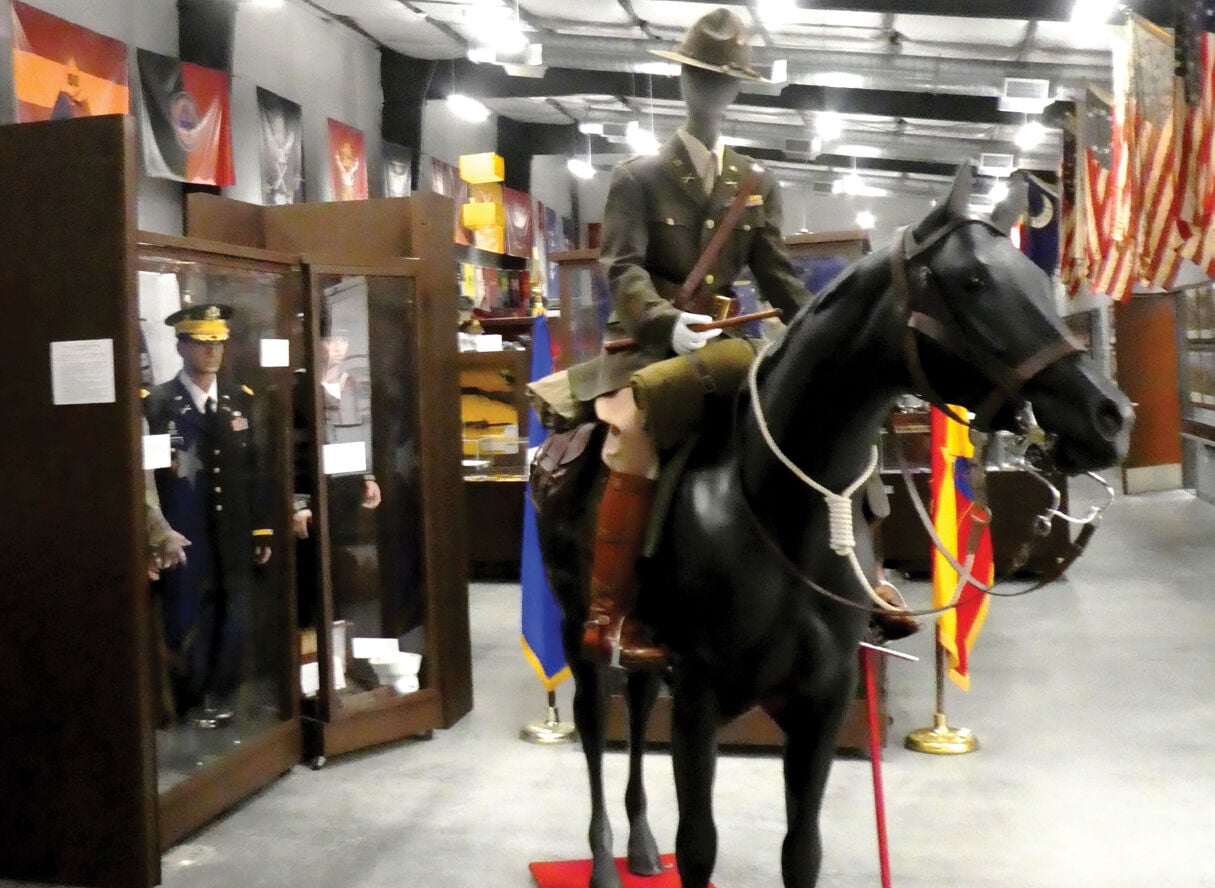
A model of Bucephalus, the armory’s legendary horse, greets visitors at the start of tours.,