This article was originally published in the August 2018 Princeton Echo.
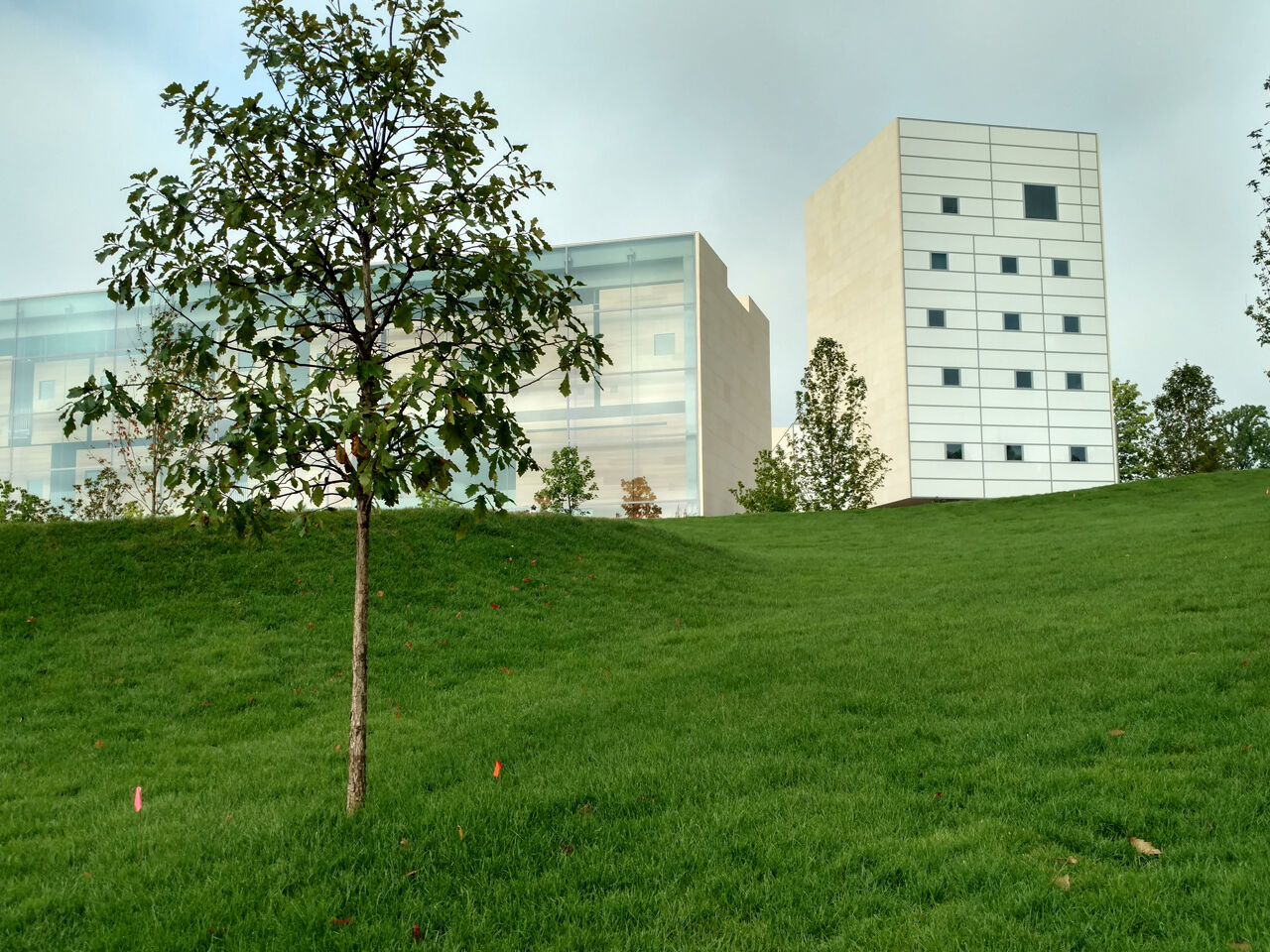
Perhaps the most carefully cultivated lawn in Princeton is the new expanse of grass that has sprouted up on the slope between the university’s new Lewis Center and the hockey rink and parking garage below. This lawn is a piece of art, an undulating earthen sculpture created by artist and architect Maya Lin, known for her Vietnam War memorial wall in Washington, D.C.
What’s surprising about Lin’s Princeton installation is that it has been covered with sod brought in when spring rains delayed the work to the heat of summer and made a seeding of naturally occurring grass impossible. Lin, whose artistic energy is now focused on environmental issues, is not a fan of the classic suburban lawn. At a lecture about her work last spring on the university campus, Lin posed a question: “What’s the largest irrigated crop grown in America?” Answer: The lawn. Lin said that more gasoline is used in lawn equipment every week than was spilled in the 1989 Valdez oil spill.
In a conversation with a reporter at the site early in the summer, Lin said that her preferred approach to creating sustainable ground cover includes using native grasses, avoiding sprinklers, and using ground-soaking watering systems that encourage roots to grow deep. But soon thereafter the sod was in place and sprinklers were watering the instant lawn in the heat of day.
At her lecture Lin had said that she has always wanted her memorials “not to be about loss itself,” but rather to be a “teaching tool.” At the Princeton sculpture site, she predicted the lawn would become more sustainable over time. “It will be an educational process,” she said with a smile.
,

