This article was originally published in the October 2017 Trenton Downtowner.
It’s election season and time to get involved in more ways than just voting. But just how does someone start delving into federal, state, county, and local politics?
It’s time to ask the experts:
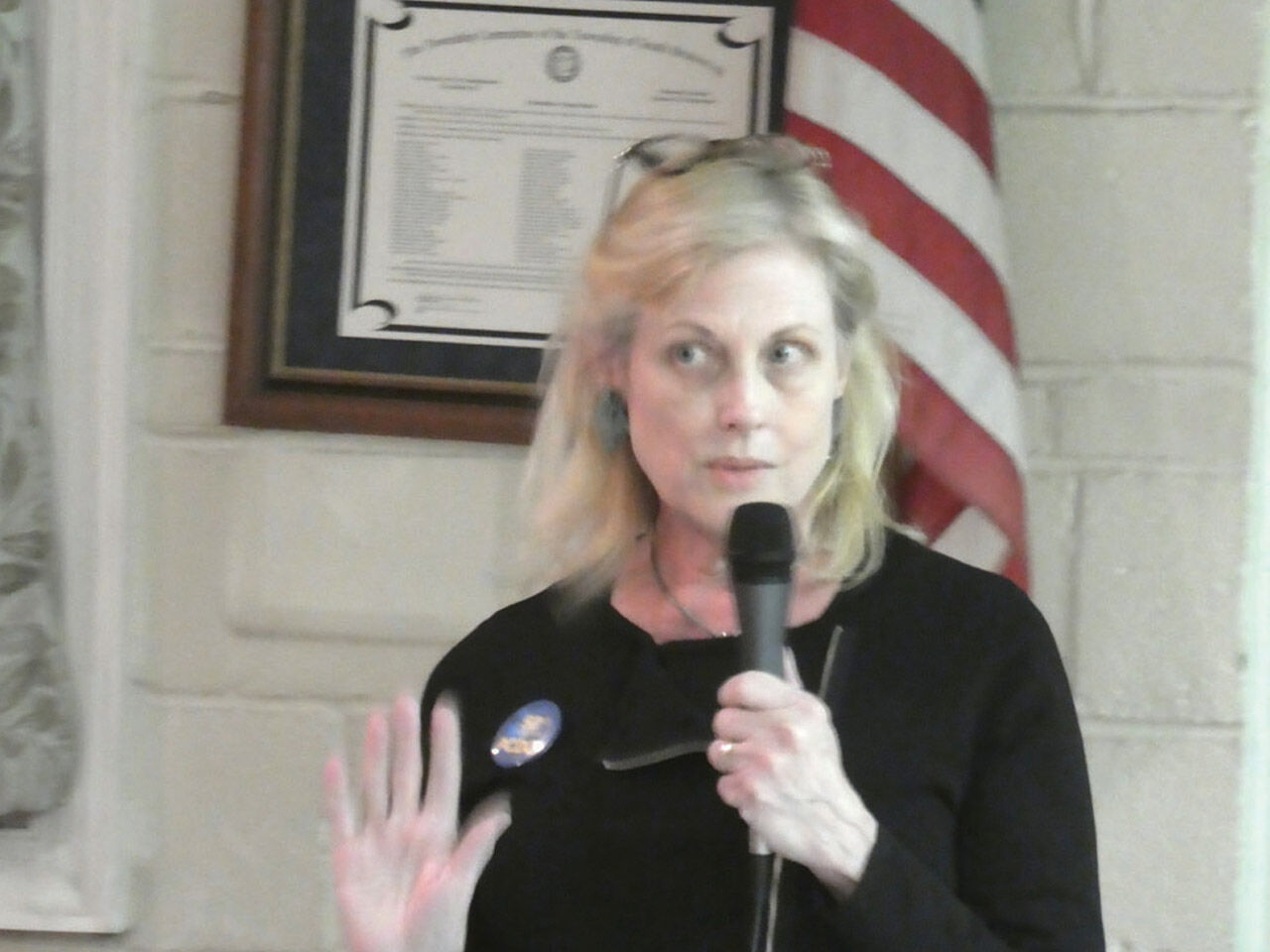
Scotia MacRae, the past director of constituent services for former Congressman Rush Holt (whose district included Trenton), has an inside track about getting information.
“It’s like being a detective,” she says. “In any congressional office there are two sides. One is constituent services. The other thing is the legislative office. The constituent services are usually in the home office. So if someone called about a bill we would refer them to the legislative office in Washington, D.C.”
MacRae says to get involved start by getting informed about proposed bills or existing laws. It’s as easy as a phone call. “If you talk to a constituent service person, they’ll go out of their way to help you,” says MacRae, a Princeton resident who had worked for the Times of Trenton and Mercer Street Friends. “The problem with the legislative (division) is you don’t always get an immediate answer — unless it’s an issue that is really hot and everyone’s calling.”
The other ways is to start sleuthing and using the Library of Congress website, congress.gov. “That’s the place where you can find out about bills. We all went there ourselves. You have to figure out where a bill is.” That includes being introduced into a committee where it is still being discussed, or being advanced and prepared for a vote.
“Knowing the process takes a little while because it is very detailed — but everything is a process,” says MacRae. “You (then) know who to call and to whom to protest.”
Asked for an example, MacRae says informed and organized people can affect change and mentions Congressman Leonard Lance (R-NJ 7th District) and his reluctance to join the opposition to the recent health care bill. “(Citizens) went to his office and told him why they objected to the (recent) health call bill, and he got lots of calls and lots of action. So when people get together it has a special effect.” (Lance ultimately voted against the bill.)
Other ways of getting your voice heard is to communicate with the office. “It is probably better to put your thoughts in writing, rather than call. If you call you often get an intern. So it is probably best to write it. It sounds like it is easy to send an e-mail, but it isn’t. There is so much security on (the House of Representative’s) website. It just doesn’t just go through because the house is closely guarded because of hacking. It is best is to write a letter or send a fax,” says MacRae.
What doesn’t work, she says, “are the pre-written or prepackaged postcards. It isn’t personal, like writing your own letter and mailing and faxing it, signing, giving an address and telephone number.”
She then adds, “The worst thing to do is nothing. The next worst thing is to call and be abusive. We did get people who would swear, and we would tell them if you can’t tell me your position in a civil manner that I would hang up.”
The frustration, she says, is that each congressional district represents an average of around 711,000 voters, and “you can’t always get back to people in a timely manner.”
Then there is help outside the office. “The League of Women Voters has a good deal of information. They’re always up on the legislation. I think every voter should have a League of Women Voters’ handbook.”
In the Assembly:Reed Gusciora
‘When I first started (in 1996) it was the Trenton Times, Trentonian, and Star-Ledger,” says Trenton resident and New Jersey Assemblyman Reed Gusciora. “Today it’s Facebook, Twitter, NJ.com. Then there’s the political blogs — Politico.NJ. So there’s actually more to follow. People in politics tend subscribe to the media they’re most comfortable with. Conservatives like Fox, liberals MSNBC, and the middle like CNN. Elected official have to watch all them because we want to know what others are thinking — ‘fake news’ or not.”
He then admits he has difficulty staying abreast of it all. “We have staff and interns watching. Elective officials interact with one another and have discussions with one another.”
Asked how a citizen can stay up to date on bills, which are generally introduced in the New Jersey State Assembly and arrive in the State Senate in a senator-sponsored companion bill, he says he does it the same way as a citizen. “I go to the legislator home page and press in a topic or search key word.”
The webpage — njleg.state.nj.us — is where any citizen can find more about a pending bill, its co-sponsors, and status. Has the bill been approved by a committee? Scheduled for a floor vote? Approved and now awaiting the companion bill in the Senate?
To understand how an idea or movement becomes a bill, Gusciora cites Assembly No. 2071, a bill developed to help artists revitalize urban areas. “I believe the arts play a major role in revitalizations projects. It is the artists, gays, and musicians who help revive cities,” he says. “Trenton has developed a strong arts community. (But) artists had trouble staying in their environment and getting started. They want to get self-sustained until they can sell their art work. They need a place to call home and create studio space. So (the art colony bill) would help supply funding and get them off the ground.
“The legislation got a lot of interest. During a regular session, it was introduced and assigned to a committee. It passed the tourism committee last year. It is eligible to go to the floor.”
Although the bill is not moving forward and the state’s budget is less flexible at the moment, he believes the legislation can continue — although it would have to begin again and then be approved by the State Senate. Yet he is used to the long process and feels that the more discussion by both houses and parties, the better the bill.
About the process of turning anyone’s idea into legislation, Gusciora says members of his office write a first draft and give it to the New Jersey Office of Legislative Services, where it is translated into legal terms. After it is introduced during an Assembly session, the speaker will assign it to a committee. If it is passed by the assembly it then goes to the State Senate, where a senator introduces a companion bill. “(Senator) Shirley Turner (D-District 15 in Ewing) and I interact daily. Usually if I introduce something, she’ll introduce it in the senate.”
And while there is sometimes unclear media coverage and hearsay about legislation, Gusciora says that if someone really wants to know what laws there are, “Go to the legislative homepage and do legal research.”
There community members will find the most up-to-date information, bill numbers, and ways to give public comments at committee meetings, attend legislative sessions, and monitor legislative sessions online.
“Often people will also contact (the office) to see if there is a law, and we’ll do the research,” he says.
County Freeholder:Mercer’s Sam Frisby
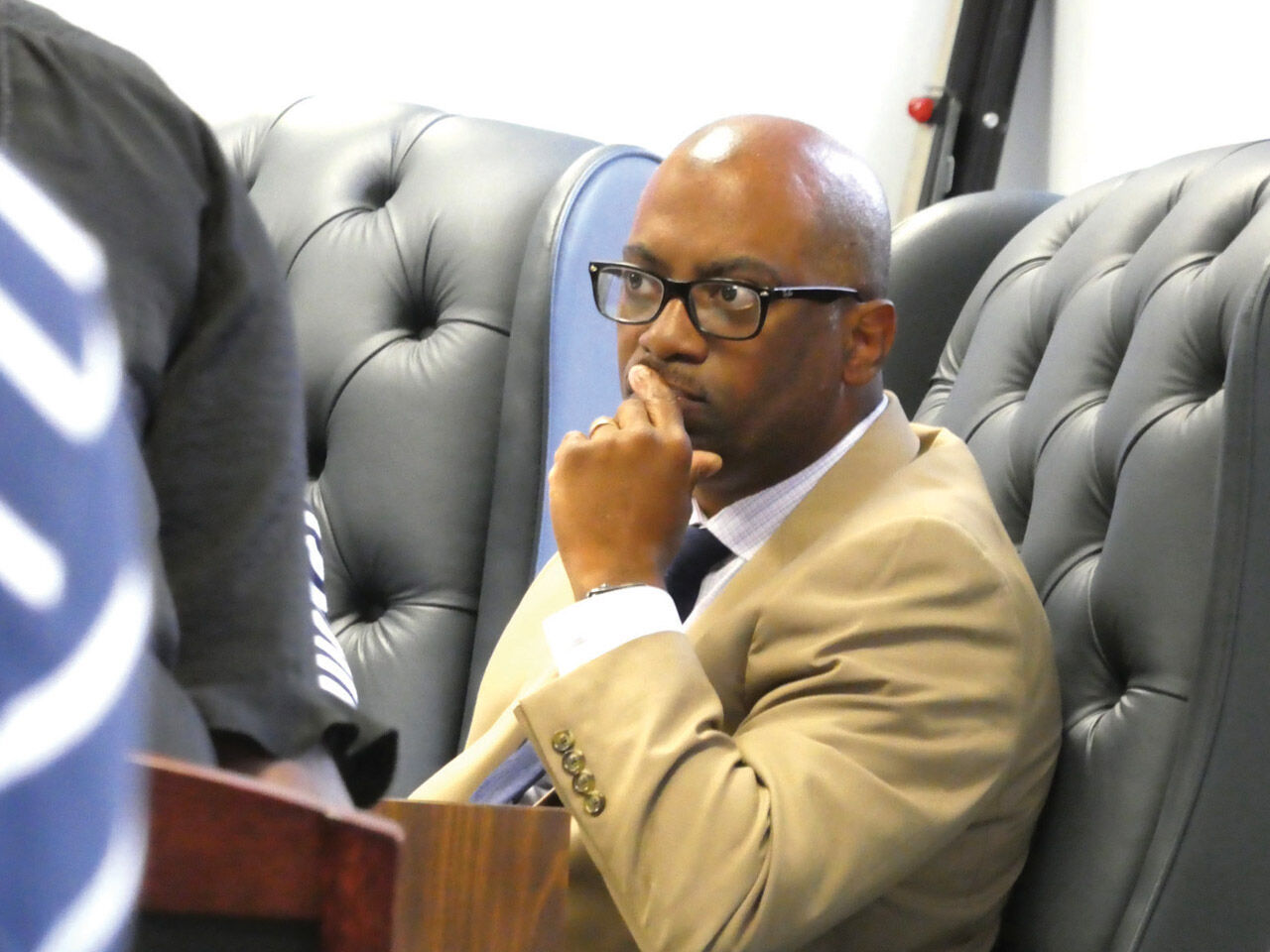
Trenton-based Freeholder Sam Frisby says, The Mercer County Freeholders board is “the city council for the county. People usually come to us because the county road is an issue, or the airport is an issue, or a physical body belongs to the county.”
Although a county executive oversees the $323 million county operations — from airport, to community college, to a park and road system, to a prison and courts — the board of freeholders introduces and passes ordinances that have an impact on the community. Asked for an example of how citizens affected the creation of an ordinance — or county regulation — Frisby brings up the airport — an ongoing hot point for area residents. “The community was instrumental when planes could fly in our airport. Because our airport is in the middle of the community, the residents appeared before the freeholders.”
Frisby says “When the community comes, and if it’s something we can control, we will respond if we can. We want it improve quality of life, not challenge it.”
Frisby says concerned or motivated citizens can bring their thoughts to a freeholder meeting, posted on the county website. Or, he says, “Write a letter or e-mail us directly. I had a (Trenton) resident with some issues where the high school is being built, where the air quality is a problem. I was able to act as a conduit between the resident and the state and get an air quality control study.”
Thinking about how people can get politically involved to change their communities, Frisby points to opportunities beyond attending a meeting. “People who want to get involved and want to see change have to get involved on more levels. People aren’t getting involved with the school board or as a county committee member. People can get involved so we can make the right choices before people get in office. People (need) to get back to our civics lessons in school. It’s critical. If we keep thinking more and more what government will do, and what happens we raise taxes and people get angry.”
As an example, Frisby mentions his past work as a City of Trenton employee. “When I was head of parks of recreation, we would have families saying, ‘When are you going to start a soccer program?’ But in most communities it’s the recreation department that will reserve the fields and it is the parents who run the programs. There is work we need you to do on your own. We need to find those things out and act on them.”
He then adds, “I am working with a couple of groups. We are trying to work with the school boards to see how we can bring civics back to our school along with the Amistad curriculum,” a state legislative initiative that examines the history and contributions of Americans of African ancestry.
The municipal level:Jim Carlucci
If all politics is local, the ultimate hotspot is at city hall or the municipal building. It is also the most accessible.
Community activist, former Trenton political candidate, past Community News Service editor, and regular Hamilton Township Council meeting attendee Jim Carlucci is the go-to guide to help one warm up to local politics.
Carlucci says one of the most useful ways he got informed about Trenton’s actions was “being put on the distribution list for council meeting agendas/dockets. (It) was very useful in not only learning how the ‘system’ works, but for becoming aware of what was being ‘planned.’”
“Attending the meetings was also instrumental in gaining a better understanding of how things work (or supposed to). Particularly, I found the Tuesday ‘workshop’ meetings where docket items were explained and council members questions answered added to my comprehension of matters pending.”
Carlucci’s responses to a series of e-mailed questions and some face-to-face discussions show that participation is not always easy but involvement helps keep the democratic process alive.
He says some of the problems he encountered were that “administrations often don’t introduce items to the council for vote until the ‘night of’ thereby circumventing the opportunity for the governing body and/or the public to learn about and mount a possible opposition to proposed legislation. These ‘walk ons’ often involve contracts for professional services or other questionable expenditures. The administrations have also (frequently) abused the closed or executive session rules in the Open Public Meetings Act.”
He says one of the most productive ways to address or overcome these situations was by “familiarizing oneself with the Open Public Meetings Act (sunshine laws), the Open Public Records Act, and the applicable Municipal Charter Laws (the Faulkner Act in the case of Trenton and Hamilton).”
Yet the most useful thing, he says, is “attending meetings frequently and speaking out on topics in a clear, concise, and non-accusatory way is great for building one’s credibility with elected and appointed representatives. Then when something comes up you stand a better chance of having your suggestions heeded.”
Asked about the best civic practices to get information and engage, Carlucci says, “I developed relationships not only with elected officials but with appointees and staff. At least publicly, I was almost always given respect and information requested; one-on-one, I often had candid, if not always productive, conversations with government officials. And over the years I developed a network within city hall that helped feed me info and tips and such.”
Looking back at Trenton and at the political climate today, Carlucci says that citizens need to be “way more selective about who they elect. The residents must inform themselves of the laws and procedures and must not be afraid to challenge public officials. After all, they work for us!”
Others also have advice. “The only way to affect change is to get involved, get informed, and vote,” says MacRae, and Frisby adds, “My mother always taught me that if you don’t get involved you don’t have the right to complain.”
No matter the words, what they are saying: Get involved.
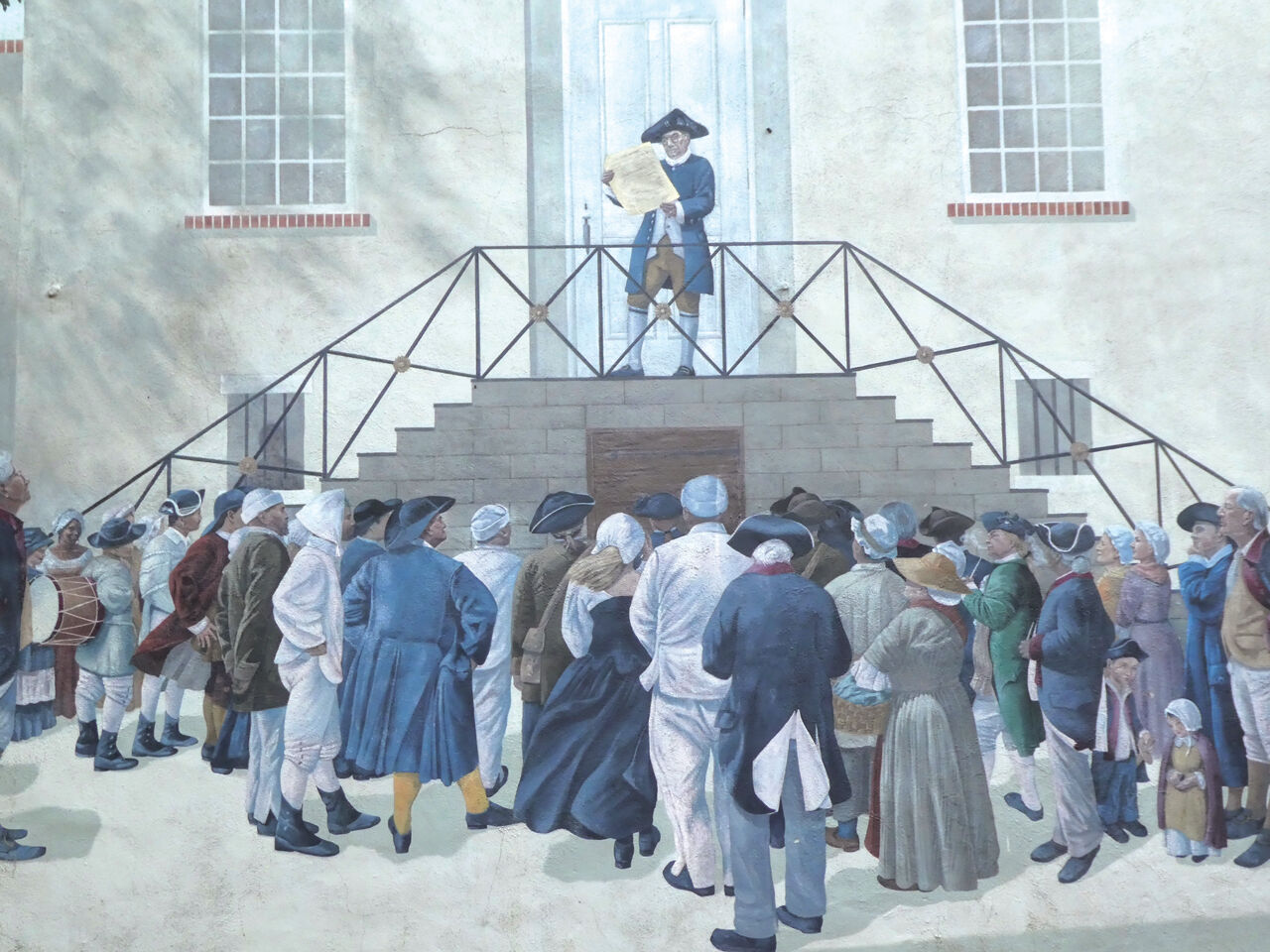
llia Barger’s depiction of the county magistrate reading the Declaration of Independence on the steps of the courthouse in Trenton in 1776. Her mural can be found on a wall outside the Weidel Insurance Company at 23 South Warren Street.,