When it comes to children going through the family court system, many don’t get to decide what happens to them. The final say goes to judges they’ve probably never met, based on arguments of other adults they’ve never spoken to.
But to say that kids have no say in their fate is a bit of an overreach. They do have a voice, they just channel them through people like Kenneth Ritchey or Daniel Reynolds. Both men are Ewing residents, both are retired from careers in government service, and both have been volunteers at Court Appointed Special Advocates for Children of Mercer and Burlington Counties for about five years.
Volunteers like Ritchey and Reynolds are the conduit between the assortment of case workers, social workers, lawyers and temporary guardians that come with the usually long and arduous process of deciding what to do with children who have been removed from their homes, typically as an offshoot of abuse or neglect. Some are bound to reunite with their parents, others are destined for adoption. For sure, no two cases are exactly alike.
Reynolds has worked with nine children in three separate cases: one in which all three children living in foster care had absolutely found their new home; one in which two of four siblings have been adopted, with another about to be and the fourth old enough to opt out of the system; and one sibling pair split up across both sides of northern New Jersey.
The first case would be the stuff of any Hollywood tearjerker were it not bathed in the unpleasant reality of a trio of children who had lived in such neglect that their mother voluntarily gave up her rights to raise them.
The process is called “identified surrender,” and when the mother surrendered her rights, the children were separated. The middle boy, Reynolds said, was taken to a loving foster home, which would have been fine if not for the visits with his siblings who did not live with him anymore. Those visits were destroying the siblings whenever they had to say goodbye.
The toll the visit-separation spiral was taking on the siblings compelled the foster parents who had the boy to just petition to take all three. Ultimately, that’s what happened, not that Reynolds had much doubt.
The first time he met the kids, he said, the oldest girl, who was in third or fourth grade, came home from school, climbed in her foster mother’s lap, and nestled her head into the crook of the woman’s shoulder and neck.
“Kids don’t fake that,” he said. “When I was leaving, she said, ‘Tell the judge I have a wonderful family.’”
Quite a moving image, yes? Well, yes, but there’s a little more to children hugging the stuffing out of their potential adoptive parents than just affection.
In Reynolds’ second case, with the four siblings, he visited with the foster mother in her 50s, who had a daughter in her 20s. The little girl crawled into the daughter’s lap and squeezed. Same buried face, same loving embrace. Only not.
“She had been moved so many times, she thought I was going to take her away,” he said. It was only after some convincing that the little girl believed that she could stay with this family. Eventually, formal adoption happened here, too.
CASAs are not attorneys, nor Big Brothers, nor social workers. They exist to be the eyes and ears of the judge.
Despite these particular heartwarming sendings, the reality for children in the foster care system can be a harsh one. There are more children in foster care than homes to send them to and more cases than there are CASAs. And even with pleasant endings involving adoptions and annual celebrations of birthdays, first-visit anniversaries, and formal adoption dates, the fact is that those days only happen because something went wrong in the original family.
Sometimes, Ritchey said, it’s neglect. Other times it’s outright abuse. Sometimes parents realize they can’t care for their children and give them up. Other times parents are so terrible that the courts step in and remove children from homes by force of law.
Still other times, parents just don’t care. They disappear, leaving the children to navigate a state foster care system that, while generally considered among the country’s best — a 2015 report from the Annie E. Casey Foundation found that 91 percent of children in New Jersey’s foster care system live with families, while the federal Department of Health and Human Services reported in 2014 that the national average is around 75 percent — is still a foster care system.
According to the New Jersey Child Placement Advocacy Council, a little more than half of all children in state foster care are in the system for three to four years, while nearly 15 percent are in it for five or more.
“I just started my third case,” Ritchey said. “So I had two cases in five years. These cases don’t resolve quickly.”
One reason it takes so long is that family/custody court hearings happen quarterly, which means that even well-intentioned progress happens slowly. A bigger culprit is usually the emotions that come naturally from various entities trying to decide what’s best for the children, Ritchey said.
In a strange irony, it is not that no one wants these kids, it’s that so many different people think they have the one right answer for them. So lawyers get involved on two or more sides, relatives vie for custody, and the result is often that kids get shuttled around or left to dangle while they wait to be told where they’re going to end up.
If it sounds bleak, remember that this is why CASAs exists. CASAs are not attorneys, nor Big Brothers, nor social workers, Ritchey said. They don’t take the kids out for burgers and spend time with them. They exist to be, Reynolds said, “the eyes and ears of the judge.”
Ritchey said the job mostly is of the observe-and-report variety. He meets families, almost always at a neutral location, and offers succinct recommendations to the judge. Those recommendations can be anything from telling the judge that the foster home a child is in won’t be good for them to having the parents make sure the kids brush their teeth more often.
CASAs generally visit once a month, and often are far from the only visitors to the families. Sometimes foster families have multiple children with multiple CASAs, Ritchey said. The families often like to schedule the myriad visits on the same day so as not to overburden the children, nor themselves.
Overburdening is a well-watched watchword in CASA. The agency generally doesn’t allow advocates to take on more than two cases at once. For one thing, a single case often involves multiple locations, as was the case with Reynolds’ trips to different ends of northern New Jersey. But it’s also just very easy to take on too much when you’re trying to help, Ritchey said. Then efforts to help get spread too far afield, and the helper burns out.
If the name Kenneth Ritchey rings a bell, it’s probably because the Ohio native was, until 2011, the head of the state Division of Developmental Disabilities for four years. He’d built a career in human services, from his beginnings as a special ed teacher to his time in government, and wanted in his retirement years to keep doing something. He began with CASA as everyone must, by going through the agency’s 30-plus-hour training program.
Over his time as a CASA, he’s seen his share of good news and brewing trouble; heated conjecture and the droning tedium of time. But overall, so far, it’s been rewarding and certainly worth it, and his cases have generally resolved for the best, he said.
Reynolds used to work in state government too, as a lawyer with state agencies concentrating on finances and tax collection. About two years before he retired he had hip replacement surgery and was homebound for about six weeks — which he said was far more than enough to convince him that sitting around the house watching soaps in his retirement years was not going to happen.
Reynolds went to the state judiciary’s website to scour for ideas and landed on CASA. He raised three kids of his own and was always big into volunteering for their sports programs and such, so working with kids seemed a natural fit for a volunteer activity.
Both men, though they don’t work together, said the experience of being a CASA is fundamentally rewarding, but it does take commitment. Often, a CASA is the only consistent person a child sees on a regular basis over that three or four years they spend in the system.
Neither man said they form close bonds with the children. Professional distance is a must. But they both said it’s hard to see what the children sometimes have to go through. For the most part, Reynolds said, CASAs don’t see the kids after they’re placed. But that’s all right. The end goal is to see the kids get to a loving home — hopefully with their original families who have turned things around for the better. But wherever they end up, as long as it’s good for the children, that’s what he wants.
Then again, a total cutoff isn’t always the case. You remember that little girl who clung to the young woman for fear that Reynolds was going to take her away? She just had a birthday party.
“She gave me a piece of cake that was about three times the size of what I’d eat,” he said. “But I ate it anyway.”
To learn more about Court Appointed Special Advocates for Children of Mercer and Burlington Counties or to volunteer, go to casamercer.org.
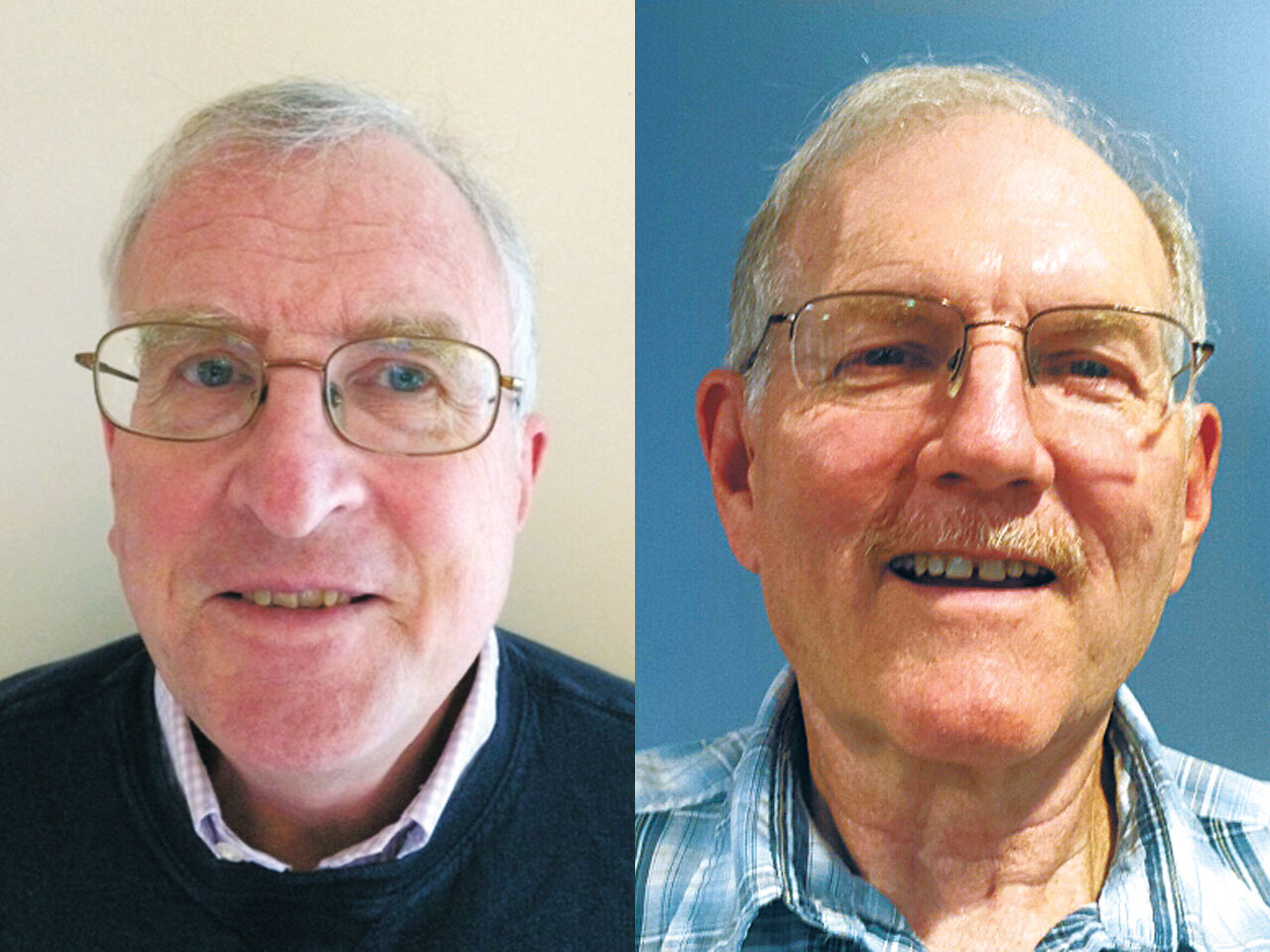
Ewing residents Daniel Reynolds, left, and Kenneth Ritchley volunteer as Court Appointed Special Advocates.,

