A visit to Cherry Grove Farm, located on Route 206 just north of Lawrenceville’s Main Street district, is an opportunity to meet the cows responsible for their award winning cheeses, and the chickens laying the eggs sold in the farm store.
About a decade ago, Cherry Grove added a dairy herd and started making fresh cheeses. This year also marks the 10th anniversary of the construction of aging caves used to make aged cheeses at the farm.
In 2013, the farm received blue ribbons from the American Cheese Society for its Buttercup Brie and Lawrenceville Jack Reserve. Last year, they received another ACS blue ribbon for its Abruzze Jawn. Other types of cheeses they sell include Toma Primavera, Herdsman, Havilah, Full Nettle Jack, Harvest Tomme and Trilby.
The farm’s variety of cheeses, produce and more will be available on Friday, May 6, when the farm is set to hold a Fiesta Cinco de Mayo event featuring Shelley Wiseman of the Farm School at Tullamore Farm.
A chef and author of two Mexican cookbooks, Wiseman will be presenting a Cinco de Mayo themed farm-to-table dinner. For more information or to make a reservation, go to cherrygrovefarm.com/farm-dinners. Dinners are $85 a person.
“People’s relationship to food is personal in this area,” said Kathy Simon, marketing manager at Cherry Grove Farm. “In this area people have been to different places, they have traveled, and have a more open world view. People think about where food comes from and where it is raised. We have locally sourced food that is clean and nutritious.”
In 1987, brothers — Oliver, Bill and Sam — inherited the 400-plus-acre farm tract. Their ancestors have farmed nearby land in Lawrence and Princeton since before the Revolutionary War, and this particular parcel had been in the family since 1902.
The Hamill family originally used the farm for row crops, and at some point it was converted into a traditional dairy farm. Over the years, the land suffered as a result of intensive conventional farming techniques.
Being strongly conservation-minded, the Hamill brothers wanted to preserve the farm.
“They didn’t want it to become another housing development,” Simon said, so instead they decided to return to the roots of farming and make Cherry Grove a sustainable farm.
As much as is possible in a four season climate, their cows are grass-fed, which meant finding cows that genetically thrive on a non-grain-based diet.
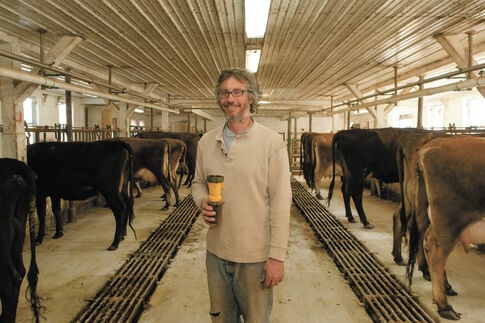
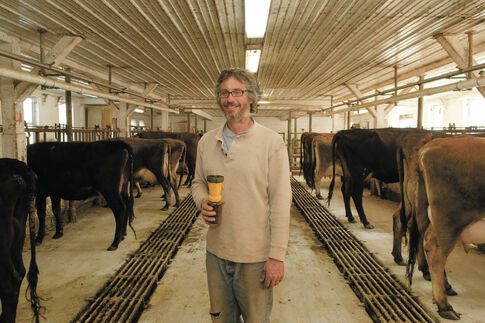
Their herd contains roughly 120 cows, a mix of Jersey, Friesan, Milking Short Horn, Red Ayreshire, Dutch Belted and Swedish Reds on 240 acres of certified organic pasture.
The farm’s combination of different types of cows produces a diversity of fat and protein, all of which goes into their cheeses. Since the cows’ diets change throughout the year based on what grasses and plants are growing in the fields, so does the variety of cheeses available. The cows are rotated throughout the farm in order to keep the pasture healthy and give the land time to rest and rejuvenate.
As part of their sustainable ecosystem, they also raise a small number of pigs, lambs, chickens and beef cattle, producing grass- and whey-fed meats, raised without hormones, antibiotics or steroids.
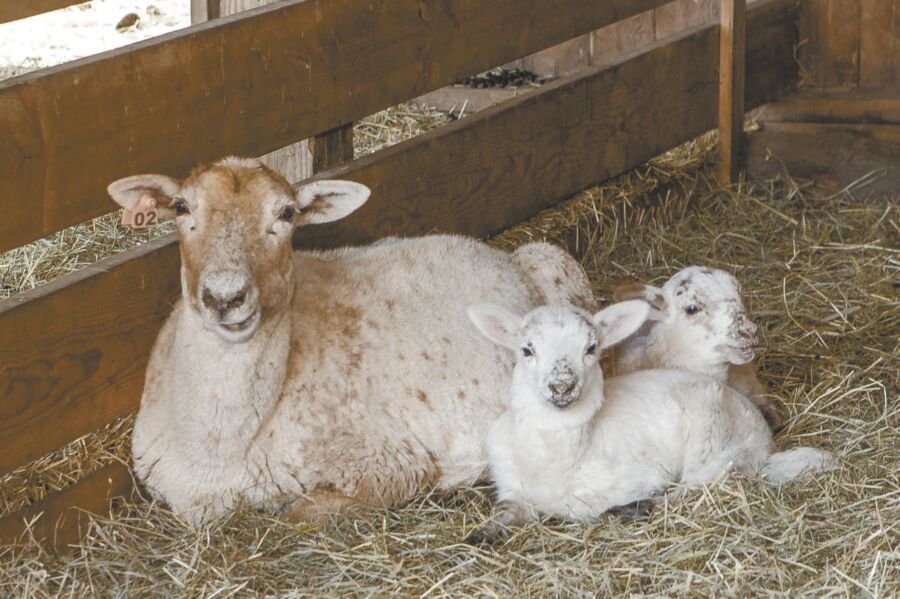
In addition to the dairy cows, they also graze a herd of about 200 Katahdin sheep, a small number of beef cattle, and a flock of mixed heritage breed laying hens who live in mobile coops, pecking and scratching through the grass, eating ticks, and spreading organic matter as they follow the sheep from pasture to pasture.
The hens include a mix of Ameracauna, Wyandotte, Australorp and Delaware which produce a wide variety of colored eggs in each carton.
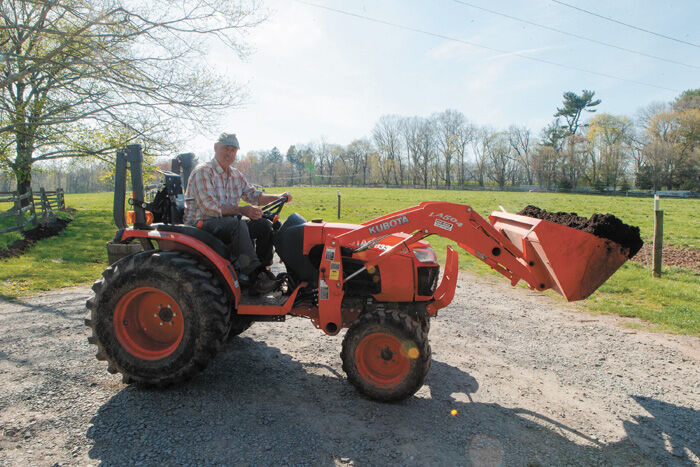
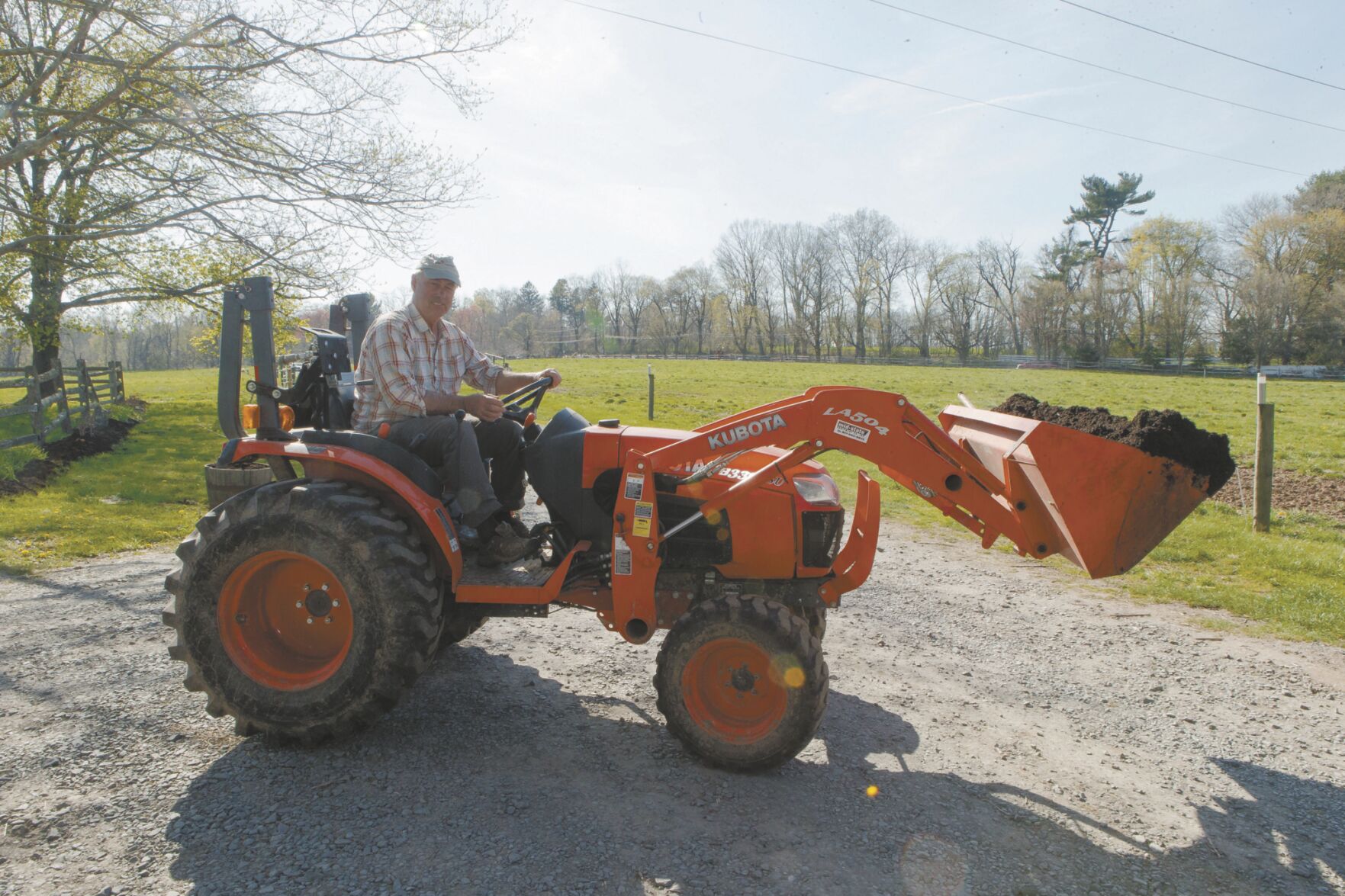
About two and half years ago, Farmer J.J. Dabbs joined the team. His goal was to make the soil rich again.
“You don’t flip a switch and make the land sustainable,” Simon said. “It has taken J.J. a few years.” The belief at Cherry Grove Farm is “if we take care of the land, the land will sustain us.”
Cheesemaker Paul Lawler also joined the team at the same time as Dabbs. “He has done an amazing job of refining our cheese line and stabilizing our recipes. We are a high-end cheesemaker,” Simon said.
“I find from watching Paul and J.J. that they have a mentor’s mentality. They want it to expand, to take what they have learned and make it happen in another corner of the world. There are a lot of small farms, but not everyone is a diversified sustainable farm trying to keep a balance,” Simon said. They have staff meetings at the farm that include Dabbs, Lawler and shepherdess Ashley Shaloo. “What you do affects someone else.”
Vince Vercillo is a direct beneficiary of Lawler’s mentoring. Vercillo came to Cherry Grove Farm as an intern, and he is now the assistant cheese maker. Vercillo himself is described by Simon as living “truly sustainably so he doesn’t have to spend a lot of money.”
“Deep down it is necessary to remind people this is a good way to farm,” she said. “Sustainability and balance are necessary. We are here to reconnect people to the food source and to the land.” They do this through farm-to-table dinners, farm tours, and other programs to earn money and raise awareness in the community.
“Farm dinners are a way to bring together food lovers and local chefs in a beautiful pastoral setting. These dinners are a whole new way to enjoy the farm,” Simon said.
Other ways to enjoy the farm includes participating in their homesteading series. “It started with cheesemaking,” said Tamara Christians, Cherry Grove’s education coordinator. They added fall forage in the fall. “We are expanding to salt preserve in the fall and DYI cleansers and a preserving series.”
On Saturday, May 28, the farm is offering Spring Forage with Ben Walmer, a chef and architect who will lead the group on a walk deep into Cherry Grove Farm to locate wild edibles and describe innovative ways to use the bounty.
Recognizing the growing trend of people raising chickens in their backyard, Shaloo will be teaching a class on May 15 on how to deal with roosters and how to turn aging chickens into dinner. Cost is $40 to observe and $50 if you bring your own chicken. Due to the topic, no children under 8 may attend, and teens and children under 16 must have a parent with them.
Building off of their popular school group tours, once a month the farm will be open for themed guided tours. Most events will be held in the afternoon, however in August and September there will be a sunset tour and a full moon tour, respectively.
“The moonlit tour is at a time we don’t normally let people on the farm,” Christians said.
“That’s what is nice about the farm tours — you go behind the common area,” Simon said. They have about 300 acres on the one side, and another 200 acres on the upper side for a total of 480 acres. There is a lot of land people don’t normally see.” Group tours are still available by request for $200. Reservations can be made online.
“A farm is a living, breathing thing that never stops,” Christians said.
“You never know what is going to happen. The pigs may escape. The guinea hens roam all over the place,” Simon said.
For example, she said, in April the bull was on the other side of the creek for the first time, and as a precaution they closed that part of the trail to visitors. Even though the bull’s temperament can be described as docile, “he is still a bull.”
Dabbs, who lives on the farm, is an early riser who milks the cows at 3 a.m. every day and then again in the afternoon. He treats animals homeopathically as a first line of defense, but sometimes the vet needs to be called.
Shaloo, meanwhile, is on duty 24/7 during lambing season to make sure all of the births happen safely.
“It is a balancing act because farm work is never-ending,” Simon said.
Cherry Grove Farm, Lawrenceville Road (Rt. 206 N.). Store: (609) 219-0053, Office: (609) 895-1502. Web: cherrygrovefarm.com. Hours vary by season. From April 1 through May 31, 10 a.m. to 5 p.m., seven days a week; June 1 through Jan 1, 10 a.m. to 5 p.m., Sunday to Wednesday, and 10 a.m. to 6 p.m., Thursday through Saturday; January through April, 10 a.m. to 5 p.m., closed Tuesdays.
The farm’s high-end cheeses can be purchased in their farm store, and are also sold through Zone 7, a local wholesale distributor, to restaurants and local food vendors.
,
A mama goat and her babies relax in their pen at Cherry Grove Farm in Lawrence Township. (Photo by Suzette J. Lucas.),