Cutter Swanson is playing a game on his laptop. In the game, he must move a pink starfish wearing Hawaiian shorts up and down with the arrow keys, trying to evade attacking plankton.
When the starfish finally succumbs to the plankton, the game is over. That’s when Swanson, 11, showed me the code behind the game, which he wrote using a programming language called Scratch. Swanson had recently completed Fyre Code, a 10-week coding class taught by his parents, Pete and Jamie Swanson, at the Union Fire and Rescue Company on River Road.
“Our kids are going to grow up to be digital natives,” said Chris Sullivan, one of the founders of Fyre Code. “They can do one of two things: they can consume [technology], or they can create it. The whole idea is to position them for the greatest possibility of success.”
The spring session was Fyre Code’s first course. A summer camp session starts in June that will introduce rising 4th through 7th grade students to coding — programming the machines and devices on which we have come to depend.
By 2022, the Department of Labor projects an additional 1.2 million computer science-related jobs will be added in the U.S. Yet most states do not have a computer science requirement to graduate high school. “It takes a long time for curriculum to change,” said Jamie Swanson, a science teacher at Pennsbury High School in Fairless Hills, Pennsylvania. Her husband, Pete, teaches applied engineering and technology at Pennwood Middle School in Yardley.
Even as schools struggle to keep up, Sullivan and the Swansons recognized the need for children to become technologically literate early on. At his daughter’s soccer game last summer, Sullivan approached Jamie with the idea to start an after-school coding program for elementary and middle school students.
The Swansons ran with the idea, creating a curriculum while Sullivan, who is vice president of media and marketing strategy at Princeton Partners and his wife, Lainie, director of sales at PeopleShare, headed up the business end.
Pete Swanson, a Hopewell native, has volunteered at Union Fire and Rescue since he was 14 years old. He currently serves as President. He realized the training room in at the fire department would serve perfectly as a classroom. Thus, Fyre Code was born.
For many elementary students, their first introduction to coding is during the annual Hour of Code, a one-hour digital event occurring across the world once a year in early December that aims to introduce students to computer science. The Swanson and Sullivan children have participated in the Hour of Code in their Hopewell Valley schools, and Pete taught it in his classroom.
“Pete would teach it and see sparks fly,” Jamie Swanson said. “The kids that really grasped it were really excited about it. I think eventually school districts will see this as a positive.”
But students can only learn so much in one hour once a year, and as Jamie explained, coding is cross-curricular, with schools struggling to find where it fits into the current curriculum.
“Coding is one of those grey areas,” she said. “It pulls a little from science, a little from math, a little from applied engineering and creating a little bit of graphics.”
While teaching the Hour of Code, Pete was introduced to Scratch, a programming language and online community created by the Lifelong Kindergarten Learning Group at MIT Media Lab. The Swansons developed the Fyre Code curriculum around Scratch, which provides an easy-to-use coding language and platform for kids to create games, art and animated stories, then share their projects online with their peers.
The Fyre Code curriculum goes beyond teaching the students to write and layer code. All students keep idea journals, and throughout the session they examine their physical world to find inspiration for their projects. For example, one homework assignment was to jot down their five least favorite noises. In the classroom, they identified their least favorite noise, put it in a layer of code and programmed it to be the sound that would be played when a player loses a game.
During my visit, Cutter Swanson demonstrated another one of his games, in which he had photoshopped his face onto a frog. The frog’s tongue swiped around the screen, catching buzzing flies that also bore his face.
Another component of Scratch is “remixing,” in which you can view and edit another user’s game or animation. Cutter made an attempt to play a replica Space Invaders game that another Scratch coder had created, but quickly the descending aliens overcame his laser cannon.
Instead of making another attempt, Cutter opened the source code, and he and his father marveled at the large amount of code the user had to write to make the game. Then, without hesitation, Cutter began to edit the code. In the classroom, students remix one another’s projects, brainstorm together on ideas, and provide critiques on one another’s products.
“You’re giving them that collaborative aspect where they are learning from each other, commenting on each other, learning to be appropriate in their constructive criticism and what they like and what they don’t like and that’s part of the risk taking,” Jamie Swanson said.
Out of the formal classroom setting, Fyre Code allows the students to take risks and experiment while using their creativity and imagination to create a product that is truly their own. Over the ten 10-week Fyre Code course, the youngsters could take their project in as many directions and as far as they wished.
“When they’re coding, they are just taking risks and trying things that may not work constantly,” Pete Swanson said. “They get to take a risk and try something that didn’t work, problem solve it, and fix it. So there’s a logical progression that you don’t see in curriculum.”
“We call it the video game mentality,” Jamie added. “To succeed in video games you fail, fail, fail, achieve once, and that’s OK. That’s good enough intrinsic motivation to go the next level and fail, fail, fail again. It’s rarely anywhere else that you have that with low stakes.”
In January, President Barack Obama announced the Computer Science for All initiative, calling for a $4 billion commitment to computer science education in the 2017 budget proposal. According to a White House statement, “last year, there were more than 600,000 high-paying tech jobs across the United States that were unfilled.”
“The fundamentals of what they learn here are relevant for the next level of software—Java, or the next level after that,” Sullivan said. “These fundamentals are going to help them in any industry. Everything that we see today as maybe a paper and pen or desktop-based job will be influenced heavily by code.”
While there is an overall need for more computer programmers and engineers, the tech industry is struggling with a diversity problem. As these companies strive to diversify their work force and hire more women, girls represented only 22 percent of the students who took the AP computer science exam in 2015, according to the Department of Education.
More than half of the students in Fyre Code’s spring session were girls. “They don’t have a perception of a glass ceiling, yet,” Jamie Swanson said. “They don’t know they are the minority. They don’t know that girls don’t get these jobs.”
Two decades ago, she was one of the only four women in her science tech and science education graduating class at Penn State University. She sees Fyre Code as an opportunity to introduce girls to tech early in their development, to break that barrier before the girls even realize there is one.
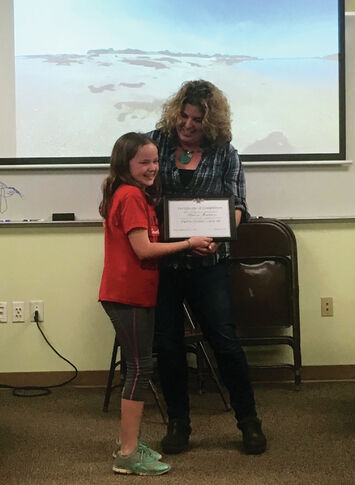
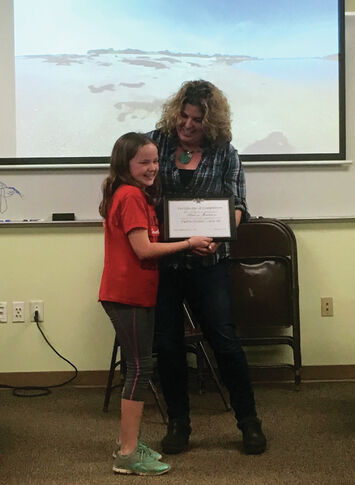
Sullivan’s 10-year-old daughter, Addison, was one of the Fyre Code spring session students. By the end of the sessions, she had made two games and is looking forward to the summer session where she plans to “make a game that’s not already created,” she said. Eventually, she wants to program her own app.
Pete also teaches the students Photoshop so they can add more personal elements to their games and animations.
In addition to their full-time teaching positions and teaching Fyre Code, the Swansons coach youth sports in Hopewell, and Cutter and their younger daughter Aspen participate in recreation sports.
“This is what we do. We shuttle our kids around to give them the best experience that we can,” Jamie Swanson said. Pete said Fyre Code fills a gap in after-school extracurricular activities.
“We can sign up for 50 leagues right now if we wanted to, for any sport,” he said. “We’re doing something that uses your mind, because there’s not a lot of that out there.”
The Fyre Code summer camp will run 9 a.m. to noon from June 27 to July 1 at the Union Fire and Rescue Company at 1396 River Road. The cost is $300, and each child must bring a laptop or Chromebook. More information is online at fyrecoders.com.
,