Fried
Fresh off winning his third term as mayor of Robbinsville, Dave Fried sat down with the Advance to reflect on how far the township has come and where it is going.
RA: What are your plans for the township’s future?
DF: I want to continue to build on what we’ve done. Robbinsville has done a good job defining our economic development process, and continuing to win interesting buildings. We need to continue to build on that, and try to keep our taxes from escalating. We definitely need to try to take action in the Foxmoor Shopping Center. The businesses in the center have been struggling.
We need to take a hard look at what we’re going to do with the south side of Town Center, and I think making a big portion of that into a park would go a long way. We’re going to need to, probably, take a hard look at the Gordon-Simpson property [430 acres at the corner of U.S. 130 and Gordon Road], and look at the potential of preserving at least the back of that property to stop it from becoming a significant amount of single-family homes. The number one thing we can do at the township right now is to limit the amount of residential growth in the town, so we don’t overburden the school district. The school district just spent significant amount of money to do a school expansion, and we at the township need to make sure we don’t allow growth to overcome the expansion they just made. That would be catastrophic for our school district. Anyone who’s got kids in the school district knows how crowded it is. My son has his lunch at 10:30 in the morning. We really need to make sure we have good planning as we go forward.
RA: It was a year ago we were talking about the school referendum and school expansion. A lot of effort went into that, so I imagine you don’t want the schools to get to that point of burden again.
DF: Exactly. Developers feel that I’m being tough on them. The fact of the matter is, what I’m really doing is protecting the investments the town has made. We just made a $30-million investment into our school district. The last thing I want to do is finish that project and find out it’s too small. It’s going to be the main thrust as we move forward. The town is getting close to being built out, so we’ve got to be really smart about what developments we let move forward. The Gordon-Simpson property is something we’re going to have to work hard on the next 12-18 months.
RA: How built out is the township?
DF: In terms of residential, we’re about 80 percent built-out.
RA: Within the last year, you’ve had a lot of development in the township. Amazon, obviously, is the big one. But you have Walgreen’s, you have some other things in the warehouse park. Did it surprise you at how suddenly things happened?
DF: No. I always look at plans like a flywheel. The first pull is always the hardest, and as you continue to pull, it gets easier and easier. Eventually, you get the wheel moving, and sustaining the movement becomes easier. The first few wins—Mercedes-Benz, Green Mountain Coffee, McMaster-Carr—they were the hardest. We had to convince those folks. They were taking a real chance on our town. Once we had those in and we were able to show people we were able to get buildings in on-time and on-budget, we had references. We had a track record we could build on. So, we’re starting to see more and more large companies be interested in Robbinsville, and as you look at the Town Center South, you’re going to see some of the businesses that come in on Town Center South be some of the more mainstream businesses, like Walgreen’s. I’d very much like to see a Starbuck’s on the south side of Town Center, and some other interesting retail opportunities we haven’t had in Town Center because of the constraints on parking. Large retailers demand a certain amount of parking or they won’t move in. We’ve had those constraints on the [north] side of Town Center. We won’t have them on the [south] side. We we want to make sure that as we plan the [south] side, we learn from some of the mistakes we’ve made on the [north] side.
RA: Now, the warehouse park with Amazon and Mercedes, that’s close to capacity at this point, right?
DF: That’s correct. One of the things we’re looking at now is trying to convince some of the other developers to think about taking on the parcels adjacent to that property, to see if they can acquire those parcels and perhaps tie them into the current warehouse park. I really think that will make a lot more sense as we move forward.
RA: You mentioned you’d like to build a park in Town Center. Can you elaborate?
DF: What we’re going to do is preserve somewhere in the neighborhood of 15 acres of property on the south side that was designated to be housing. We’re going to make that into a park. When you think about the population of Robbinsville, the largest portion of our population is Foxmoor and Town Center. To be able to have those two neighborhoods be able to walk to a park, to enjoy the day and, with some luck, frequent some of the businesses on the south side of Town Center and along Route 33, I think that would make a lot of sense. The businesses will thrive from it, as well as the residents being able to go have lunch, spend the day at the park, really make it all tied together. To have a large park adjacent to what was supposed to be a walkable community, it would also make some sense.
RA: I know it isn’t nearly as large as the park you just talked about, but how is the park in Foxmoor coming?
DF: That’s going very, very well. It’s on-track, on-budget. We also have a new building in Community Park underway, and that will allow us to do some really interesting things in Community Park, perhaps some lacrosse tournaments, some soccer tournaments. It will have bathrooms, and also potentially some concessions. It will make that park significantly easier to use for some of the activities we’d like to do there. Thirdly, we’re looking at acquiring the parcel between Blakely Park and what is now Tantum Park. That is the last parcel between in making that connection. It’s a very interesting property. It’s got a pond. It’s got some buildings. I could see the Boy Scouts perhaps doing some camping there. We could use it for camps in the summer. I think we could turn that property into something very interesting, and that will tie those two parcels together.
RA: Who owns that right now?
DF: It’s privately owned, by a family. They’ve contacted us. We’re actually in the process of doing an appraisal right now to see if we can acquire that.
RA: That would be a fairly large stretch of land.
DF: Yes, and it would really make that make sense, make that connection. And the open space would further protect the creek back there and the watershed.
RA: With Town Center, are you looking to put more parking there?
DF: We would love to do something with the north side, but the problem is all the land, for the most part, is built on. Creating new parking would be very, very difficult because we’re not going to take down someone’s home to make parking. That’s always going to be very, very limited. There will be a little bit of room, if and when the new Roma building gets built because there will be more parking on that side. That will help Buildings F and G, which will be the two new buildings going up on the north side in the next couple of months. And those two buildings are situated between the current Town Center and Roma Bank. So, you’ll see two new buildings there.
You also have the donut hole in the middle of the north side of Town Center, which is Mack Dinette. Mack Dinette is owned by the Seventh-day Adventist college. We’re going to need to figure how what to do with that property to make it make sense and fit in with everything else that’s on the north side of Town Center.
RA: Are you having a dialogue with Mack Dinette?
DF: Not yet. We need to finish F and G, and once we finish F and G, then we’ll take a look at what to do with Mack Dinette.
RA: There’s a road [Park Street], in the residential part of Town Center, that’s ready to be built right through there.
DF: That’s correct. They’ve done condemnation for a portion of that property so that we can come through. That Mack Dinette property would become a corner in Town Center, so it’s going to become a very interesting property. We need to figure out what we’re going to do there, what it will look like and what the long-term plan is there.
RA: On the more established side of Town Center, you are starting to see some people using it as it was intended to be used. Is it nice to see Town Center start to have some life?
DF: It really is. It has not been easy. It was planned before my time. When you look back on what people did before you, you have to learn from what they did, why they did it. They had some great ideas, they made some mistakes. What we want to do is build on the good ideas and fix some of the mistakes we made. But it is exciting. It’s a great project. It’s starting to develop some really interesting businesses. All you have to do is walk around Town Center, not only some of the businesses that are making sense, and riding your bikes to businesses, but also the way people live. I go through Town Center all the time. There’s block parties. There’s people having their neighbors over. Now, they’ve sort of created an environment where people do go out and hang with their neighbors and use the little parks within Town Center. It really has developed a sense of community that we were hoping for. That, I think, has been the biggest win.
RA: Aside from Town Center, what are you proud of when you reflect on your second term as mayor?
DF: When I look around Mercer County, most of the towns are in significant trouble financially. They’re all laying people off. They’re cutting back on public safety. They are trying to figure out and trying to make some of the moves we made six to seven years ago. I’m most proud that we had the vision to make some of the moves we did early. While some towns are laying people off, we’re actually hiring. While people are trying to figure out how they’ll survive, we’re actually investing in our infrastructure, investing in public safety. We just bought a new fire truck. When I look at our financial position, we are in so much better shape than just about every other town in Mercer County, possibly even in New Jersey. No one is investing in their infrastructure. Robbinsville continues to make investments in our infrastructure, which I think will continue to pay dividends over the long haul.
We’ve taken a look at where we’re going to be, and also making our town sustainable. A big chunk of that was having very, very tough discussions with our employees a couple years ago, telling them we needed to change some of the policies that some towns continue to adopt, like lifetime health benefits. Offering people lifetime health benefits is unsustainable. Making some changes in how we hire new people, changing the structure. This took a real commitment from our unions and took a leap of faith from our unions because we were doing things then. All the other unions were looking at them, saying, ‘Why are you doing this? No one else is doing this.’ So, they had to take a leap of faith that we were right. Now, I’ve talked to some of our bargaining units, and they are starting to agree. They see the fact that everyone else is laying people off, and we’re hiring.
When you think about bargaining agreements, these employees had to willingly make those changes. Our staff did that. It’s something you don’t see every day. Talking with them and interacting with them and getting them to agree these changes would make the township sustainable. When you take a look at Detroit, it’s one of the first large, large cities that’s gone bankrupt. Detroit will not be the last. When you take a look at these towns and what that’s going to do to these employees when they retire, these employees are going to get 15 cents on the dollar. If you retire and you’re counting on that pension, and you find out you’re going to get 15 cents on the dollar, your outlook has radically changed. That’s the thing with these employees saying, ‘Let’s make our town sustainable.’ It’s going to protect you, too, over the long haul. You’re going to see other towns go through the exact same problems. They’re unsustainable. The math doesn’t work.
The thing I’m most proud of today is that Robbinsville’s math works. The township’s sustainable. The town is financially in the best shape of any town in Mercer. We’re lowering taxes when everyone else is raising taxes. We’ve got our debt under control. Our bond rating is increasing while the state of New Jersey’s is decreasing.
RA: Where is the township hiring?
DF: Police, fire, recreation. Everyone else has been on a hiring freeze, so as people retire, they don’t replace those folks. That’s eventually going to affect every department. You can’t continue to allow people to retire, and then never hire anyone new. Those departments are all getting smaller. As our people retire, we’re hiring new folks. We’re very, very fortunate on that end. As other towns continue to lay off from their police force, that’s going to create more challenges for the towns surrounding them. If you’re not investing in your police force, if you’re not doing some of those things, as the trouble expands, you’re not going to have the resources to be able to react to it.
The number one thing the mayor’s most responsible for is making sure their people are safe. People want to talk about taxes. They want to talk about ratables. They want to talk about development and housing and schools. But safety is always number one. If you’re not safe, if you call 911 and no one comes, nothing else matters. At the end of the day, that is the most important thing that you do. So that’s one of the things I really focus on the most, on really making sure our public safety is top notch.
Beyond public safety, the next thing a mayor should do is build a great team. My job is to ensure, if I got hit by a bus tomorrow, the town would continue to run. We have really great people. Every one of our department heads continue to amaze me. If we have a crisis, they step up. No matter what happens to me, I know the town would continue to run and continue to be in good shape.
That, I think, is one of the most important things you have to be able to do as a leader. Oftentimes, you want to build everything around you. That’s the wrong thing because when you leave or something happens to you, things fall apart. You’re real job is to ensure things run without you, and that means letting go of your own ego and realizing things are going to run without you. If you’re going to be a good leader, you have to be willing to accept that.
RA: You mentioned that people want to talk about taxes, so let’s do that. I imagine people were somewhat pleased with last year’s tax decrease. What is the outlook going forward?
DF: We need to start having some tough discussions with the school district. We reduced taxes two cents last year. The school district has increased every single year, and they’ve done so for the last dozen years. At some point, if we’re going to make Robbinsville sustainable, we’re going to have to have a real conversation with the school district to say, ‘The township has cut taxes. The township has stopped residential from coming in. At some point, the school district needs to start managing within their own means.’ They cannot continue to give tax increase after tax increase, year after year after year. They’re going to need to give the residents a break. They’re going to need to start to make some of the tough decisions the town has made. They’re going to have to look at lifetime health benefits, and start negotiating with their employees, the same way the township did. They’re going to have to start looking at the fact that some of their employees are at the top of the pay scales and they can’t continue to give out bonuses. They’re going to have to start really being a steward of the town’s finances.
I’ve got kids in the school district. I want to have great schools. But at the same time, we have to be smart. You can’t have a tax increase every year, forever.
RA: Last year was a good example of how the municipal government and the school district can work together. But do you have the relationship with the district to have the kind of discussion you’re mentioning?
DF: I think we do have a good relationship with the school district, and I think we do work well together. The key issue is, to have a great town, you have to have great schools and you have to have great municipal services. You have to work together. You also have to have some long-term planning. The left hand has to know what the right hand is doing. We’re bringing in a significant amount of ratables into the town. It doesn’t mean money’s just coming into the township. Money’s coming into the school district, too. We’re all going to have to start managing together and be smart.
RA: Are there any other ratables coming into town that people maybe haven’t heard about yet?
DF: There are some interesting things happening. We’ve got some significant interest in the warehouse park, with a couple of new buildings, that we’re excited about. People are going to be really pleased with some of the retail opportunities that are going to be presented on the south side of Town Center. You’ll see some interesting restaurants that will be interested in coming into the township. We have a brand-new hotel opening up, which is going to be really unique. It’s going to allow us to do tournaments, and we can do overnight tournaments. There can be soccer tournaments happening at the bubble. People can stay over at the facility. That’s going to be interesting having on-going tournaments happening during the weekend for people who play soccer and lacrosse. I think that’s going to be exciting. You’re definitely probably going to see a WaWa somewhere in town in the very near future, which I know is going to make a lot of people happy. We’ve got a lot of good stuff coming.
RA: One of the first things you mentioned today was Foxmoor. There’s a new barbecue restaurant in there, but what other steps do you need to take to get that center going?
DF: One of the biggest challenges we’re having with Foxmoor right now is the landlord. The landlord needs to start working with the township and the businesses to update the facility. We need to open up that berm so we can get a curbcut onto Route 33 and make the property more visible. They need to start being a little bit more reasonable with their tenants. Their tenants are suffering, and I’ve heard from a number of tenants who are complaining about the rent even though they don’t have an anchor store. We’re going to [declare it] an area of redevelopment. We’re going to start having some tougher conversations with the landlord about what he’s going to do and what their plans are with this project.
I’m not a big fan of condemnation. I’m not a believer in government taking over someone’s business even if you’re not a big fan of the way they’re running it. But, it’s clear the way they are running it is not working, and we’re going to be having some tough conversations with them going forward because the businesses in that center are suffering.
RA: So, you hear from the tenants in Foxmoor?
DF: Oh yeah. They are not happy.
The other piece of what I plan to do in the next six months is, we’ve got a significant amount of interest in the Mercer Mobile Home park. Seeing new ownership there will make the residents in that development very, very happy. The hate-hate relationship with the current owner is awful. I think in the next 6-12 months I’m hopeful we’ll see some change there for them as well.
RA: Has the the mobile home park been an area of focus for you? There was the deal for Allies to take it over that fell through a few years ago. Have you been working on a new deal since then?
DF: I have. I’ve been keeping it very quiet because last time we did this deal, one of my councilmen [Dave Boyne] wound up on the board, which caused some challenge to making that deal go through. So, we’ve been keeping it quiet.
There’s a lot of interest in the park. We have kept it on the radar screen, so I think in the next 6-12 months you’ll see something happen there.
RA: Is there anything else I haven’t mentioned?
DF: We’ll probably take a hard look in the next year at the Tammaro property again. Talking about it in terms of priorities, it would go Foxmoor, Town Center South and then taking a hard look at the Tammaro property.
We’ve finally got traffic signals at the two most dangerous intersections in our town. That’s probably something we’ve been trying to get done for the last three years, so I’m extremely grateful we’ve been able to get that fixed. The intersection at Gordon and Sharon is probably the intersection where we have the most accidents in town.
RA: Where is the Tammaro property?
DF: If you go next to Shrimp King, there’s a big open property, and it actually wraps all the way around along to the back to 526. We’re going to take a look at possibly doing redevelopment there. It’s really kind of the gateway to town.
When you think about retail, the retail is really starting to come from Hamilton our way. So, that’s going to become a really interesting property. From North Gold to the corner of 526, that stretch there I think is going to become the next really interesting parcel in the township.
RA: This is the first time Robbinsville really has had a mayor leading it in the same direction for nearly a decade. When you started did you envision the town ended up how it is now?
DF: I was hopeful. And it’s like anything else, you have a plan. You execute the plan. You hope it’s going to work. There’s no guarantees. You have things you did that worked really well. You have things where you go, ‘I wish I that thought things through differently.’
One thing I think this government is really good at is admitting we make mistakes and changing direction. We recognize we’re not perfect. We recognize some of our ideas are not necessarily always the best. And, we’re willing to change direction. That fluidity has really paid dividends. It has created a lot of opportunities. And sometimes things that were not necessarily the best ideas turn into really great ideas, Foxmoor Park being a great example of listening to residents and coming up with a better outcome.
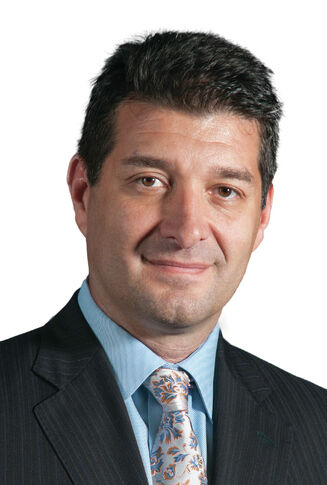
Mayor Dave Fried,

