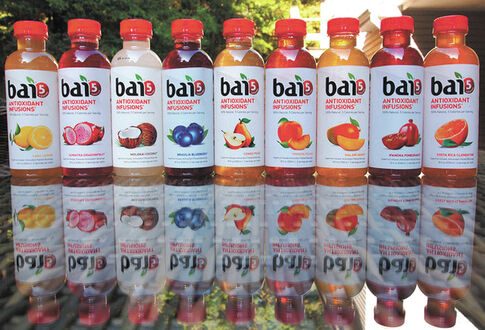
Bai Brands, founded by Princetonian Ben Weiss in August 2009, currently boasts sales of $20 million a year of its antioxidant beverages, which mix coffeefruit and exotic fruit juices.
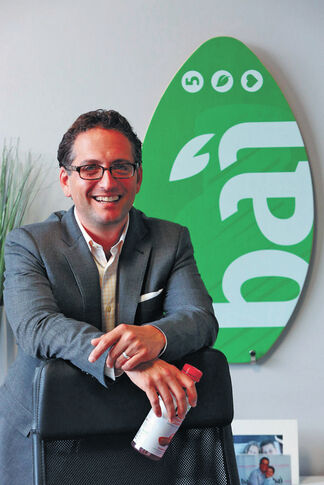
Bai Brands CEO Ben Weiss, a resident of Princeton, has been named Entrepreneur of the Year by the Princeton Chamber of Commerce.
By Michele Alperin
Ben Weiss, Princeton resident and founder and CEO of Hamilton-based Bai Brands, will be celebrated as the Princeton Regional Chamber of Commerce’s Entrepreneur of the Year at the chamber’s annual awards gala on Dec. 4.
Weiss’s fast-growing company sold its first case of coffeefruit beverage in August 2009 and four years later has sales of $20 million a year, with about 66 full-time employees and more than 300 brand ambassadors who independently promote the brand.
“I think Ben is a very progressive entrepreneur who has created a unique niche with Bai, and we are very impressed that he continues to expand the company nationally and we are very glad we can be part of that,” said Peter Crowley, chamber CEO and president.
Potential entrepreneurs are nominate by chamber members, then checked to make sure they meet the Small Business Administration guidelines. Independent judges, one an active professor and one retired, interview a dozen or so nominees about their background, financials, and growth projections, and then recommend a winner.
In 1992, fresh out of Boston University with a degree in finance, Weiss did the expected — he put on his blue suit and white shirt and went to work for a bank.
“I did it for a year, knowing it was not where my passion lay,” he said. “Then I started my love affair with coffee.”
Aware of the new wave of coffee coming through the Pacific Northwest and California, he fell in love with the industry, even at the most basic level of walking up to a coffee bar and being part of that culture.
At 22, he began an intensive study of the coffee scene in Europe, backpacking his way through Switzerland, Italy and France.
“I wanted to understand this product that I wasn’t intimate with,” he said, “and I fell in love with the coffee house.”
Inspired by these mini-environments, he said, “I just wanted to bring some of that culture back into the United States.” He noted that this was about the time that Howard Schultz was doing Starbucks, but the phenomenon hadn’t yet hit the East Coast.
Weiss had an idea for the coffee space and some investors lined up, but the idea didn’t pan out, and he wound up working for Godiva Chocolatier, helping them to develop their coffee line, in particular a product called Chocolixir, a frozen coffee beverage that he said enabled people to “enjoy Godiva ‘indulgence’ through a straw.” (“Indulgence,” like “decadence,” seems to be a word Godiva uses to capture the experience of imbibing high-quality chocolate.)
“It turned out to be a big hit for Godiva, in a very counter-seasonal way,” said Weiss, explaining that with no gifting holidays in the summer, chocolate sales decreased, and this product brought traffic into Godiva stores. “They were able to get an 18-year-old male demographic to purchase a beverage and walk out with Godiva chocolates for their mothers and girlfriends,” he said.
He then worked for the micro coffee roaster Fonté, where he learned the art of roasting and distributing coffee.
“This brought me to my ‘aha moment’ five years ago,” he said.
The marketing magic of Bai Beverages lay in antioxidants. Scientists are studying whether consuming substances rich in antioxidants can help prevent certain diseases, or whether they improve health by fighting oxidative stress, which is thought to contribute to aging. Although the science is still inconclusive, the hype surrounding antioxidants has outpaced the research, and many health foods and drinks are advertised as containing antioxidants.
What Weiss found was a fresh source of the highly sought-after chemical.
“While coffee is being harvested in far-away places, the coffeefruit that protects the coffee typically gets thrown away. A harvested superfruit, rich in polyphenol antioxidants — it was literally used as compost.”
About five years ago, he set out to use this coffeefruit as a functional ingredient in a beverage and created antioxidant infusions. He describes his Bai product as enhanced water, with only five calories per serving. “Usually when we drink something good, it is 100 percent juice, which is fattening,” he said.
When he created the first three Bai flavors, he and his father put cases of them in the trunk and knocked on the doors of Princeton retailers.
“They all took it on, and consumers loved the product and really embraced it,” said Weiss.
“One of the things I am most proud of is that the brand incubated in Princeton,” he said. “The success early on made me very confident this product had the potential to be a breakthrough brand in the beverage space.”
Once Bai gained a foothold in Princeton, the next step was to prove out the concept in New York City, a much larger area, to show that lots of stores would be interested in taking on the beverage.
Each year about 2,000 new products enter the beverage space, said Weiss. When a product occupies a space on a shelf in a cooler, it is at the expense of another brand. “If you are going to maintain the space, the consumer has to pull the product off the shelf,” Weiss said.
“Usually a product starts on the bottom shelf off to the side,” said Weiss. “When you do well, it is a real estate game — when you start warranting primary shelf space and the brand sticks and a retailer wants the brand in there, you’re proving there is consumer demand for the product.”
After a product proves that it can make it on prime shelf property, then a company is ready to look for a distributor. Bai got its first distributor in October 2010, a little over a year after it sold its first case of beverage, and then spent the next four years building distribution from Maine to Virginia and then in California.
Bai just signed a national distribution deal with Dr. Pepper/Snapple, and the brand is on the verge of going national.
The company got its start in Weiss’s home in Princeton, where it stayed for its first two and half years. When Bai started to scale up, Weiss needed more office space and signed a lease in Studio Park in Hamilton.
Describing it as a “cool, industrial, mill-style building, with lofty warehouse/office space,” Weiss said, “It had great character and was not far from the Hamilton train station. It felt like it really fit the vibe of our brand.”
Over the last two and a half years he has grown from 3,500 to 33,000 square feet and is now bursting at the seams. Bai also has an office in Corona, Pa., as well as three copackers, in South Brunswick, Landsdale, Pa., and southern California, and by the end of the year will have a fourth in the middle of the country.
All of Bai’s coffeefruit comes from Indonesia. “We have an exclusive relationship with a facility where they purchase the fruit from coffee farmers, then extract it into powder form, and we bring it here,” said Weiss.
The coffee farmers, who would typically throw away the coffeefruit once it is separated from the bean, now have a secondary source of revenue by selling it to Bai. The company does not use importers or brokers.
With select retailers and select geographies, Weiss has grown the business to its current size and said, “Now we are confident in scaling up and introducing it to other markets.”
He does admit that scaling up poses its own challenges: handling growth, ensuring that demand is met, and supporting new markets with sales and marketing people.
Now Bai is approaching big retailers. It already has had an amazing relationship with Costco on a regional basis, said Weiss, but no national launch. But in January he is expecting a prominent retailer to roll out the company’s products in all its locations.
Weiss grew up in Staten Island. His parents were in new home construction, but now both work for Weiss. His father is responsible for regional sales in the Princeton area and his mother, community relationships in Princeton. In this area all the major retailers sell his brand, including Whole Foods, Wegman’s, Shoprite, McCaffrey’s, D’Angelo, and Olives. “
I want to always make sure we give Princeton our best in a very authentic way,” said Weiss. “I want to make sure we are tethered to Princeton as we grow nationally.”
,