

This story has been updated to reflect a Trenton Water Works news release on Dec. 22.
Suburban mayors responded angrily to the most recent shutdown at Trenton Water Works, citing repeated failures, delayed communication and unresolved public health concerns.
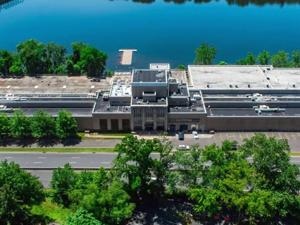
The incident occurred on Dec. 12, when frazil ice clogged the utility’s raw water intake, forcing a several-hour shutdown of TWW’s filtration plant along the Delaware River. State regulators directed the utility to notify customers and issue a water conservation advisory.
That did not happen — at least not immediately.
Residents and officials in the five municipalities served by the system — Trenton, Hamilton, Ewing, Lawrence and Hopewell — were not promptly informed of the shutdown, though the utility later said a letter was mailed to customers.
TWW ultimately issued a public water conservation advisory and press release on Dec. 18, nearly a week after the shutdown. The notice did not disclose that the filtration plant had been taken offline.
Then on Dec. 22, Trenton Water Works issued a statement announcing a request for proposals (RFP) from engineering firms to assess the design and construction of the $9 million raw water intake and recommend improvements.
The delay in notification, coming nearly one year after a similar frazil ice incident, drew sharp criticism and renewed demands from suburban leaders who said the utility once again failed to address known risks.
In a joint statement, Ewing Mayor Bert Steinmann, Hopewell Township Mayor Courtney Peters-Manning and Hamilton Mayor Jeff Martin said Trenton Water Works had ample warning and time to act.
“If it did not have real world impacts, we would think this is a bad comedy show,” the mayors said. “Under their current leadership, TWW has failed time and time again.”
They said the frazil ice shutdown compounded broader concerns about water quality and system reliability.
“If we weren’t already worried about brown water or Legionella; now we again must worry if we even have any water,” the statement said.
The mayors called on state legislators in Districts 14 and 15 to amend the Water Infrastructure Protection Act to allow the state Department of Environmental Protection to determine when a water system faces emergent conditions and to initiate public reformation hearings.
“If the people who are failing to lead are the only ones allowed to determine if a system should be reformed, the cycle of incompetence will only continue,” the statement said.
They also said the municipalities would work with the state to explore whether towns served by Trenton Water Works could form a separate water utility independent of the city.
The frazil ice shutdown was confirmed by DEP in a letter to the city dated Dec. 12, the same day the plant was taken offline. The letter described the raw water intake as a critical point of failure in the system.
DEP said the shutdown, combined with ongoing water main breaks and planned intake cleaning, caused water levels at the Pennington Avenue Reservoir to fall below normal operating ranges.
The department directed Trenton Water Works to notify customers to conserve water until further notice while frazil ice conditions persist, postpone nonessential intake work until warmer months, and provide daily operational updates to the state through March.
Frazil ice is a slushy accumulation of tiny ice crystals that forms in supercooled, turbulent water. It can adhere to submerged structures and intake screens, growing into blockages that restrict the flow of raw water into treatment plants.
TWW’s RFP, which was sent out on Dec. 15, seeks proposals from engineering firms with experience with river-based surface water intakes operating in similar climates and environments. The deadline for submitting proposals is Jan. 9, 2026.
Sean Semple, director of the city’s Department of Water and Sewer, which operates Trenton Water Works, commented on the water intake situation in the Dec. 22 release.
"Based on operational data, inspections, and expert consultations, TWW has found no evidence that operator actions caused the intake’s reduced performance; rather, cold-weather conditions exposed design limitations that were not anticipated in the current configuration,” Semple said.
He added: "Cold weather impacts the performance of our water infrastructure, but our filtration plant operators, distribution system technicians, and distribution repair teams are ready to address any operational issues."
According to Semple, the independent assessment will evaluate whether the intake’s design assumptions adequately accounted for frazil ice, supercooled river conditions, and seasonal biological loading.
Last winter, the current design of the raw water intake, which TWW rehabilitated in 2021-2023, including its compressed air blow-off system, was not very resilient to frazil ice buildup. It was necessary to bypass the structure to pump water into the plant using high-capacity diesel pumps for several weeks.
The newly constructed raw water intake was designed by the engineering and development consultancy Mott MacDonald Group and replaced a concrete structure in service since 1954.
"Plant operators have seen reduced hydraulic capacity in the current intake system during peak winter months when pockets of the Delaware River around the plant are supercool, and the growth of aquatic vegetation during summer months, which will require engineering-informed changes to the intake’s design to overcome Mother Nature’s challenges," Semple said.
"We’ve been doing a lot of work over the last several months to address the intake’s hydraulic performance, including using divers to examine the structure, cleaning out its intake channels of sediment and debris, evaluating the capacity of the compressed air blow-off system, and operating protocols," said Semple.
Trenton Water Works provides drinking water to more than 200,000 residents and has faced heightened scrutiny in recent years over water quality and system management issues, including multiple cases of Legionnaires’ disease reported in its service area in 2022 that resulted in three deaths.
DEP investigations found that while water leaving the filtration plant generally met regulatory standards, conditions within the aging distribution system created elevated risks for Legionella growth, particularly in areas with low water use and limited circulation.
State reports also cited significant deficiencies in water quality testing and system oversight during portions of the outbreak period.
The mayors’ reference to Legionella underscores continued concern among suburban officials that repeated operational failures, delayed communication and unresolved infrastructure vulnerabilities continue to erode public confidence in the regional water system as winter conditions persist.
The frazil ice incident unfolded as litigation involving Trenton Water Works continues to move forward in state Superior Court.
Hamilton, Ewing and Lawrence previously filed suit against the city of Trenton, alleging longstanding operational failures, governance problems and risks to public health tied to the regional water system.
Hopewell Township recently joined the lawsuit, expanding the case to include all of the suburban municipalities served by TWW.
The lawsuit seeks court intervention to address what the towns describe as systemic mismanagement at the utility and raises the prospect of structural changes to how the system is governed.
Earlier this year, a judge lifted a stay in the case and allowed discovery to proceed after determining that Trenton had not complied with state administrative orders related to the utility’s operations.
But anyone hoping for a quick solution through the courts is likely to be disappointed.
The discovery phase—a court-ordered process in which the parties exchange documents, conduct depositions and examine the operation and governance of Trenton Water Works—is expected to continue into late 2026.
Continued information can be found on the Trenton Water Works situation at the state’s website at dep.nj.gov/trentonwater.