
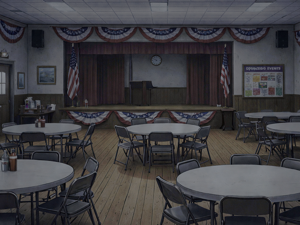

Do you remember the last time you went to a small community gathering — a potluck, a simple concert in the park, a neighborhood book club — and everything felt easy, organic, welcoming … maybe even spontaneous? That kind of casual, local connection is becoming harder to accomplish.
The cause isn’t just digital distraction or busy schedules. It’s the expectation that public or semi-public venues require liability insurance before any gathering can take place.
On the surface, this may seem harmless or even prudent. But for many small community groups, it has become an unnecessary barrier. Even minimal policies often cost $100 or more, and faced with both the financial hurdle and the bureaucratic hassle, many groups avoid gathering as frequently as they’d like, or altogether. The result is fewer meetings, fewer connections and fewer shared spaces.
I’ve encountered these obstacles firsthand. When I organized a simple winter potluck for borough families and neighbors — something warm and neighborly in the coldest part of the year — all but one venue required event liability insurance. Hosting at the Hopewell Train Station — a community building supported by our tax dollars — has a $150 minimum price tag.
Just a single church in town has been willing to offer its facilities thus far, and it has been a joy to be their guest.
And when a small group of parents attempted to hold a meeting at the local elementary school for the fledgling eco-PTO — parents eager to improve our children’s school-day experience — the gathering had to be moved at the last minute because the group, not yet fully incorporated, was asked to provide proof of insurance. For six to ten parents sitting around a table, that requirement was enough to complicate and almost cancel a promising effort before it began.
Our communities are already feeling the effects of reduced connection. Only 26% of U.S. adults say they know most or all of their neighbors; 12% know none at all. Loneliness is rising, too: in a 2025 survey of adults 45 and older, 40% reported persistent loneliness, up from 35% two decades earlier. Other research shows Americans are spending far more time alone and far less in social settings.
These trends carry serious consequences. The 2023 documentary Join or Die argues that as participation in clubs, community groups, and local collaborations declines, civic trust erodes, democracy weakens, and social bonds deteriorate. Community gatherings — whether a potluck or a parent meeting — are where relationships form, support networks grow, and trust in neighbors and local institutions is built.
When the cost of gathering rises, even modestly, we aren’t just placing a financial burden on residents; we’re erecting a social barrier.
Liability concerns are real, but requiring small groups to pay fees to meet is disproportionate to the risk. Especially when the consequence is fewer friendships and weaker civic ties. Municipalities, landlords and public venues should step in. Insurance protections matter, but the burden should not fall on local groups trying to come together. Towns can provide blanket coverage for low-risk events or create affordable options for neighborly gatherings.
Mayor Ryan Kennedy heard my case during one of his office hours. He said he is open to exploring potential avenues that would allow rental fees or insurance requirements to be eased or waived for residents. Certainly a remedy is more possible today than in the past because of the borough’s increased financial flexibility after selling its water system.
Still, Mayor Kennedy also noted that changing town ordinances for such things can be an arduous process. Though a solution seems simple, there is no quick fix.
If we hope to address the loneliness epidemic, rebuild civic trust and strengthen democratic engagement, we must make it easy to gather. Otherwise, we risk cutting ourselves off from one another — not through conflict, but through fees and paperwork.
I hope our leaders and all of our townspeople will see the bigger picture behind this barrier to a connected community.
Kirsten Shearer is a resident of Hopewell Borough.